 Save
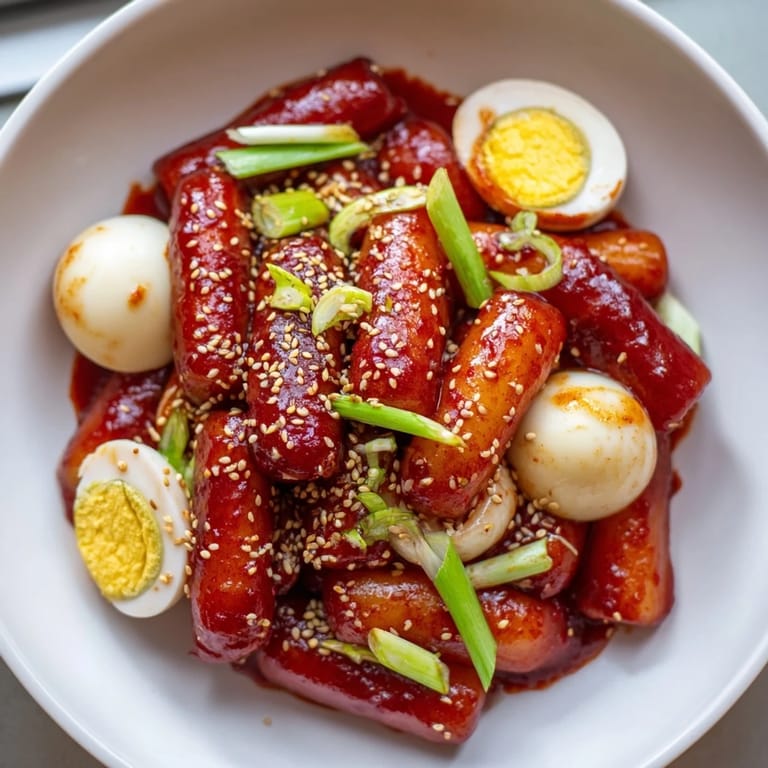
Save A friend once handed me a paper cone of tteokbokki at a Seoul street market, steam rising into the cold November air, and I burned my mouth twice because I couldn't stop eating. The chewy rice cakes coated in that deep red sauce tasted spicy, sweet, and vaguely fishy in the best way—nothing like the Korean food I'd tried at home. Years later, I finally understood why: that umami-rich broth made all the difference, and it came from somewhere I hadn't expected.
I made this for my roommate on a lazy Sunday afternoon, and she called it "the most comforting thing that also makes you sweat." We sat at the kitchen counter, fishing for eggs with chopsticks, dripping sauce everywhere, laughing at how messy it all was. That's when I realized tteokbokki isn't really a dish meant to be eaten quietly or politely—it's meant to be shared, enjoyed, and maybe a little bit chaotic.
Ingredients
- Rice Cakes: Look for Korean cylindrical tteok in the frozen section of Asian markets; they should be soft and slightly spongy once soaked, ready to absorb all that sauce without falling apart.
- Gochujang and Gochugaru: These two aren't interchangeable—gochujang is thick and fermented, gochugaru is flakes with more texture; together they build layers of heat rather than just one sharp burn.
- Eggs: Boiled until the yolk is still slightly creamy in the center because that soft yolk becomes a sauce of its own once it breaks.
- Dried Kelp and Anchovies: These create the broth's quiet depth; you remove them after simmering, but the umami stays behind like a secret you can taste but not name.
- Sesame Oil and Seeds: Toast them yourself if you have time; the difference between raw and toasted is the difference between flat and alive.
- Fish Cake: Sliced thin so it picks up the sauce quickly; optional but it adds a pleasant chewiness that rounds out the texture.
Tired of Takeout? 🥡
Get 10 meals you can make faster than delivery arrives. Seriously.
One email. No spam. Unsubscribe anytime.
Instructions
- Soak the Rice Cakes:
- Warm water and 10 minutes is all they need if they're from the fridge; cold rice cakes are dense and stubborn, but heat softens them just enough to absorb the sauce later.
- Make the Broth Base:
- Water, kombu, and anchovies (skip the anchovies for vegetarian) go into the pot together and simmer gently for 10 minutes—you're not making a strong fish stock, just extracting enough umami to make people ask what's in here. Once the time is up, fish out the solids and watch the broth turn clear and golden.
- Boil the Eggs:
- Eight to nine minutes gives you a yolk that's still a little soft in the middle, which matters because that creamy center is half the appeal. Cold water stops them immediately so the yolk doesn't darken further.
- Build the Sauce:
- Gochujang, gochugaru, soy sauce, sugar, honey, minced garlic, and sesame oil all go into the hot broth at once, and you stir until the paste dissolves completely—this takes longer than you'd think, so don't rush it.
- Cook the Rice Cakes:
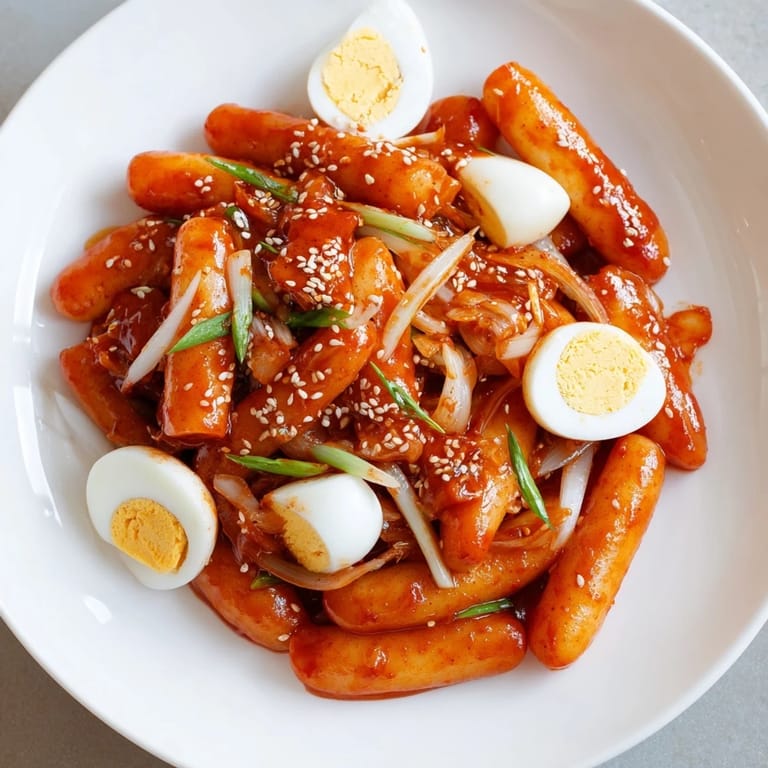
- Soaked cakes, sliced onion, and fish cake (if using) go in, and you let it simmer over medium heat for about 10 to 12 minutes, stirring once in a while, until the sauce thickens and clings to each piece. The rice cakes should be tender and chewy, not mushy or al dente.
- Add the Eggs and Serve:
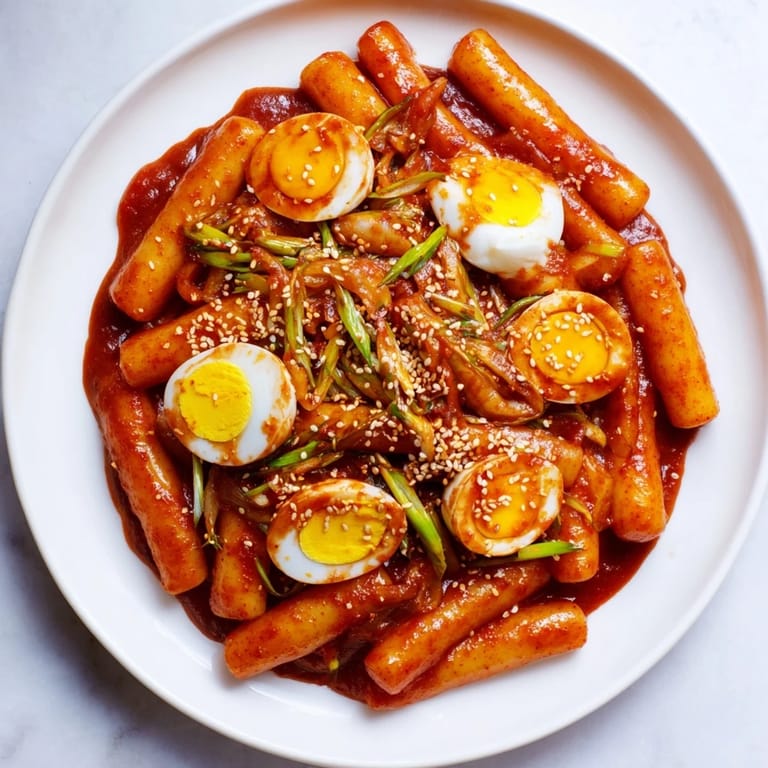
- Halved boiled eggs go in at the very end, warm through for two or three minutes, then garnish with sliced green onion and sesame seeds while it's still steaming.
 Save
Save The first time I made this alone, my small apartment filled with such a fragrant steam that my neighbor knocked to ask if everything was okay—she'd never smelled anything like it before. It made me realize that food is as much about filling a space with its presence as it is about nourishment, and sometimes the boldest dishes say the most without you saying anything at all.
Spice Adjustments That Actually Work
The recipe as written sits in the middle ground—warming heat that builds slowly rather than an immediate burn. If you like it milder, cut the gochugaru in half and reduce gochujang to two tablespoons, then taste before committing. If you want real heat, add another tablespoon of gochugaru and an extra minced garlic clove, and accept that your lips will tingle and your nose will run, which is exactly the point for some people.
Why the Broth Matters More Than You Think
Most people focus on the sauce, but that clear broth underneath is doing more work than it appears—it carries the umami, keeps the rice cakes from sticking together, and prevents the whole thing from drying out as it simmers. A vegetarian broth made with kombu, dried shiitake, and fresh garlic cloves can replace the fish stock without losing much; it's less funky but still deep.
Vegetables and Add-Ins That Turn It Into a Meal
The basic version is already satisfying, but cabbage torn into rough pieces, shredded carrots, or even fresh ramen noodles added in the last few minutes turn it from a snack into something you could eat for lunch without needing anything else. Each addition changes the texture slightly, which keeps your palate interested through the whole bowl.
- Cook add-ins for just long enough that they're tender but not mushy, usually two to three minutes for softer vegetables.
- If using noodles, add them dry and let them cook in the sauce to soak up extra flavor and thicken everything slightly.
- Taste as you go so you're not guessing how seasoned the final dish actually is.
 Save
Save Tteokbokki taught me that the best dishes don't need to be complicated, just honest—good ingredients, proper heat, and enough patience to let flavors build. Every time I make it, it tastes like the Seoul market, a shared counter with friends, and the simple knowledge that some food is made for eating together.
Recipe Help
- → How do I soften rice cakes before cooking?
Soak the rice cakes in warm water for about 10 minutes if they are hard or refrigerated, which helps them soften evenly during cooking.
- → Can I make a vegetarian version of this dish?
Yes, omit anchovies and fish cake and prepare the broth using kombu and water for a delicious vegetarian option.
- → How spicy is the sauce typically?
The sauce combines gochujang and gochugaru for a balanced spicy-sweet flavor, which can be adjusted by varying the chili paste and flakes quantities.
- → What is the purpose of boiling eggs separately?
Boiling eggs beforehand ensures they are cooked through and ready to be gently warmed in the sauce near the end, adding texture and richness.
- → Are there any suggested add-ins for more texture?
Adding vegetables like cabbage or carrots or even ramen noodles can provide extra texture and variety to the dish.