 Save
Save There's something quietly magical about the first time you smell hojicha powder hitting warm egg yolks. I was experimenting with Japanese tea cakes one autumn afternoon, and instead of the grassy brightness of regular matcha, I reached for a tin of hojicha—that toasted, almost nutty cousin with the deep amber color. The way it bloomed in the warm batter, filling my kitchen with this unexpected warmth, made me stop and just breathe it in. That moment sparked the idea for a roll cake, something elegant enough to impress but forgiving enough to let you learn as you go.
I made this for a tea gathering last spring, and watching my grandmother's face light up when she tasted that first slice—the way her eyes closed for just a second—that's when I knew this recipe had found its place in my kitchen. She kept asking if I'd studied in Japan, which made me laugh because the truth was much simpler: I'd just followed my nose and trusted the process.
Ingredients
- Eggs, separated: Room temperature eggs beat to better volume, so take them out of the fridge while you preheat the oven—this small step changes everything about the cake's airiness.
- Granulated sugar (divided): Splitting it between yolks and whites means the whites whip up faster and hold more structure, which is the foundation of a tender crumb.
- Whole milk: The fat content keeps the cake moist without making it heavy, and warm milk helps the flavors bloom.
- Vegetable oil: This stays tender longer than butter would, which is why this cake slices so cleanly even after a day or two.
- Cake flour and cornstarch: Cake flour alone can sometimes feel tough in roll cakes, but the cornstarch lightens it, creating that delicate texture that almost dissolves on your tongue.
- Hojicha powder: Roasted green tea is your star here—use a good quality powder from a tea supplier if you can, because the flavor difference is real and worth seeking out.
- Heavy cream (minimum 35% fat): Don't skimp on the fat percentage or it won't whip properly, and yes, it absolutely must be chilled beforehand.
- Mango: A ripe but still-firm mango slices cleanly and adds brightness without overpowering the subtle tea flavor.
Tired of Takeout? 🥡
Get 10 meals you can make faster than delivery arrives. Seriously.
One email. No spam. Unsubscribe anytime.
Instructions
- Set yourself up for success:
- Preheat to 170°C and line your tray with parchment, making sure the paper comes up the sides a bit so the cake has something to climb toward. This temperature is gentler than standard cakes need, which keeps the hojicha from tasting toasted to the point of bitterness.
- Build your yolk base:
- Whisk yolks with 40 g sugar until they're pale and ribbony—this takes about 2 minutes with an electric mixer and is worth the effort because it aerates the whole cake. Add milk and oil, stirring until absolutely smooth with no streaks of dry flour hiding anywhere.
- Combine dry ingredients carefully:
- Sift flour, cornstarch, hojicha powder, and salt together, then fold into the yolk mixture gently with a spatula until just combined—overmixing toughens the cake, so stop as soon as you see no white streaks. The batter will look slightly thick and earthy from the hojicha.
- Create your meringue:
- Beat egg whites in a clean, dry bowl until foamy, then gradually sprinkle in the remaining 40 g sugar while beating, continuing until you have stiff, glossy peaks that don't fall when you lift the beaters. This takes about 4 minutes total and is your insurance policy against a dense cake.
- Fold gently in stages:
- Add the meringue to the yolk mixture in three additions, folding with a spatula in slow, sweeping motions from the bottom up, rotating the bowl as you go—treat it like you're handling something precious because, in a way, you are. Each fold should take maybe 30 seconds and preserve as much airiness as possible.
- Bake with confidence:
- Pour into the prepared tray, smooth the top, tap gently to release air bubbles, and bake for 13–15 minutes until the cake springs back when you press it lightly. The kitchen will smell like toasted hazelnuts and warmth, and you'll know it's done when a toothpick comes out mostly clean.
- Cool without panic:
- Invert onto fresh parchment while still warm and peel away the original paper—this prevents sticking and cracks. Cover loosely with a clean towel and let cool completely at room temperature, which takes about 15 minutes.
- Whip your cream:
- Using chilled equipment, whip heavy cream, powdered sugar, and hojicha powder together until you reach medium-stiff peaks—you want it to hold shape but still feel soft on the tongue. Taste it; add more hojicha if you want that flavor to sing louder.
- Assemble with intention:
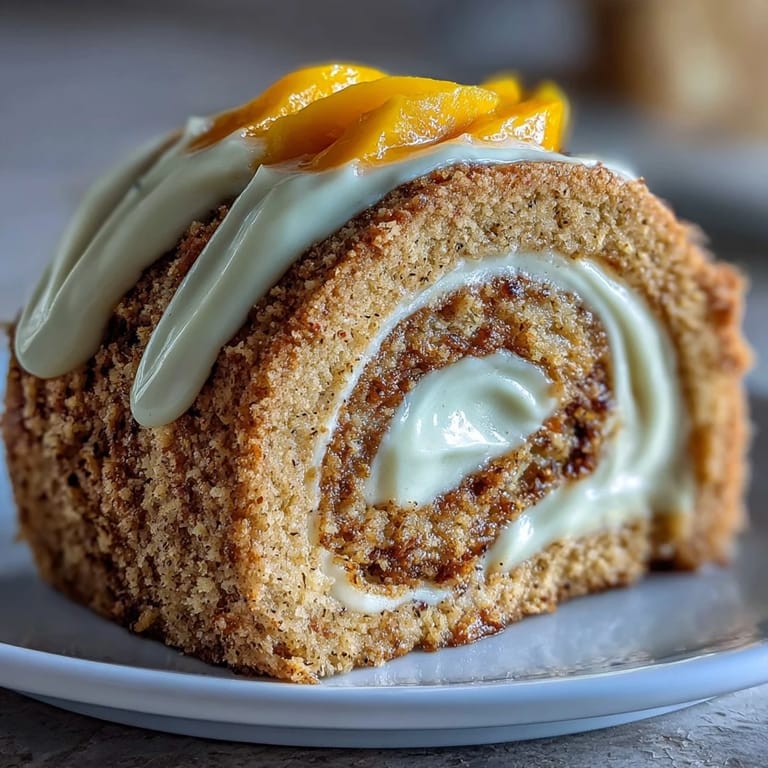
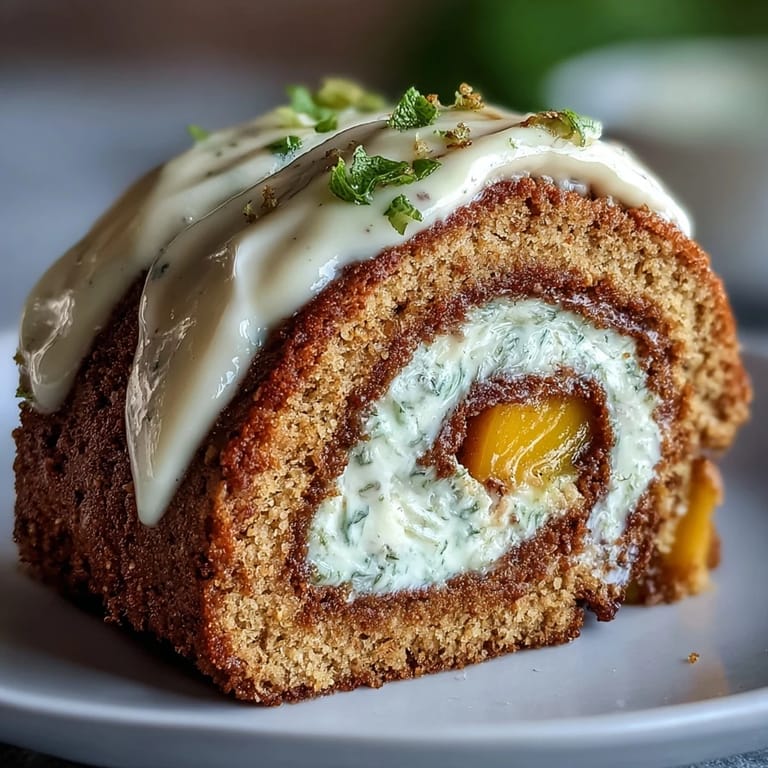
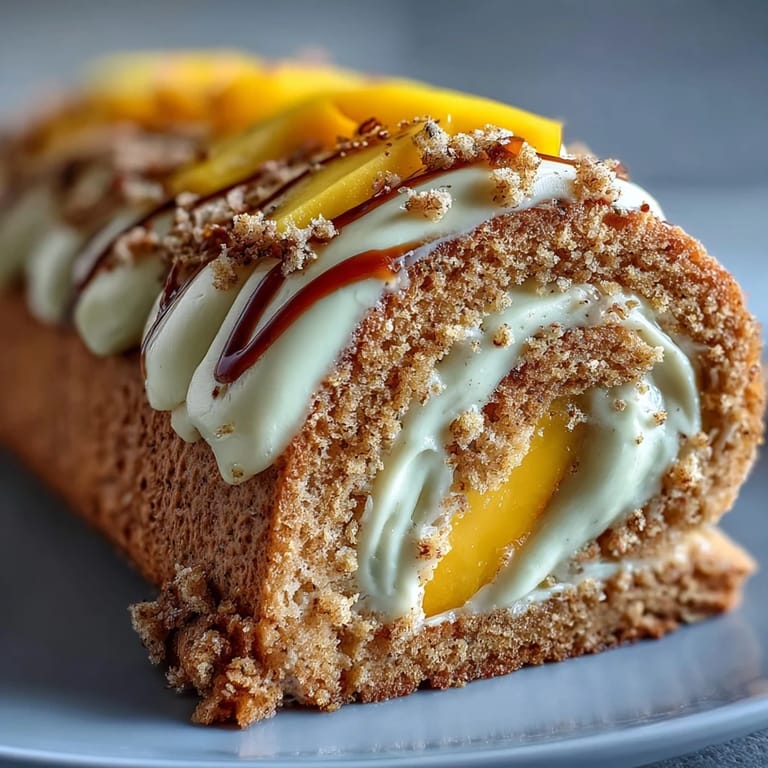
- Spread cream evenly over the cooled sponge, arrange mango strips along one short edge, then use the parchment underneath as your guide to roll gently and tightly from the mango side. The parchment helps you keep tension on the roll, which prevents it from cracking.
- Let it set:
- Wrap the rolled cake in parchment and chill for at least 30 minutes—this lets everything firm up and makes slicing so much cleaner. You can actually make this a full day ahead and slice it fresh.
- Finish and serve:
- Trim the messy ends with a warm, damp knife for neat edges, then slice carefully, wiping your knife between cuts. A light dusting of hojicha powder on each plate adds the finishing touch.
 Save
Save The moment that made me keep this recipe was when my friend's daughter asked for a second slice at dinner, which doesn't sound like much until you know she's usually skeptical of anything green-tea-flavored. She bit into that piece and suddenly the whole table went quiet, which is how you know you've made something that speaks for itself.
Why Hojicha Instead of Matcha
Matcha is beautiful and popular, but hojicha has this roasted, almost coffee-like depth that feels less sharp and more welcoming when you're baking. The roasting process mellows the grassiness and adds this warm nuttiness that doesn't scream tea at you—it whispers it instead. When you taste this cake, you're not sure at first what you're tasting, and that mystery is what makes people lean in for another bite.
The Mango Question
The mango isn't mandatory, which is important to know because sometimes the best version of a recipe is the one you make with what you have on hand. Strawberries offer tartness that cuts through the richness beautifully, while peaches bring a softer, more delicate sweetness that complements the tea without competing. Even without fruit, the cake stands on its own with just the hojicha cream, though the mango's brightness does feel like the intended ending.
Storage and Make-Ahead Wisdom
This cake actually improves after a day because the flavors marry and the sponge becomes slightly more tender, making it perfect for baking ahead and slicing fresh the morning you need it. Wrap it tightly in parchment and then plastic wrap, and it keeps beautifully for three days in the fridge without drying out or the cream sweating.
- The unfilled sponge can be wrapped and frozen for up to two weeks, then thawed at room temperature before filling and rolling.
- If you're slicing it and not serving immediately, cover the cut edge loosely with plastic wrap to prevent drying while it sits.
- Bring it to room temperature for about 15 minutes before serving—the flavors and texture are most beautiful when it's not straight-cold.
 Save
Save This cake has become my answer to the question of what to bring when I want to show someone I care but not in an obvious, complicated way. It's approachable enough to feel warm, but polished enough to feel intentional.
Recipe Help
- → What does hojicha taste like?
Hojicha has a distinct earthy, nutty flavor with roasted notes that sets it apart from other green teas. The roasting process reduces bitterness and creates a warm, toasty profile that pairs beautifully with cream and sweet elements.
- → Can I make this ahead of time?
Yes, the assembled roll cake keeps well in the refrigerator for up to 2 days. The flavors actually develop and meld better after chilling overnight. Wrap tightly in parchment to prevent the sponge from drying out.
- → Why did my sponge crack when rolling?
Cracking usually occurs when the sponge cools completely before rolling or when it's overbaked. Roll while slightly warm for flexibility, and don't overbake—the cake should spring back when lightly pressed but still feel moist.
- → What can I substitute for mango?
Sliced strawberries, peeled peaches, or poached pears work beautifully. For a purely hojicha-focused version, omit fruit entirely and intensify the cream with additional powder or match the cream with white chocolate ganache.
- → How do I prevent the cream from leaking?
Whip the cream to medium-stiff peaks for stability. Spread cream evenly, leaving a slight border at the edges. Roll tightly from the filled end, using the parchment paper to guide and support the spiral as you roll.
- → Can I freeze this roll cake?
The unfilled sponge freezes well for up to a month wrapped tightly in plastic. The filled roll can be frozen, though the texture may become slightly denser. Thaw overnight in the refrigerator before serving.