 Save
Save I discovered this idea at a dinner party where the host had arranged almonds and cashews in a playful spiral on the board, and when I reached the center, there was this magnificent wedge of Brie waiting like a treasure. What struck me wasn't just how beautiful it looked, but how the journey itself became part of the eating experience—guests lingered, plucked nuts along the way, and suddenly snacking became interactive and memorable. That night, I watched people navigate the pattern with their fingers like they were solving a puzzle, and I knew I had to recreate that magic at home.
Last summer, I made this for a backyard gathering on a Saturday afternoon, and my friend Sarah arrived early with wine just as I was finishing the arrangement. She watched me place the final line of pistachios and said, 'This is too pretty to eat,' but then we both laughed when she immediately reached for a handful of hazelnuts. By the time everyone arrived, the board had become less about the cheese and more about the adventure—people were genuinely engaged, calling out the patterns they saw, debating which path to take.
Ingredients
- Raw almonds: Use unblanched for visual contrast and a slight earthiness that plays beautifully against the richer roasted nuts.
- Roasted cashews: These bring that buttery sweetness and are forgiving enough for guests who prefer milder flavors.
- Pistachios: The bright green hull adds genuine visual pop, but shell them yourself if you can since shelled ones sometimes taste stale.
- Pecan halves: Their warm amber color creates gorgeous depth in any arrangement.
- Hazelnuts: A subtle nod to European flavor that most people don't expect in a savory setup.
- Pumpkin seeds: These are the structural workhorses—they hold their shape in lines and their slight curve catches the light.
- Sunflower seeds: A traditional neutral backdrop that lets other ingredients shine.
- Black sesame seeds: They're speckled and dramatic, perfect for filling gaps and adding sophistication.
- White sesame seeds: Balance the dark ones and create visual rhythm when alternated.
- Flaxseeds: Their smaller size works beautifully for fine details in your pattern.
- Soft-ripened cheese: Brie and Camembert are traditional, but I've used everything from a tangy goat cheese to creamy vegan cashew wheels depending on the crowd.
- Dried cranberries or cherries: A touch of tartness and color that plays against the richness, optional but they fill gaps beautifully.
- Fresh herbs: Thyme and rosemary add an unexpected herbal note when scattered across the cheese surface.
- Honey or agave: Just a light drizzle catches the light and adds subtle sweetness.
Tired of Takeout? 🥡
Get 10 meals you can make faster than delivery arrives. Seriously.
One email. No spam. Unsubscribe anytime.
Instructions
- Set your stage:
- Find a large, flat board or platter with a smooth, neutral surface so your arrangement actually shows. If you're nervous about freehand patterns, use a pencil to sketch a gentle spiral or winding path first—it's like creating a map for your guests' hands to follow.
- Build the foundation:
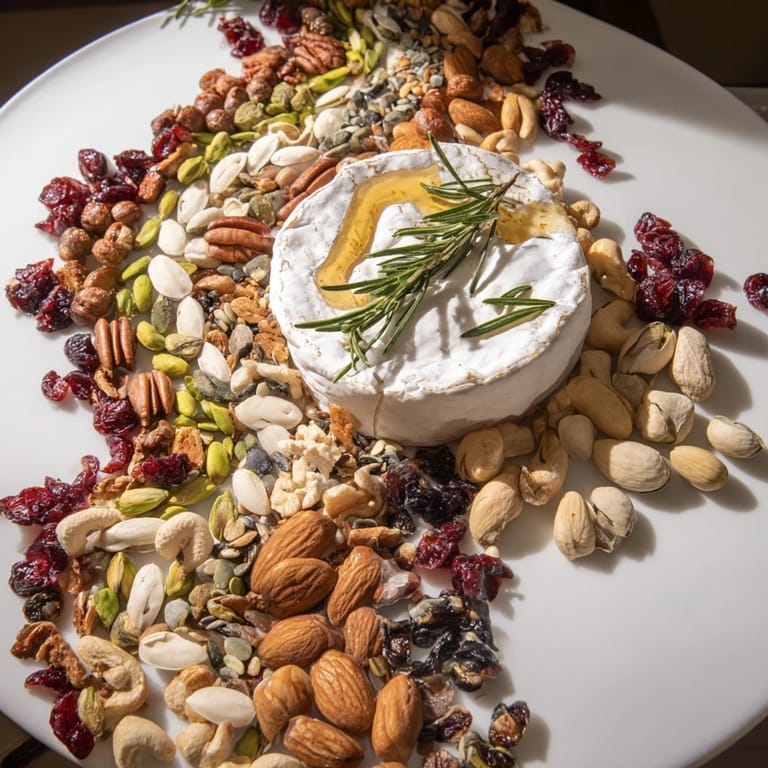
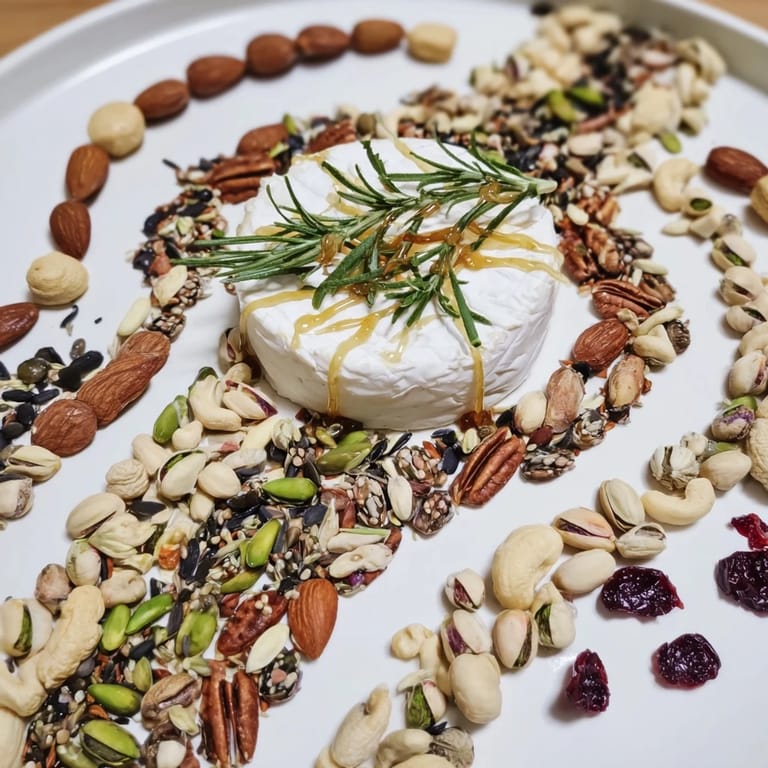
- Start at the outer edge and lay down your first line using one type of nut or seed, creating a clear stripe. The single-file approach is key because it lets each ingredient's texture and color stand alone before you layer the next one.
- Layer with intention:
- Add your second line right beside the first, using a contrasting ingredient—if almonds are pale, follow with dark sesame seeds, then bright pistachios. This creates visual momentum that pulls the eye naturally toward the center.
- Keep spiraling inward:
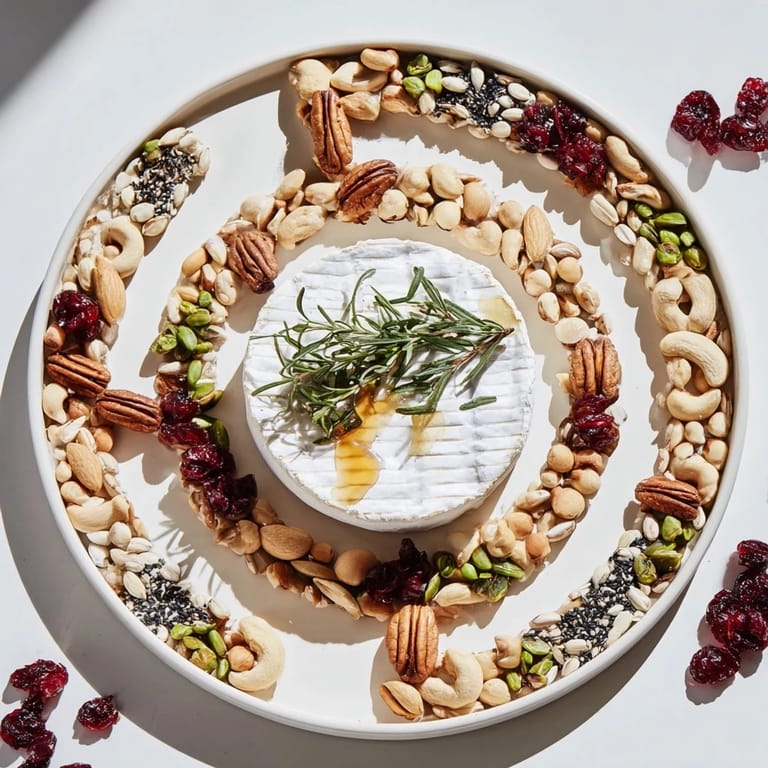
- Continue this pattern, rotating between nuts and seeds, dark and light, until your maze tightens toward the middle. Step back occasionally to see if the flow feels balanced or if you need to adjust.
- Crown the center:
- Place your cheese wheel at the heart of the labyrinth like you're revealing the grand prize. This is the moment everything makes sense.
- Finish with flourish:
- Scatter fresh herbs across the cheese, drizzle with honey, and tuck dried fruit into any gaps. These accents are the finishing touches that signal to guests that this isn't just practical—it's thoughtful.
- Set the rules:
- Provide small forks or cocktail picks so guests can navigate without using their fingers, though honestly most people will ignore this and use their hands anyway, which is part of the charm.
 Save
Save The magic of this dish isn't in the individual ingredients—it's in what happens when you ask people to slow down and play with their food. I watched my nephew navigate the pattern with such concentration, choosing which fork to take next, and suddenly this simple arrangement became a moment of genuine connection and joy.
Building Your Personal Labyrinth
Every board you make should feel different because your mood and what's available will influence the final design. Some days I arrange in perfect geometric spirals, other times I create a winding river-like path that feels more organic and flowing. The beauty is in the flexibility—you're not baking, you're not following strict ratios, you're literally just arranging things in a way that makes sense to your eye and tells a small story with ingredients.
Pairing and Presentation Strategy
Think of this as the opening act before a meal, not the entire show, which changes how you present it. I typically nestle this board on a larger table with wines, sparkling cider, and thin crackers nearby so guests have options for how they want to explore it. The cheese wheel itself is mild and versatile, so it won't fight with whatever you're serving next.
Creative Variations That Work
Once you understand the basic principle, the possibilities multiply quickly. I've built versions with all warm spices for fall gatherings, added edible flowers for spring events, and even created a chocolate and nut version for dessert boards that shocked everyone in the best way. The core wisdom is that contrast—in color, texture, and flavor—is what makes your eye happy and keeps hands reaching back for more.
- Try a diagonal stripe pattern instead of spirals for a more modern geometric feel.
- Experiment with coating some nuts in spice blends or a light dusting of sea salt for depth.
- Make a second smaller labyrinth around the board's edge using thinner lines if you want to maximize visual impact.
 Save
Save This labyrinth works because it gives people permission to linger, to touch, to explore—and somehow that transforms a simple appetizer into an experience worth remembering. Make one whenever you need a moment of creativity or when you want guests to feel like they're part of something a little bit special.
Recipe Help
- → What nuts and seeds are best for the labyrinth?
A mix of almonds, cashews, pistachios, pecans, hazelnuts, pumpkin seeds, sunflower seeds, and sesame seeds creates vibrant colors and textures.
- → Can I use vegan cheese for the center?
Yes, plant-based soft cheeses work well and accommodate vegan diets while maintaining the dish's visual appeal.
- → How do I arrange the labyrinth pattern?
Sketch a winding path on a board and place nuts and seeds in single lines alternating types for color contrast that leads to the cheese center.
- → What pairing suggestions complement this platter?
Light white wines like Sauvignon Blanc or sparkling cider accentuate the flavors without overwhelming the delicate components.
- → Are there allergy considerations to keep in mind?
Yes. This dish contains tree nuts and dairy, so be mindful of guests with related allergies and consider ingredient swaps when necessary.