 Save
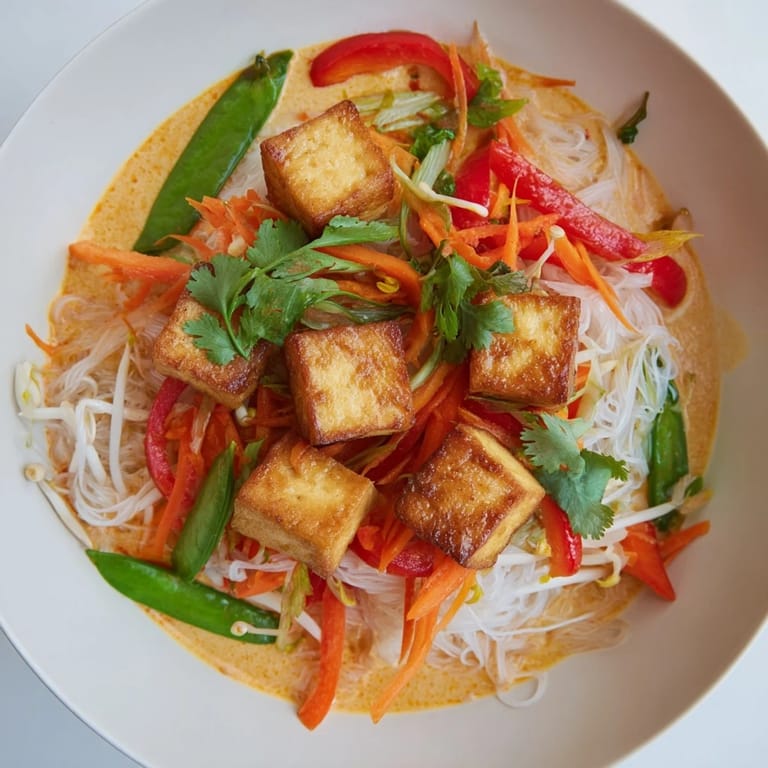
Save The first time I tasted laksa was at a bustling hawker stall in Kuala Lumpur, sitting elbow-to-elbow with strangers under a tin roof while rain hammered down outside. One slurp of that golden, coconut-rich broth and I was hooked—the way the spice built slowly, the noodles disappearing into creamy warmth, the fresh herbs cutting through everything. I spent the next three days chasing that bowl, trying different versions, and eventually badgering a vendor's aunt for hints about her technique. Now I make it at home, and while I can't replicate that exact street-food magic, I've learned something better: how to build those layers of flavor in my own kitchen, sharing bowls with people I love.
I made this for my friend Maya on a gray Tuesday evening when she needed comfort food, and watched her face light up the moment she lifted that first spoonful. The smell alone—coconut, ginger, lemongrass—filled my whole apartment, and by the time we sat down to eat, even my skeptical partner was asking for seconds. That's when I knew this recipe was the real thing.
Ingredients
- Vegetable oil: Use something neutral that won't burn—peanut oil is traditional and adds a subtle depth.
- Onion, garlic, ginger, and lemongrass: This is your aromatic base, and toasting them properly is non-negotiable; don't rush the 3–4 minutes or you'll miss that fragrant sweetness.
- Laksa paste: The heart of the dish—I've made my own, but honestly, a quality store-bought paste saves time and delivers authentic flavor.
- Coconut milk and vegetable broth: The coconut milk must be full-fat (shake the can before opening) to get that luxurious texture; thin coconut milk leaves you with something watery.
- Soy sauce, sugar, and salt: These balance the richness and heat—taste as you go, because every laksa paste brand has different salt levels.
- Rice noodles: Thick rice noodles hold the broth better than vermicelli, which tends to get mushy if sitting in the soup too long.
- Firm tofu: Press it lightly first to remove excess moisture so it crisps properly; silken tofu will fall apart.
- Fresh vegetables: The carrot, bell pepper, and snow peas should be cut thin so they cook through without becoming mushy in just 3–4 minutes.
- Bean sprouts, cilantro, spring onions, and lime: These are the freshness and brightness that make the dish sing—don't skip them or you'll have just a heavy bowl.
Tired of Takeout? 🥡
Get 10 meals you can make faster than delivery arrives. Seriously.
One email. No spam. Unsubscribe anytime.
Instructions
- Toast your aromatics:
- Heat the oil and add onion, garlic, ginger, and lemongrass, letting them soften and release their fragrance—you'll know they're ready when the kitchen smells incredible and the onion turns translucent. This foundation takes patience but makes all the difference.
- Bloom the laksa paste:
- Stir it in and cook for 2 minutes so the spices wake up and lose any raw, pasty taste. The smell will deepen and become more complex.
- Build the broth:
- Pour in the coconut milk and vegetable broth, stirring well to dissolve the paste completely. Bring to a gentle simmer—aggressive boiling will break the coconut milk's texture.
- Season and simmer:
- Add soy sauce, sugar, and salt, then let it bubble quietly for 10 minutes so all the flavors marry together. Taste and adjust; this is your last chance to balance heat, salt, and sweetness before assembly.
- Prepare your noodles:
- While the broth simmers, cook or soak your rice noodles according to package instructions and drain well. Soggy noodles are the enemy.
- Fry the tofu:
- In a nonstick skillet over medium-high heat, pan-fry the cubes until they develop golden, slightly crispy edges on all sides. This texture contrast is essential—it keeps the tofu from feeling limp in the soup.
- Add vegetables:
- About 3–4 minutes before serving, slide the carrots, bell pepper, and snow peas into the simmering broth. They should be tender but still have a tiny bit of snap when you bite them.
- Assemble and serve:
- Divide noodles among bowls, ladle the hot broth and vegetables over them, then top with fried tofu, raw bean sprouts, spring onions, cilantro, and chili slices. Serve immediately with lime wedges so everyone can squeeze to taste.
 Save
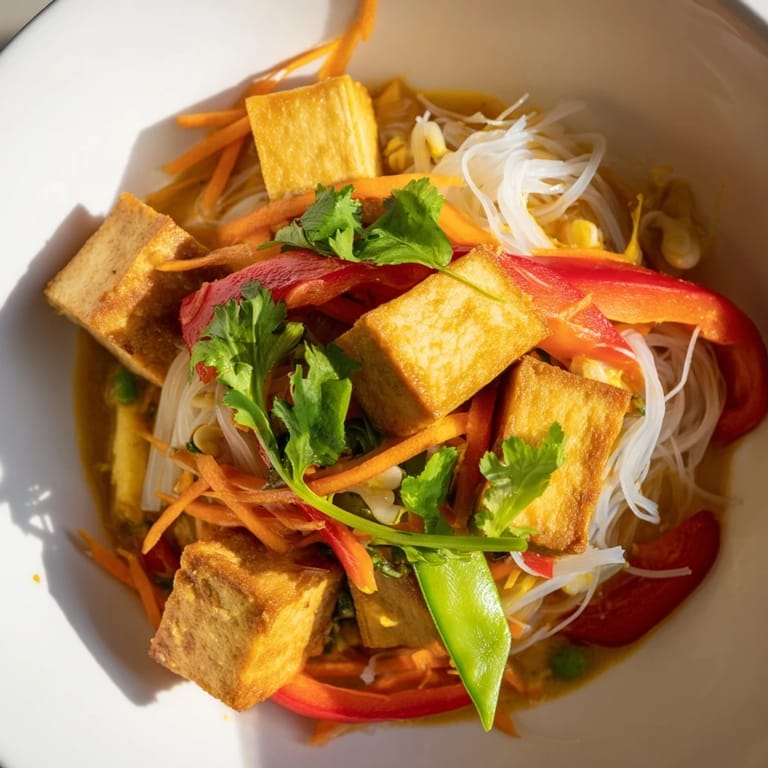
Save The first time someone asked me for the recipe, I realized this dish had crossed from 'something I make' to 'something I share.' That shift happened quietly, over a table crowded with half-empty bowls and people reaching for thirds, talking and laughing through mouthfuls of noodles. That's when I understood why laksa matters in Malaysian cooking—it's not just about flavor, it's about bringing people into the same bowl.
Why Coconut Milk Is Everything
The difference between a good laksa and a great one comes down to that full-fat coconut milk. I learned this the hard way by once trying to use lite coconut milk to cut calories, and ended up with something that tasted more like thin curry than the silky, luxurious broth laksa is supposed to be. Full-fat coconut milk isn't just richer—it emulsifies with the broth, creating this velvety texture that coats the noodles and makes every spoonful feel indulgent. Shake the can well before opening, and if you're using fresh coconut milk from an Asian grocery, even better.
Customizing Your Vegetables
One of the beauties of laksa is its flexibility—this is a dish that welcomes whatever is fresh in your kitchen. I've made it with mushrooms, baby corn, bok choy, and once even with thin slices of cucumber (which sounds odd until you taste how the cool, crisp texture plays against the spicy broth). The key is understanding which vegetables need cooking and which don't: the sturdier ones like carrots go into the broth to simmer, while delicate ones like cucumber or sprouts stay raw as a topping. This way you get layers of texture and temperature in every bowl.
Making It Truly Yours
Once you've made this once, you'll start noticing small ways to adjust it based on what's in your pantry and what you're craving that day. Some days I add a splash of fish sauce for deeper umami (though this breaks vegetarian, so I keep it separate). Other times I'll poach an egg to crack into the broth, or swap the tofu for cashews for a completely different texture.
- For a richer dish, stir a spoonful of peanut butter into the broth—it sounds strange, but it's traditional in some Malaysian versions and adds incredible body.
- If you want more heat, fry whole dried chilies in the oil before adding aromatics, or serve extra sambal on the side for people who want more punch.
- Leftovers keep well in the fridge for two days; reheat the broth gently and add fresh noodles and toppings rather than storing everything together, which turns the noodles to mush.
 Save
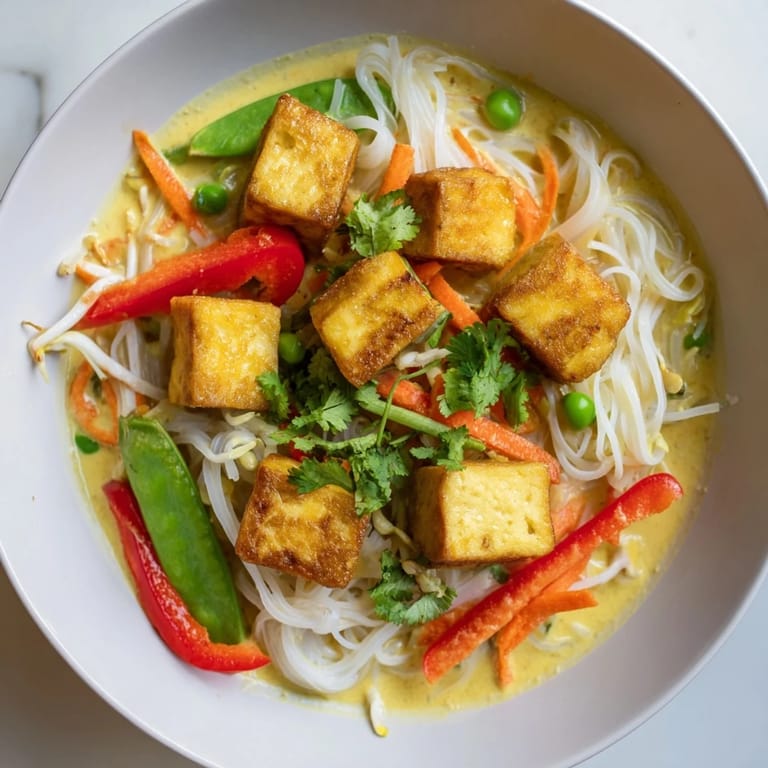
Save This laksa has become one of those dishes I make when I want to feel like I'm traveling without leaving my kitchen, or when I want to feed someone in a way that says I've spent time thinking about what they need. It's not complicated, but it asks you to taste as you go and adjust with your own hand—and that's where the real cooking happens.
Recipe Help
- → What type of noodles are used in this dish?
Rice noodles, either thick or vermicelli, are soaked or cooked as per package instructions to complement the rich coconut curry broth.
- → Can this dish be made vegan?
Yes, by ensuring the laksa paste contains no shrimp paste or fish sauce, the dish is fully vegan-friendly.
- → How is the tofu prepared?
Firm tofu is cut into cubes and lightly fried until golden to add texture and soak up the curry flavors.
- → What vegetables are included in the laksa?
The dish features julienned carrots, red bell pepper slices, snow peas, bean sprouts, and spring onions for freshness and crunch.
- → What garnish options enhance this dish?
Fresh cilantro, lime wedges, and optional red chili slices are used to brighten and balance the rich broth.
- → How long does it take to prepare and cook this dish?
Preparation takes about 20 minutes, with 25 minutes of cooking time, totaling approximately 45 minutes to serve.