 Save
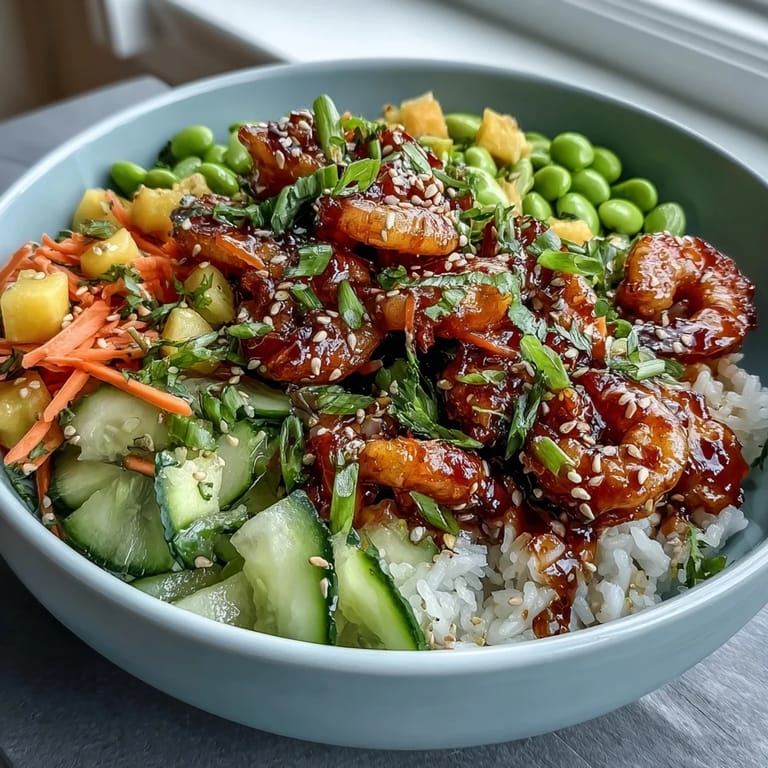
Save My neighbor handed me a takeout container one afternoon, steam still rising from the lid, and said, "Try this, but make it at home." That poke bowl changed how I think about weeknight dinners—suddenly, something that felt restaurant-fancy took shape in my kitchen in under twenty minutes. The first time I made it, I was skeptical that shrimp could cook so quickly, but watching them curl from gray to pink was oddly satisfying, like a tiny kitchen magic trick. Now it's my go-to when I want something that tastes indulgent but leaves me feeling energized, not weighed down.
I made this for my sister during a surprise lunch visit, and she kept asking why I'd never mentioned it before, fork moving steadily between bites. The kitchen smelled like sesame oil and fresh ginger, and the whole thing came together while we caught up at the counter. She's not usually a seafood person, but something about the sweetness of the mango alongside the shrimp shifted her perspective entirely.
Ingredients
- Raw shrimp (200g): Look for shrimp that smell briny and clean; frozen works perfectly and actually defrosts while you prep everything else.
- Brown rice or cauliflower rice (120g cooked): Brown rice adds substance and nuttiness, but cauliflower rice cuts the carbs dramatically if that matters to you.
- Ripe mango: Choose one that yields slightly to pressure; an underripe mango tastes woody, but overripe gets mushy in the bowl.
- Edamame (100g shelled): These little green pods bring a satisfying pop and plant-based protein that keeps you full longer than you'd expect.
- Cucumber: Slice it thin so it stays crisp and doesn't turn watery as the bowl sits.
- Carrot: Julienning takes an extra minute but makes the bowl feel thoughtfully composed instead of thrown together.
- Avocado: Add this last, right before eating, otherwise it browns and looks sad.
- Scallions: The white and light green parts add a sharp bite that brings everything into focus.
- Low-sodium soy sauce or tamari: Tamari is genuinely better for people avoiding gluten, and the flavor difference is real.
- Rice vinegar: It's subtle and bright; regular vinegar tastes harsh by comparison.
- Toasted sesame oil: A little goes far; untoasted sesame oil tastes flat and misses the whole point.
- Honey or agave syrup: Both dissolve into the sauce, but honey adds a deeper note that I prefer.
- Sriracha: Optional, but it creates complexity; start with a half teaspoon if heat concerns you.
- Fresh ginger and garlic: Minced fine, they distribute evenly through the sauce instead of hitting you in chunks.
- Toasted sesame seeds: Buy them pre-toasted or toast your own for five minutes in a dry pan; the difference is noticeable.
- Fresh cilantro: I skip it some days, but it adds an herbal brightness that makes the bowl feel complete.
Tired of Takeout? 🥡
Get 10 meals you can make faster than delivery arrives. Seriously.
One email. No spam. Unsubscribe anytime.
Instructions
- Heat your skillet and ready the shrimp:
- Get your non-stick skillet hot over medium-high heat, then give it a light spray of cooking oil so the shrimp won't stick. The pan should be hot enough that a drop of water sizzles immediately.
- Cook the shrimp until they curl:
- Lay the shrimp in a single layer and let them sit for two to three minutes before flipping; you'll see them transform from translucent gray to opaque pink. Don't move them around constantly, or they'll steam instead of getting that subtle golden edge.
- Whisk the sauce together:
- In a small bowl, combine soy sauce, rice vinegar, sesame oil, honey, sriracha, ginger, and garlic, stirring until everything is incorporated and the honey dissolves. The sauce should taste balanced—not too salty, not too sharp—so taste as you go.
- Build your rice base:
- Divide the cooked rice between two bowls, pressing it gently to create a slightly hollowed center where you can nestle everything else. Think of it as edible architecture.
- Arrange your toppings with intention:
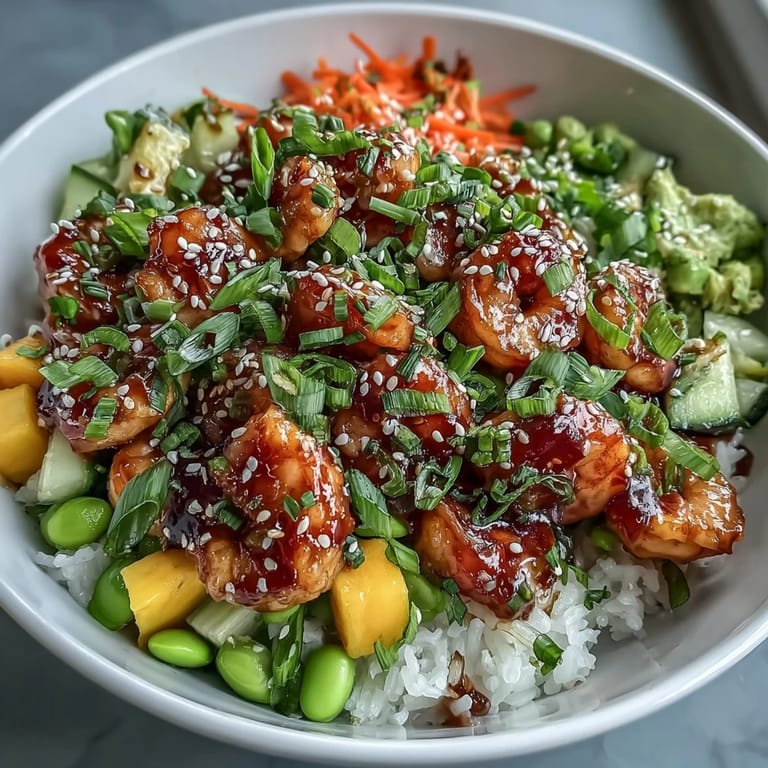
- Place the warm shrimp, mango, edamame, cucumber, carrot, and avocado around the rice in sections, creating color contrast and balance. This isn't just about taste; the way it looks makes you want to dig in.
- Drizzle and finish:
- Pour the poke sauce evenly over each bowl, then scatter scallions, sesame seeds, and cilantro on top. Serve with lime wedges so people can squeeze brightness over everything just before eating.
 Save
Save A friend texted me a photo of this bowl she'd made after I'd texted her the recipe, and she wrote: "Why does this taste like it costs thirty dollars?" It became shorthand between us for the small moments when cooking something good at home feels like a small rebellion against the ordinary.
Building Flavor Layers
The magic in this bowl isn't any single ingredient; it's how they talk to each other. The warm shrimp sits against cool, crisp vegetables while the sauce acts as a bridge, carrying sesame and ginger to every component. I learned this by accident when I forgot to drizzle sauce on half a bowl and took a bite—it tasted pleasant but flat, like someone had turned the volume down. The sauce is where everything clicks into place.
Texture Matters More Than You Think
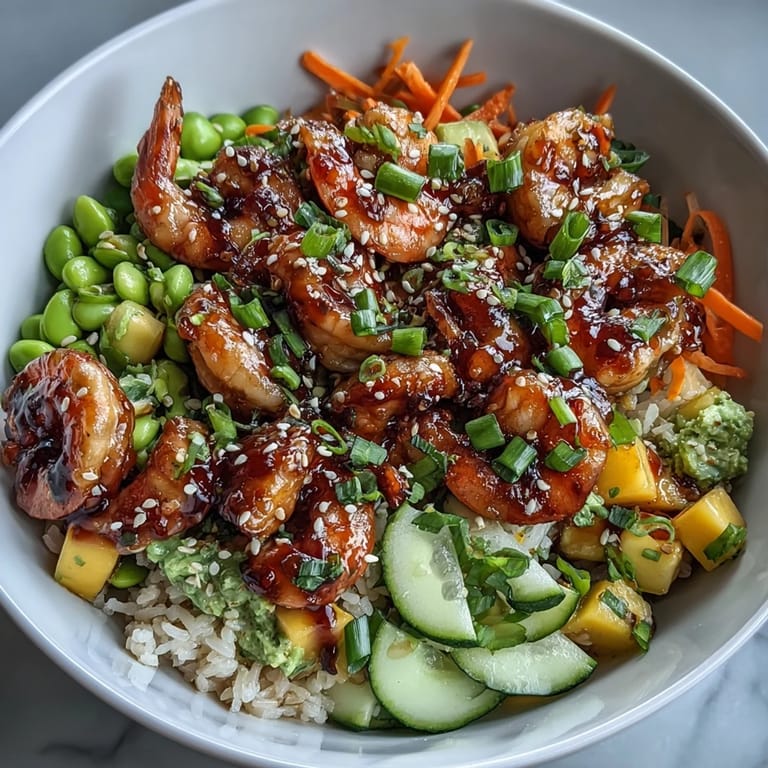
Crunch is half the experience here. The second I started paying attention to how thin I sliced the cucumber and how I julienned the carrot, the bowls stopped feeling one-note. You want moments where your teeth meet resistance, where you get that satisfying snap, contrasted with the softness of the mango and creaminess of the avocado. It's the difference between a bowl you eat quickly and one you linger over.
Customizing Without Losing the Soul
This bowl is forgiving in ways I didn't expect. I've swapped in shredded red cabbage for extra crunch, thrown in radishes when I found them in the crisper, and used quinoa instead of rice on days when I wanted more protein density. The core—shrimp, sauce, and vibrant vegetables—stays consistent, but you can riff on it endlessly. What matters is keeping the balance: something warm, something cool, something to bind it all together.
- Radishes add a peppery crunch that plays beautifully against the sweet mango.
- If you're meal-prepping, keep the sauce separate and add it just before eating so everything stays crisp.
- Leftovers taste great cold, but the shrimp is best enjoyed fresh.
 Save
Save This bowl reminds me that good food doesn't need to be complicated, just thoughtfully put together. Once you make it once, you'll understand why it became my default answer to "What's for lunch?"
Recipe Help
- → Can I substitute the brown rice used in this bowl?
Yes, cauliflower rice or quinoa work well as lower-carb alternatives while maintaining a satisfying texture.
- → How do I cook the shrimp to keep it tender?
Cook shrimp in a hot skillet for 2-3 minutes per side until opaque and pink, avoiding overcooking to keep them tender.
- → Is there a way to make the sauce gluten-free?
Substitute regular soy sauce with tamari to ensure the sauce is gluten-free without compromising flavor.
- → Can I add more vegetables to the bowl?
Absolutely; adding sliced radishes, shredded cabbage, or mixed greens can enhance crunch and nutritional value.
- → What can I serve alongside this shrimp bowl?
A crisp, citrusy white wine like Sauvignon Blanc pairs nicely, or enjoy it as a standalone light meal.