 Save
Save I'll never forget the first time I saw a spiral arranged on a plate at a little bistro in Lyon. It was so beautifully constructed, like something between art and food, that I was almost afraid to eat it. But when I did, the delicate vegetables melted together with creamy goat cheese, and I realized that stunning presentations don't have to be complicated. I've been recreating that magic in my own kitchen ever since, and now it's become my signature way to impress guests without spending hours in the kitchen.
I made this for my parents' anniversary dinner last spring, and my mother actually gasped when I brought it to the table. She kept saying she couldn't bear to cut into something so beautiful, but once she tasted it, she went back for seconds. That moment when food becomes a memory, when it's more than just nourishment, that's what this dish does.
Ingredients
- 1 small eggplant, thinly sliced lengthwise: The foundation of your spiral, eggplant brings an earthy depth that anchors the brighter vegetables. Slice it thin enough to curl gently when roasted, but not so thin it becomes papery.
- 1 medium zucchini, thinly sliced lengthwise: This keeps things light and fresh. I always use medium zucchini because larger ones have watery centers that can make your spiral soggy.
- 1 red bell pepper, seeded and thinly sliced: The jewel-tone color is essential for the visual drama. Red peppers have a natural sweetness that balances the earthiness of the other vegetables.
- 1 yellow squash, thinly sliced lengthwise: Another bright note that makes the spiral pop with color. It's milder than zucchini, which is why I love using both.
- 1 small carrot, peeled and thinly sliced lengthwise: The carrot adds a subtle sweetness and a beautiful warm tone to your spiral. Slice it lengthwise so it curls naturally when roasted.
- 100 g goat cheese, softened: This is your secret weapon. Softened goat cheese spreads smoothly and melts slightly when the warm vegetables touch it. Use a good quality cheese if you can.
- 2 tbsp crème fraîche: This makes the goat cheese spreadable and adds a subtle tanginess. Don't skip it, even though tempting to increase the cheese.
- 2 tbsp fresh basil leaves, finely chopped: Basil brings freshness that makes people say 'wow, I taste something special.' Always chop it by hand, never a blender.
- 1 tbsp fresh thyme leaves: A whisper of thyme adds sophistication without overpowering. Strip the leaves from the stems and roughly chop.
- 2 tbsp olive oil: Good olive oil is non-negotiable. It protects the vegetables during roasting and adds richness to every bite.
- ½ tsp sea salt and ¼ tsp freshly ground black pepper: Taste and adjust as you build your spiral. Every vegetable has different water content, so seasoning is personal.
- 1 tbsp pine nuts, lightly toasted: Toasted pine nuts add a buttery crunch that catches your tongue and makes you pause to appreciate what you're eating. Toast them yourself for best results.
- Microgreens, for garnish (optional): These are the finishing touch that makes it look restaurant-quality. Even a small handful transforms the whole presentation.
Tired of Takeout? 🥡
Get 10 meals you can make faster than delivery arrives. Seriously.
One email. No spam. Unsubscribe anytime.
Instructions
- Heat your oven and prep your stage:
- Preheat your oven to 200°C (400°F) and line a baking tray with parchment paper. This temperature is hot enough to soften the vegetables without browning them, which is crucial for maintaining the tender texture and vibrant colors.
- Oil and season your vegetables:
- Lightly brush each vegetable slice with olive oil on both sides, then sprinkle with salt and pepper. You want them glistening but not drenched. This is where your hands become your best tool.
- Roast until pliable:
- Arrange the slices in a single layer on the tray and roast for 10 to 12 minutes. You're looking for that sweet spot where they're soft enough to bend gently but still hold their shape. They should smell fragrant and look slightly translucent at the edges. Let them cool on the tray for a few minutes, then transfer to a plate to cool completely.
- Create your cheese mixture:
- While the vegetables cool, mix the softened goat cheese, crème fraîche, basil, and thyme in a small bowl until completely smooth. Taste it and adjust the herbs. This is your flavor foundation, so don't be shy with seasoning.
- Spread your spiral base:
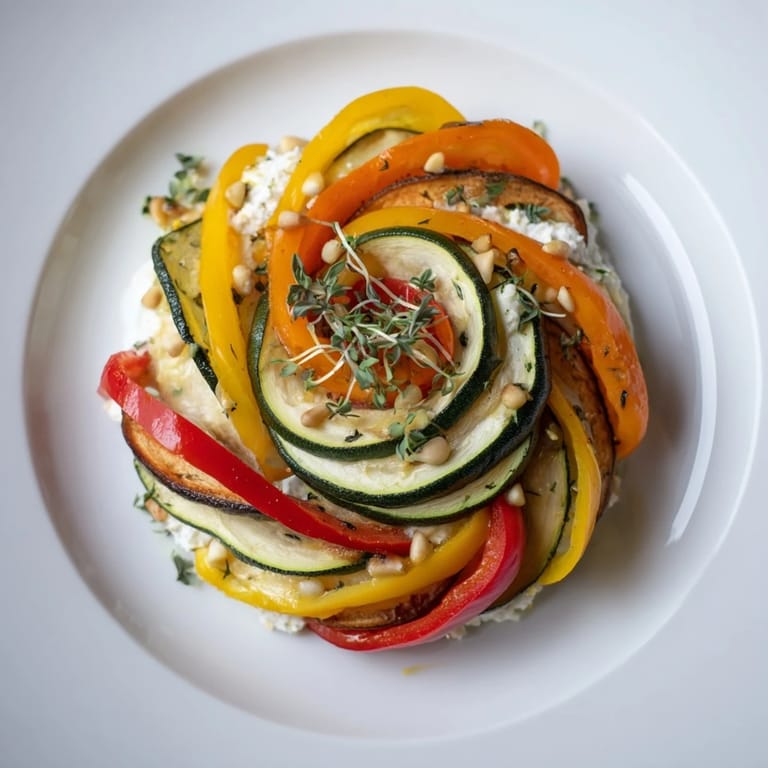
- On your serving plate (and yes, it should be beautiful because this dish deserves it), spread a thin, even layer of the cheese mixture starting from the very center and spiraling outward in a gentle, continuous line. Think of it as drawing with cheese.
- Build your spiral with vegetables:
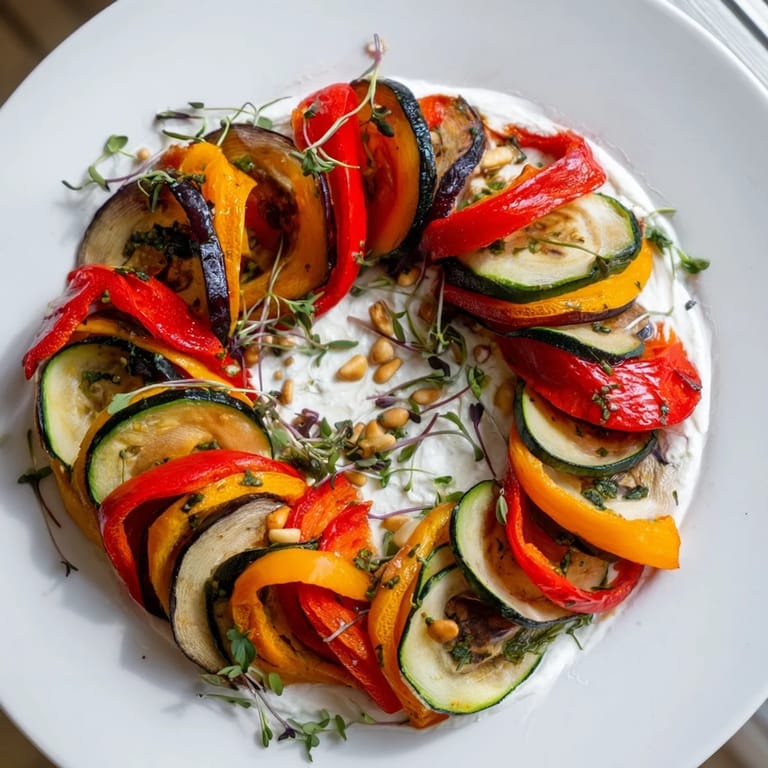
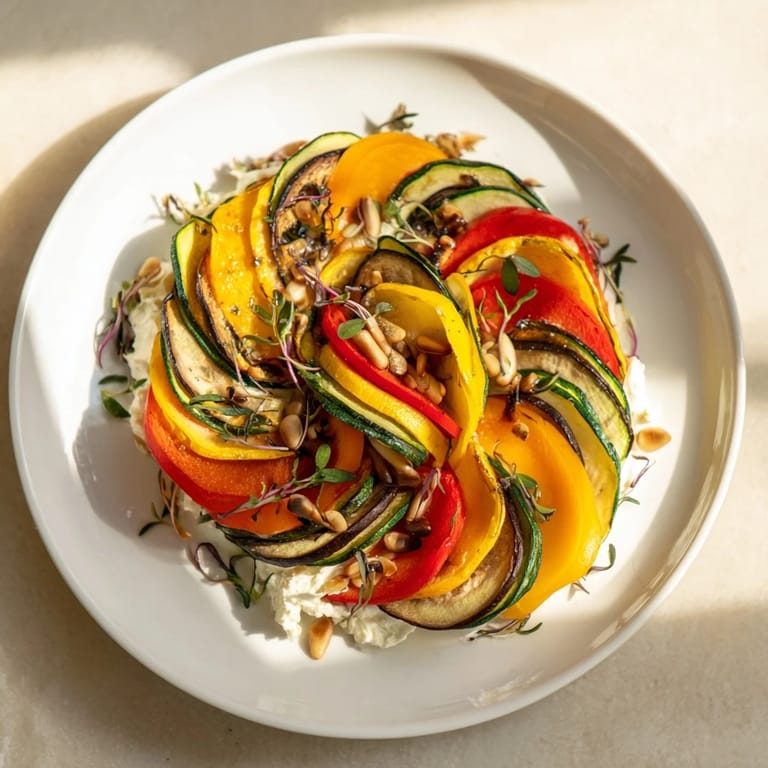
- Starting at the center where your cheese spiral begins, lay down your first vegetable slice, slightly overlapping the edge. Continue around and around, alternating colors as you go. Overlap each slice slightly so they create a gentle wave pattern. Work slowly here, because this is where the magic happens visually.
- Finish with garnish:
- Sprinkle the toasted pine nuts across the spiral in a gentle scatter, then add the microgreens if you're using them. Step back and look at what you've created. It should look like something alive, spiraling outward in perpetual motion.
- Serve at room temperature:
- Let the spiral sit for 10 to 15 minutes before serving. This allows the flavors to settle into each other. Serve it as an appetizer with crusty bread or as a light lunch alongside a simple salad.
 Save
Save I once made this for a dinner party where someone came who I knew was difficult to impress. She walked in, saw the plate, and didn't say anything at first. But halfway through eating it, she told me she'd never thought about vegetables this way before, that presentation had made her taste things differently. That's when I understood that food is never just about nourishment. It's about creating moments where people feel seen, where a simple spiral becomes a conversation.
Why This Spiral Works
There's something about a spiral that naturally makes people pause. It draws the eye inward and then outward, following a path that feels both structured and organic. When you arrange vegetables in this pattern, you're not just making dinner, you're creating a small piece of art that your guests will want to photograph and remember. The overlapping slices also mean that every forkful contains multiple vegetables and a swirl of cheese, so the flavors and textures build on each other instead of competing.
Variations That Keep It Interesting
Once you master the basic spiral, you can play with it endlessly. I've added roasted beets for a deep burgundy that makes the red peppers look even brighter, and thinly sliced sweet potatoes bring a gentle sweetness that works beautifully with the herbs. Some seasons I use ricotta instead of goat cheese, especially in summer when it feels lighter. You can even make this vegan by swapping the cheeses for a really good plant-based spread, and honestly, the vegetables shine even brighter when that's your base.
Making It Ahead and Serving It Right
This dish actually improves if you make it an hour or two before serving. The vegetables soften even more, and the cheese seals in all the flavors. I often prepare it in the afternoon for an evening dinner, which takes the stress out of entertaining. Serve it with crusty bread to soak up any cheese that migrated to the plate, or alongside a crisp green salad dressed simply with lemon and olive oil. Some friends love it with a glass of crisp white wine, others pair it with a light red. The spiral is humble enough to let your guests decide what belongs beside it.
- Make it up to 4 hours ahead and keep it covered at room temperature
- Slice your vegetables with confidence using a sharp knife or mandoline, consistency matters more than perfection
- Toast your pine nuts fresh on the day you're serving for the best crunch and flavor
 Save
Save Every time I make this spiral, I'm reminded that the most impressive dishes are often the simplest ones, executed with intention and care. It's about respecting the vegetables, letting them speak, and taking the time to arrange them like they matter. Because they do.
Recipe Help
- → How should the vegetables be prepared for the spiral?
Vegetables should be thinly sliced lengthwise, lightly brushed with olive oil, seasoned, and roasted briefly until pliable but not browned for easy arrangement.
- → Can the cheese base be substituted for dietary preferences?
Yes, for vegan preferences, replace goat cheese and crème fraîche with plant-based cheese or spreads that maintain a creamy texture.
- → What herbs enhance the flavor of this spiral dish?
Fresh basil and thyme finely chopped are mixed into the cheese base, adding aromatic and savory notes that complement the vegetables.
- → How can this dish be served for best presentation?
Serve at room temperature on a large serving plate, allowing the spiral of roasted vegetables to maintain its shape and vibrant colors.
- → Are there any suggested garnishes?
Toasted pine nuts provide a crunchy texture, and optional microgreens add freshness and a delicate finishing touch.