 Save
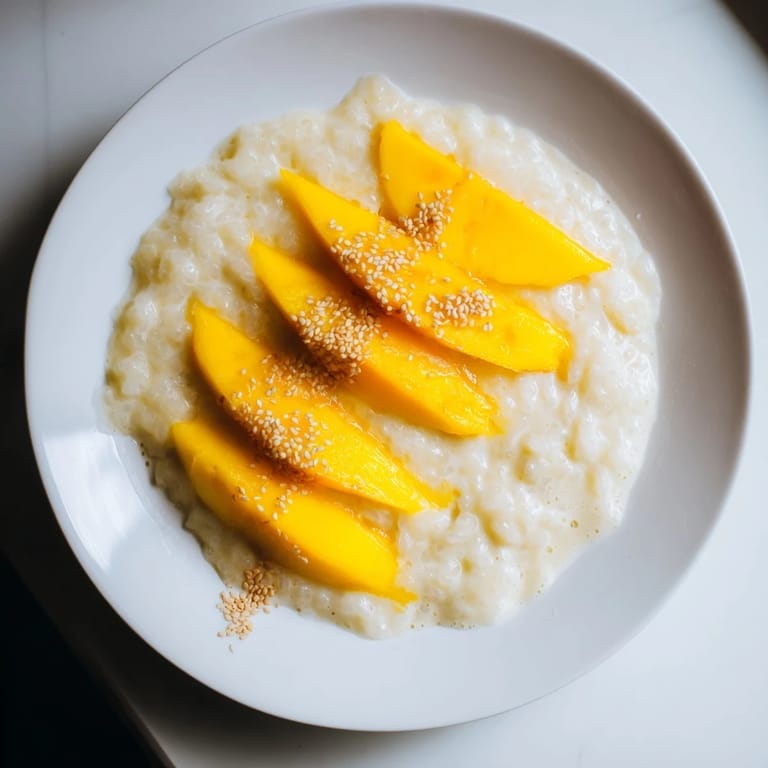
Save I discovered this dessert on a humid Bangkok evening when a street vendor handed me a paper plate without asking—sticky rice crowned with amber mango slices, still warm from being plated moments before. That first bite unlocked something: the way the coconut-soaked rice clung together in creamy waves while the mango provided this cool, bright counterpoint. I've made it countless times since, and it never fails to transport me back to that vendor's cart, to the smell of jasmine and traffic and something deeply comforting about simplicity done right.
I made this for my roommate on a Tuesday night when she came home stressed from work, and watching her face light up when she tasted it reminded me why comfort food matters. She asked for the recipe immediately, and now whenever she visits her family in Thailand, she brings this dessert to potlucks. That's when I realized this isn't just a recipe—it's a conversation starter, a bridge between cultures, something that tastes so authentic people assume you studied under a Thai grandmother.
Ingredients
- Glutinous (Sweet) Rice, 1 cup: This is the heart of the dish—don't confuse it with regular rice. Soaking it overnight transforms the texture into something almost silky. Rinsing removes excess starch and prevents gumminess.
- Coconut Milk (Full Fat), 1 cup: Buy the canned version with minimal additives; the richness matters here. Shake the can well or use the creamy top layer if you want even deeper flavor.
- Granulated Sugar, 1/4 cup: Sweetens the sauce gently without overpowering the mango's natural brightness. Some people use palm sugar for earthiness, but granulated works beautifully too.
- Salt, 1/4 teaspoon: A pinch that heightens all the flavors and prevents the dessert from tasting one-dimensional.
- Ripe Mangoes, 2 large: Choose mangoes that yield slightly to palm pressure and smell fragrant at the stem; underripe ones taste waxy. The variety matters less than ripeness.
- Coconut Cream (Optional), 2 tbsp: A luxe drizzle that adds visual appeal and a final whisper of tropical richness.
- Toasted Sesame Seeds or Mung Beans (Optional), 1 tbsp: These add textural contrast and a subtle nuttiness that nobody expects but everyone notices.
Tired of Takeout? 🥡
Get 10 meals you can make faster than delivery arrives. Seriously.
One email. No spam. Unsubscribe anytime.
Instructions
- Rinse and soak the rice:
- Run the glutinous rice under cold water in a fine-mesh strainer, stirring it gently until the water runs clear—this takes patience but prevents a gluey result. Soak it in a bowl of fresh water for at least 4 hours, ideally overnight, so it hydrates evenly and cooks through.
- Steam the rice to silky perfection:
- Drain well and transfer to a cheesecloth-lined steamer basket. Steam over boiling water for 25–30 minutes until the grains are tender and fragrant; the rice should absorb all the moisture without drying out.
- Warm the coconut sauce gently:
- Combine coconut milk, sugar, and salt in a small saucepan, stirring over medium heat until the sugar dissolves completely. The moment it looks smooth and glossy, remove it from heat—boiling breaks the sauce and makes it separate.
- Marry the rice and sauce:
- Transfer the hot steamed rice to a bowl and pour in about three-quarters of the warm coconut sauce, stirring gently to coat every grain evenly. Cover with a lid or plastic wrap and let it sit for 10–15 minutes so the rice absorbs all that coconut richness and becomes almost creamy.
- Prepare the mangoes with care:
- Peel each mango and slice lengthwise into clean, thin pieces. Arrange them on a plate just before serving so they stay cool and don't oxidize.
- Plate and serve with intention:
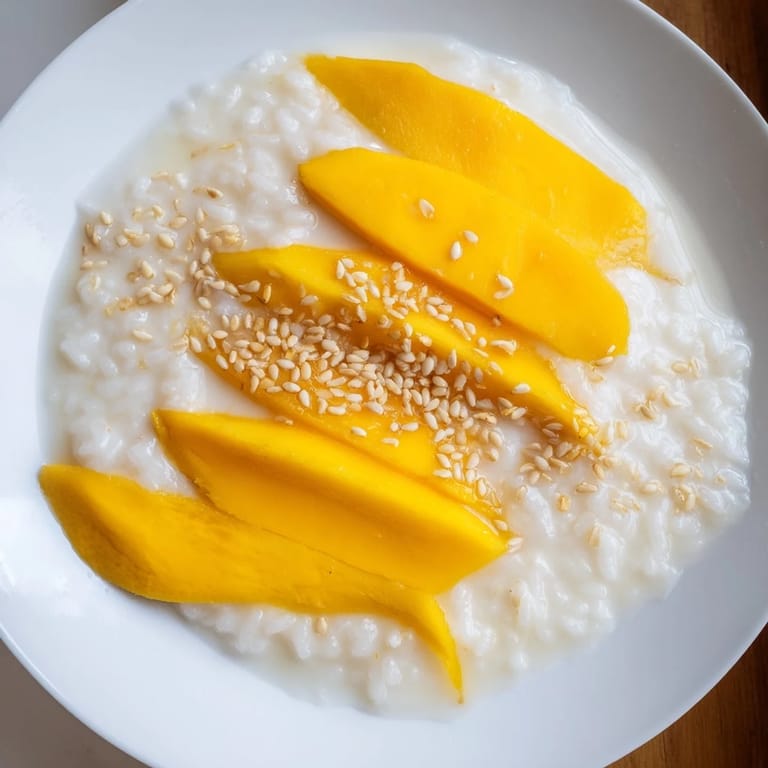
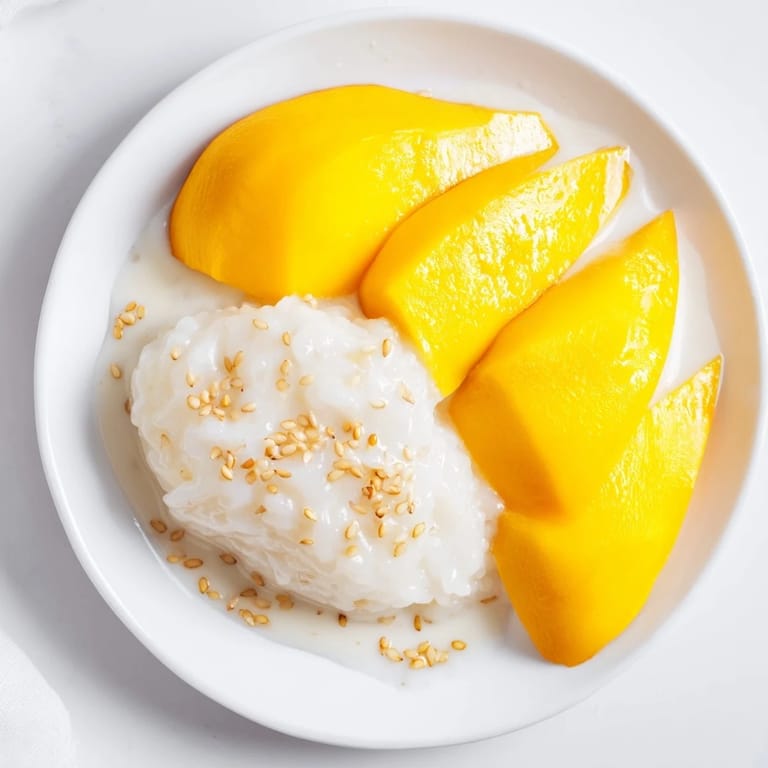
- Mound a generous portion of sticky rice on each plate, fan the mango slices alongside, then drizzle the reserved coconut sauce across both rice and mango. Finish with a small dollop of coconut cream and a scatter of sesame seeds or mung beans if you like.
 Save
Save Years ago, I brought this to a dinner party where someone's grandmother, who had lived in Thailand for decades, tasted it and simply nodded with approval. That moment—her quiet acknowledgment—meant more to me than any enthusiastic compliment. Food that feels authentic carries its own language, one that transcends words.
The Secret of Texture
The magic happens in the minutes after the hot rice meets the warm coconut sauce. That resting period isn't passive—the grains are actively drinking in the coconut, softening further, becoming almost creamy without falling apart. I learned this by watching a street vendor in Chiang Mai pack the rice into a mound, then wait, then serve it. Patience here is an ingredient.
Choosing the Right Mango
Thai desserts live and die by fruit quality, and mango is no exception. A truly ripe mango should feel almost delicate in your palm, fragrant near the stem, with golden or peachy undertones in its skin. If you buy underripe mangoes, they'll taste woody and bitter, undercutting everything else. I've learned to buy mangoes a day early and let them sit on the counter—patience pays off.
Variations and Personal Tweaks
While the traditional version is nearly perfect as written, small changes can reflect your mood or what's available. Some people stir a pinch of vanilla into the coconut sauce, others brush the mango slices with a tiny drizzle of honey. Pandan leaves, steeped in the steaming water, add an almost floral fragrance that's subtle but unforgettable. These aren't departures from the recipe—they're conversations with it.
- Try palm sugar instead of granulated sugar for a deeper, more complex sweetness that some say tastes more authentically Thai.
- Toast mung beans instead of sesame seeds for an earthier, more protein-forward garnish.
- If you have pandan extract or leaves, a hint of it transforms the rice into something even more fragrant.
 Save
Save This dessert has taught me that the simplest meals, made with intention and good ingredients, are the ones people remember. Serve it warm or at room temperature, and watch how quickly plates empty.
Recipe Help
- → How do you prepare the sticky rice properly?
Rinse the glutinous rice until water runs clear, soak for at least 4 hours or overnight, then steam until tender for optimal texture.
- → Can I substitute palm sugar for granulated sugar?
Yes, using palm sugar in the coconut sauce adds a richer, more fragrant flavor to the rice.
- → What is the purpose of soaking the rice beforehand?
Soaking ensures even cooking and softens the grains, yielding the signature sticky texture once steamed.
- → Is there an alternative garnish to toasted sesame seeds?
Toasted mung beans can also be used to add a subtle crunch and nutty flavor as garnish.
- → How can the coconut sauce be prepared without boiling?
Heat the coconut milk gently over medium heat, stirring until sugar dissolves, then remove from heat to prevent curdling.