 Save
Save I discovered this dish during a particularly uninspired evening when I was supposed to impress a handful of friends with something special. Staring at my kitchen counter, I noticed a brilliant crimson beet sitting next to a can of chickpeas, and suddenly the idea struck: what if I could transform something so earthy and humble into something that looked like edible art? The result was this velvet rose—a beet hummus so silky and jewel-toned that people genuinely believed I'd spent hours fussing in the kitchen. In reality, it took barely more than an hour, most of that time just waiting for the oven to do its thing.
There's a particular magic in watching people's faces light up when they realize that deep crimson swirl on the plate is something they can actually eat. I served this at a dinner party where one guest was convinced I'd ordered it from a fancy caterer. Watching her bite into a radicchio leaf piled with hummus and hearing that small gasp of delicious surprise—that's when I knew this recipe was worth keeping.
Ingredients
- 1 large beet (about 200g): The star of the show—roasting concentrates its natural sweetness and creates that stunning ruby color. Don't skip the foil wrapping; it keeps the beet moist and speeds up the process.
- 1 can (400g) chickpeas: They're the backbone of creaminess here. Always drain and rinse them well to avoid a gummy texture.
- 2 tbsp tahini: This is what makes the hummus feel luxurious instead of grainy. Raw tahini gives the cleanest, purest taste.
- 2 tbsp extra-virgin olive oil: Quality matters here since it's not being cooked. A fruity oil adds subtle depth.
- 1 small garlic clove, minced: Less is more—one clove keeps things balanced and lets the beet shine.
- Juice of 1 lemon: The acid cuts through richness and brightens everything, preventing the hummus from tasting flat.
- 1/2 tsp ground cumin: A whisper of warmth that echoes Mediterranean kitchens without overwhelming.
- Salt and black pepper: Taste as you go; you'll probably want more salt than you think.
- 2–3 tbsp cold water: Add this gradually to achieve that silky, spoonable consistency.
- Radicchio leaves: The bitter snap of radicchio is the perfect counterpoint to the sweet, creamy hummus.
- Flaky sea salt and optional garnish: Edible petals or microgreens transform this from appetizer to art piece.
Tired of Takeout? 🥡
Get 10 meals you can make faster than delivery arrives. Seriously.
One email. No spam. Unsubscribe anytime.
Instructions
- Roast your beet until it's completely tender:
- Wrap it in foil and let the oven do the work at 400°F for 40–45 minutes. You'll smell that sweet, earthy aroma filling your kitchen—that's how you know it's coming along. Cool it until you can handle it, then the skin practically slides off with a gentle rub.
- Build the hummus base:
- Toss the cooled beet chunks, drained chickpeas, tahini, olive oil, minced garlic, lemon juice, cumin, salt, and pepper into your food processor. Pulse and blend until there are no visible chunks, scraping down the sides occasionally so everything gets incorporated evenly.
- Achieve the perfect texture:
- Add cold water one tablespoon at a time, blending after each addition until the hummus becomes silky and spreadable. Stop when it has a luxurious, mousse-like consistency—thicker than peanut butter but thinner than cookie dough.
- Taste and fine-tune:
- This is your moment to adjust the flavors. More lemon for brightness, more salt for depth, or a tiny pinch of smoked paprika if you're feeling adventurous.
- Create the rose shapes:
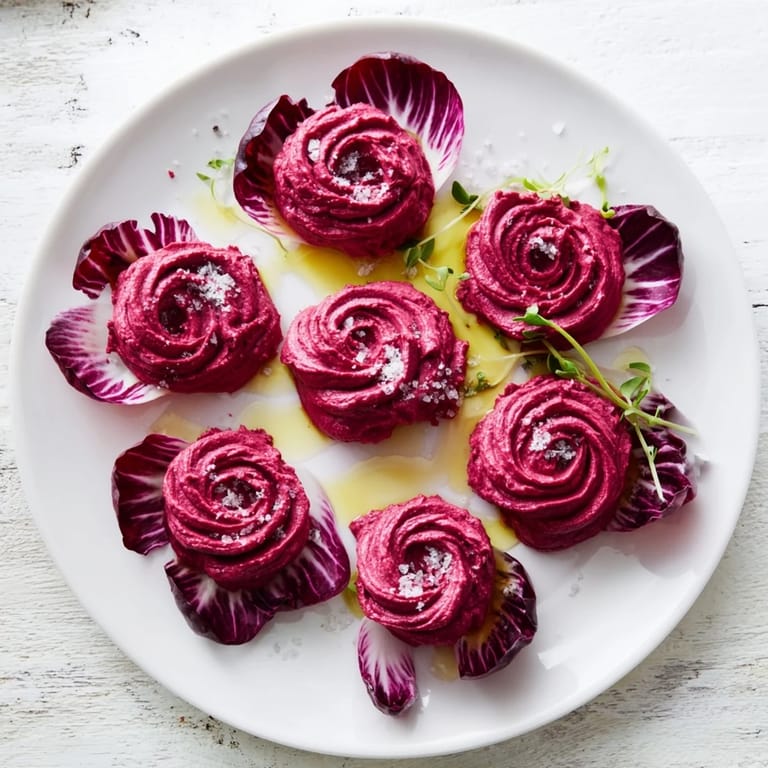
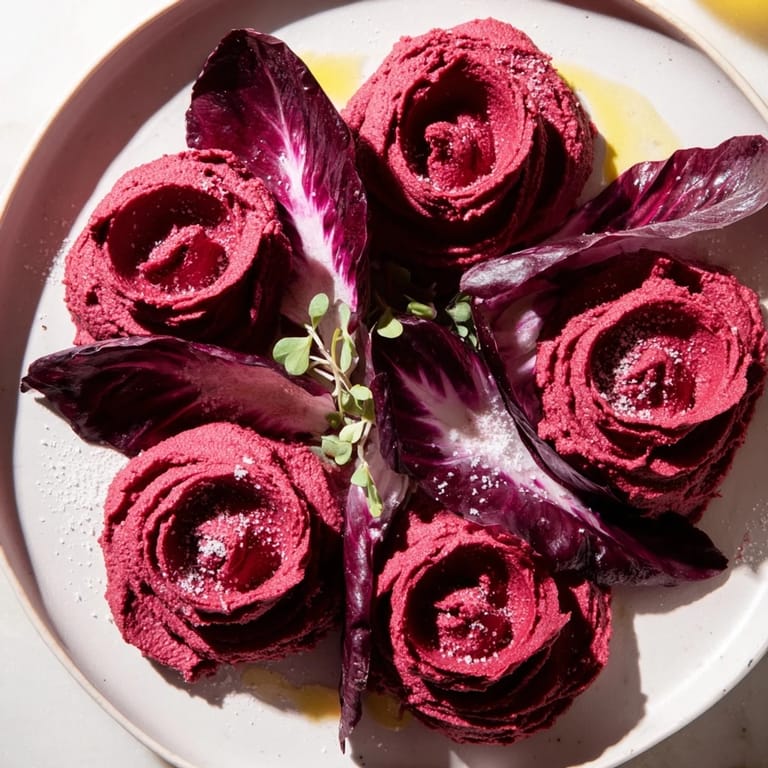
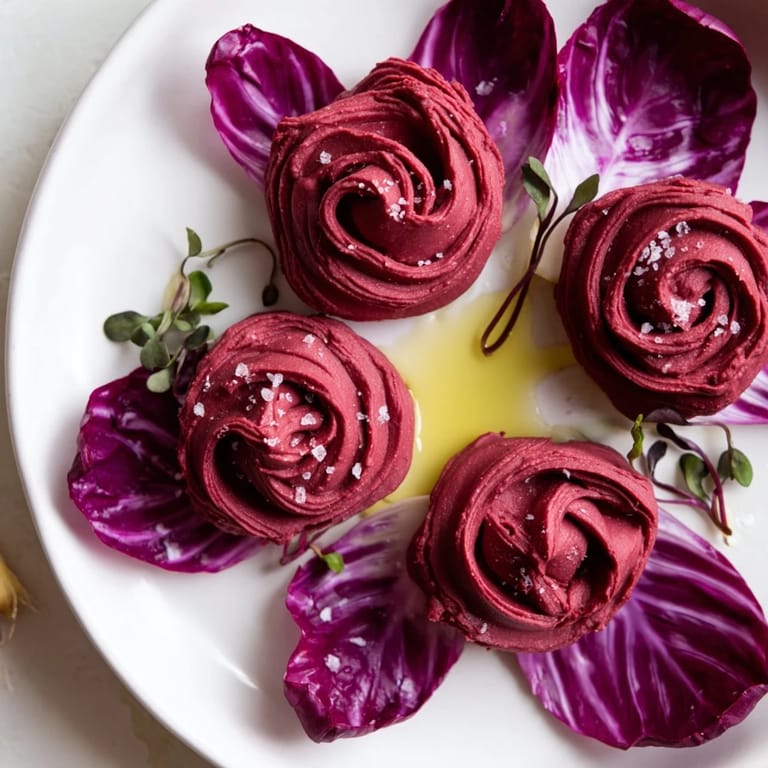
- A piping bag with a large star tip makes this effortless—pipe in concentric circles to create a rose bloom on your serving plate. If you don't have a piping bag, use a spoon to swirl it artfully instead; it won't look like a rose, but it will still taste wonderful.
- Arrange the radicchio and finish:
- Position the separated radicchio leaves around your hummus roses like petals and leaves of an actual flower. Drizzle with olive oil, sprinkle flaky sea salt, and add microgreens or edible petals if you have them on hand.
 Save
Save I'll never forget when my partner tasted this for the first time and asked if it was actually beets—they'd expected something savory and instead found sweetness wrapped in earthiness. That moment of pleasant surprise is exactly what this dish delivers every single time.
Why Beet Hummus Deserves a Spot in Your Rotation
Most appetizers demand either a ton of advance preparation or sacrifice of the senses—bland finger foods that disappear without being remembered. This one breaks that mold entirely. The visual impact alone makes it a conversation starter, but the flavor is equally compelling: creamy, complex, naturally sweet from the beet, and balanced with just enough acid and earthiness to feel sophisticated. It's the kind of appetizer that makes people ask for the recipe before they've even finished their plate.
Variations and Substitutions You Can Explore
Chickpeas are the traditional base, but white beans create an even silkier texture if you prefer something milder. Some cooks use roasted cashews blended in for extra richness, though this shifts the flavor profile slightly. The radicchio leaves are beautiful and bitter, but endive, Belgian endive, or even thin slices of beet chips work wonderfully if you want to adjust the flavor balance. I've even served this alongside pita chips for guests who wanted something sturdier to scoop with.
Making This Ahead and Presentation Tips
The hummus actually improves over 24 hours in the fridge as flavors meld together—just keep it covered so it doesn't dry out or absorb other scents. The day of serving, let it come to room temperature for about 15 minutes before piping; cold hummus is too stiff to swirl gracefully. A large, shallow white or neutral-colored plate is your best friend here because it creates maximum contrast with the deep crimson hummus.
- If you're not confident with piping, practice on parchment paper first so you get a feel for the pressure and angle needed.
- Assemble this appetizer no more than 2–3 hours before guests arrive to keep the radicchio leaves crisp and fresh.
- Set out a small spoon or fork so people can easily load hummus onto their radicchio leaf without making a mess.
 Save
Save This velvet rose has become my go-to when I want to serve something that feels special without spending all evening in the kitchen. It's proof that the most impressive dishes are often the simplest ones, built from ingredients that respect each other and let their true colors shine.
Recipe Help
- → How do I achieve the rose shapes with beet hummus?
Use a piping bag fitted with a large star tip to pipe the hummus onto the plate in circular motions, creating petal-like swirls.
- → Can I prepare the beet ahead of time?
Yes, roasting the beet a day in advance allows flavors to deepen and makes peeling easier on the day of serving.
- → What can I substitute for radicchio leaves?
Endive, Belgian endive, or pita chips make excellent alternatives, offering crisp texture and complementing flavor.
- → How can I enhance the flavor of the beet hummus?
Add a pinch of smoked paprika or increase the lemon juice for a brighter, smokier depth.
- → Is this dish suitable for gluten-free diets?
Yes, the ingredients are naturally gluten-free, making it safe for gluten-sensitive individuals.
- → What tools are essential for this preparation?
An oven for roasting beets and a food processor for blending are key, along with a piping bag if shaping the hummus roses.