 Save
Save My neighbor once handed me a jar of doubanjiang through the fence, insisting I try it that night. I had no idea what I was doing, but the smell alone—salty, funky, slightly sweet—made me brave. That first attempt at mapo tofu was messy, too salty, and absolutely unforgettable. The numbing tingle from the Sichuan peppercorns caught me off guard, and I've been chasing that electric warmth ever since.
I made this for a friend who claimed she didn't like tofu. She ate two bowls, scraping the sides for every last bit of sauce, then texted me the next day asking for the recipe. Watching her eyes light up at that first spoonful, the way she fanned her mouth and reached for more rice anyway, reminded me why I love cooking spicy food for people. It's the kind of heat that makes you laugh and keep going.
Ingredients
- Silken or soft tofu: Drain it gently and cube it with care; silken tofu is delicate but soaks up the sauce beautifully, while firm tofu holds its shape if you're worried about it falling apart.
- Ground pork or beef: This adds richness and a savory depth, though I've skipped it entirely on vegetarian nights and never missed it once the doubanjiang kicks in.
- Sichuan doubanjiang: The soul of this dish, this fermented chili bean paste is salty, spicy, and funky in the best way; don't skimp or substitute with regular chili paste.
- Soy sauce: A splash of umami that ties everything together, but go easy since the doubanjiang is already salty.
- Shaoxing wine: It adds a subtle sweetness and depth; dry sherry works in a pinch, or just use a bit more broth if you're skipping alcohol.
- Sugar: Just a teaspoon balances the heat and brings out the complexity of the bean paste.
- Chicken or vegetable broth: Low-sodium is key here so you can control the saltiness; I learned that the hard way after my first overly salty batch.
- Cornstarch slurry: This thickens the sauce just enough to cling to the tofu without turning it gloopy; stir it right before adding or it'll settle.
- Sichuan peppercorns: Toast them until they smell like citrus and wood smoke, then grind them fresh for that signature numbing tingle.
- Vegetable oil: A neutral base that lets the aromatics and spices shine.
- Garlic and ginger: Minced fine, these two create the fragrant backbone of the dish; I always prep more than I think I need.
- Scallions: Separate the whites and greens; the whites cook down into sweetness, the greens stay bright and fresh on top.
- Dried red chilies: Optional, but they add a smoky heat that layers beautifully with the doubanjiang.
- Steamed jasmine rice: The perfect fluffy canvas for all that spicy, saucy goodness.
Tired of Takeout? 🥡
Get 10 meals you can make faster than delivery arrives. Seriously.
One email. No spam. Unsubscribe anytime.
Instructions
- Prep everything first:
- Drain and cube your tofu, whisk together the cornstarch slurry, and chop all your aromatics so you're not scrambling once the heat is on. Separate those scallion whites and greens into two piles; trust me, it makes a difference.
- Toast and grind the peppercorns:
- Heat your dry pan over medium, toss in the Sichuan peppercorns, and shake them until they smell like a forest after rain. Grind them in a mortar and pestle and set aside; this step is where the magic starts.
- Build the aromatic base:
- Pour the oil into your wok or skillet, then add the scallion whites, garlic, and ginger. Stir for about a minute until your kitchen smells like a Sichuan street market.
- Brown the meat:
- If you're using ground pork or beef, add it now and break it apart with your spatula until it's browned and crumbly. Skip this step entirely if you're going vegetarian; the sauce will carry you.
- Bloom the doubanjiang:
- Stir in the chili bean paste and dried chilies, cooking for a minute or two until the oil turns a deep, fiery red. This is the moment the dish announces itself.
- Add the liquids:
- Pour in the Shaoxing wine, soy sauce, sugar, and broth, then bring everything to a gentle simmer. The sauce will start to come together, darkening and thickening just a bit.
- Simmer the tofu:
- Slide the tofu cubes in gently, spooning sauce over them like you're tucking them in. Let them simmer for 5 minutes, stirring carefully so they don't break apart; they'll soak up all that bold flavor.
- Thicken the sauce:
- Give your cornstarch slurry a quick stir, then drizzle it into the pan while stirring gently. The sauce will thicken and cling to the tofu in seconds, glossy and perfect.
- Finish with peppercorns and scallions:
- Sprinkle the ground Sichuan peppercorns and half the scallion greens over the top. The numbing heat and fresh bite bring everything into focus.
- Serve hot:
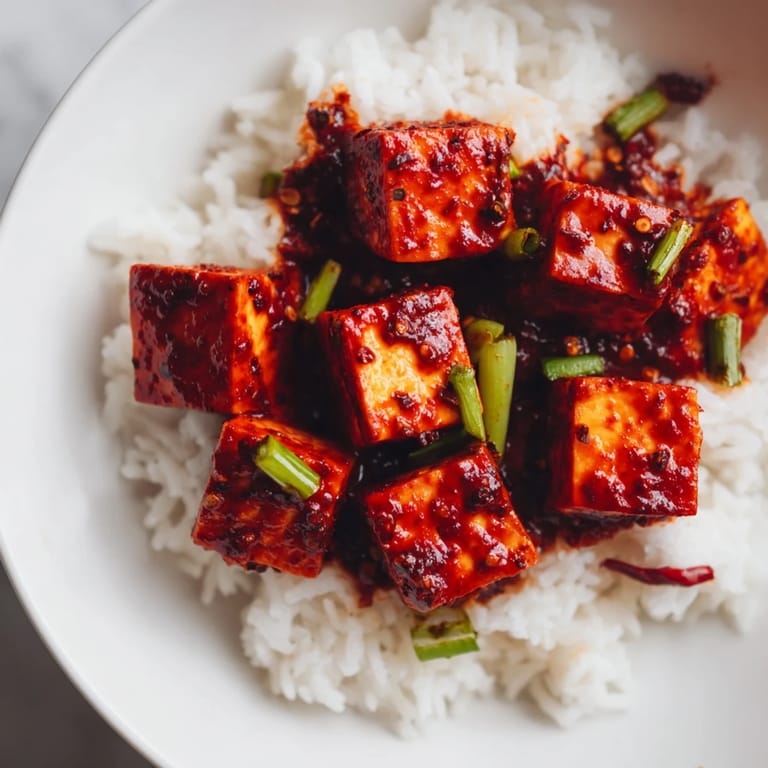
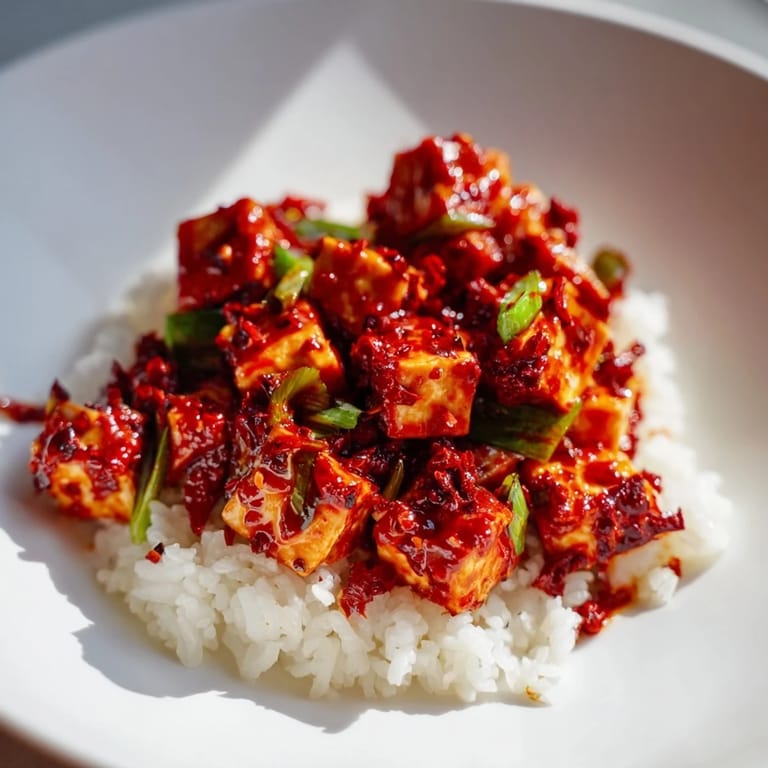
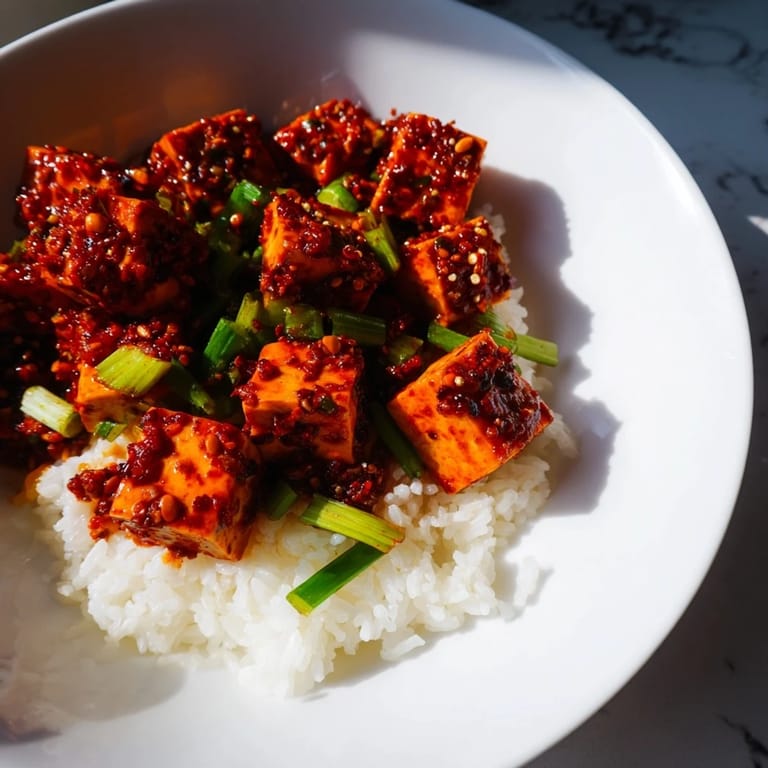
- Spoon the mapo tofu over steamed rice, garnish with extra scallions and a drizzle of chili oil if you're feeling bold. Serve immediately while it's still bubbling.
 Save
Save One winter night, I served this to my family after a long, cold day. We sat around the table, bowls steaming, faces flushed from the heat, passing extra scallions and chili oil back and forth. No one talked much; we just ate, laughing every time someone reached for more water. That quiet, spicy togetherness is what this dish means to me now.
Choosing Your Tofu
Silken tofu is traditional and melts into the sauce with a custardy softness, but it's fragile and can break if you stir too hard. Firm tofu holds its shape beautifully and is easier to handle, especially if you're new to this dish. I've made it both ways and loved each for different reasons; silken feels luxurious, firm feels reliable. Drain whichever you choose and handle it gently, like you're carrying something precious.
Adjusting the Heat
The spice level is entirely in your hands. Start with less doubanjiang and fewer dried chilies, then taste and add more if you're brave. I once made a mild version for my mother and a fiery one for myself, dividing the batch halfway through; she was grateful, I was sweating, and we both finished our bowls. The numbing tingle from the Sichuan peppercorns is separate from the heat, so even a milder version will have that signature electric buzz.
Pairing and Serving
Steamed jasmine rice is non-negotiable; it soaks up the sauce and cools your mouth between bites. A crisp, slightly off-dry Riesling cuts through the heat and complements the funky saltiness of the doubanjiang beautifully. I've also served this with stir-fried greens and a cold cucumber salad, both of which add a refreshing contrast to the bold, numbing spice.
- Have extra rice ready; everyone will want seconds once they taste the sauce.
- Set out chili oil and extra scallions so people can customize their heat level.
- Serve it immediately while it's still bubbling; this dish loses its magic when it sits too long.
 Save
Save This dish taught me that heat isn't just about burning your tongue; it's about layers, tingles, and the way a good meal makes you feel alive. I hope it does the same for you.
Recipe Help
- → What type of tofu works best for this dish?
Silken or soft tofu is ideal for the delicate texture, but firm tofu can also be used to maintain shape during cooking.
- → How do Sichuan peppercorns affect the flavor?
They add a unique numbing sensation and a citrusy aroma that balances the fiery heat from the chili bean paste.
- → Can I make this dish vegetarian?
Yes, omit meat and use vegetarian chili bean paste along with vegetable broth for a plant-based version.
- → What is the purpose of Shaoxing wine in the sauce?
It deepens the flavor complexity, adding subtle sweetness and umami that enhances the overall richness.
- → How can I adjust the spice level?
Modify the amount of chili bean paste and dried chilies to suit your preferred heat intensity.
- → What is the best way to serve this dish?
Serve it hot over steamed jasmine rice, garnished with scallion greens and a drizzle of chili oil if desired.