 Save
Save My kitchen still smells like that Sunday when my neighbor brought over her lasagna and I realized I'd been making it all wrong for years. She laughed when she caught me layering the ricotta straight from the bowl, lumpy and uneven, and showed me how a little egg transforms it into something silky that spreads like butter. That one tip changed everything, and now when I make lasagna, I think about her standing at my counter with flour on her sleeve, turning what I thought was a perfectly good dish into something genuinely spectacular.
I made this for my sister's book club once, thinking I'd impress people with something simple and foolproof. What I didn't expect was for four people to ask for the recipe, or for my sister to brag about it to me like I'd won an award. She still mentions the time I brought "that lasagna" to every family gathering, which is equal parts embarrassing and wonderful because it made me realize comfort food isn't about being fancy—it's about showing up for people with something that makes them feel cared for.
Ingredients
- Ground beef and Italian sausage: The sausage brings herbal notes and fat that meat sauce needs, while beef adds earthiness—together they're more interesting than either alone.
- Crushed tomatoes and tomato sauce: One gives texture, the other adds body, and the paste concentrates flavor without thinning things out.
- Ricotta cheese: It's milder and creamier than cottage cheese, which matters because this isn't about sharpness, it's about softness layered with savory.
- Mozzarella cheese: Low moisture mozzarella shreds better and melts into those golden bubbles; the block kind sits in watery puddles and you'll notice.
- Parmesan cheese: Grated fresh, not from a shaker, because the shaker kind has cellulose and won't melt properly into the ricotta mixture.
- Lasagna noodles: No-boil saves time and honestly works fine, but regular noodles give you more control if you like them slightly firmer.
- Fresh parsley: It brightens the ricotta layer so it doesn't taste flat; dried works if that's what you have, just use half the amount.
Tired of Takeout? 🥡
Get 10 meals you can make faster than delivery arrives. Seriously.
One email. No spam. Unsubscribe anytime.
Instructions
- Set the stage:
- Preheat your oven to 375°F and lightly oil a 9x13 baking dish while it heats. If you're using regular noodles, get water boiling now so everything moves smoothly when it's time to layer.
- Build the sauce foundation:
- Heat a good glug of olive oil in a large skillet over medium heat, then soften your onion until it's translucent and starting to smell sweet. Add garlic and let it bloom for just a minute—you want fragrant, not burnt.
- Brown the meat:
- Add your beef and sausage together, breaking everything into small pieces with a wooden spoon as it browns. This takes about 8 minutes and shouldn't be rushed because browning is where flavor lives.
- Simmer the soul of it:
- Pour in both tomato products, the paste, and all your seasonings, then let it bubble gently for 15 to 20 minutes, stirring now and then. The sauce should smell deep and complex, not sharp or raw.
- Make the cheese layer creamy:
- In a bowl, combine ricotta, egg, Parmesan, parsley, salt, and pepper, stirring until the egg is completely incorporated and everything looks smooth. This is the part that transforms ricotta from grainy to luxurious.
- Layer with intention:
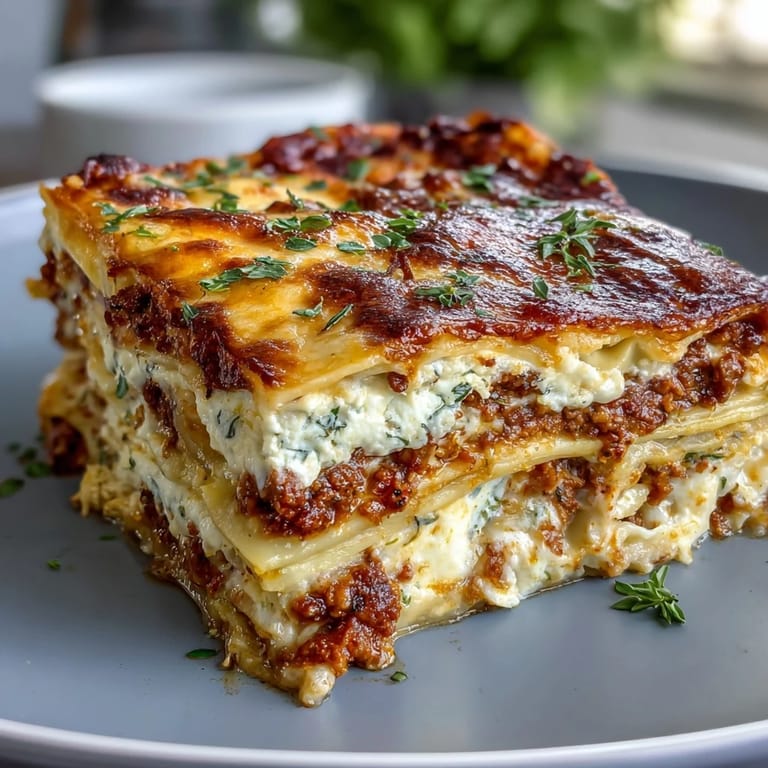
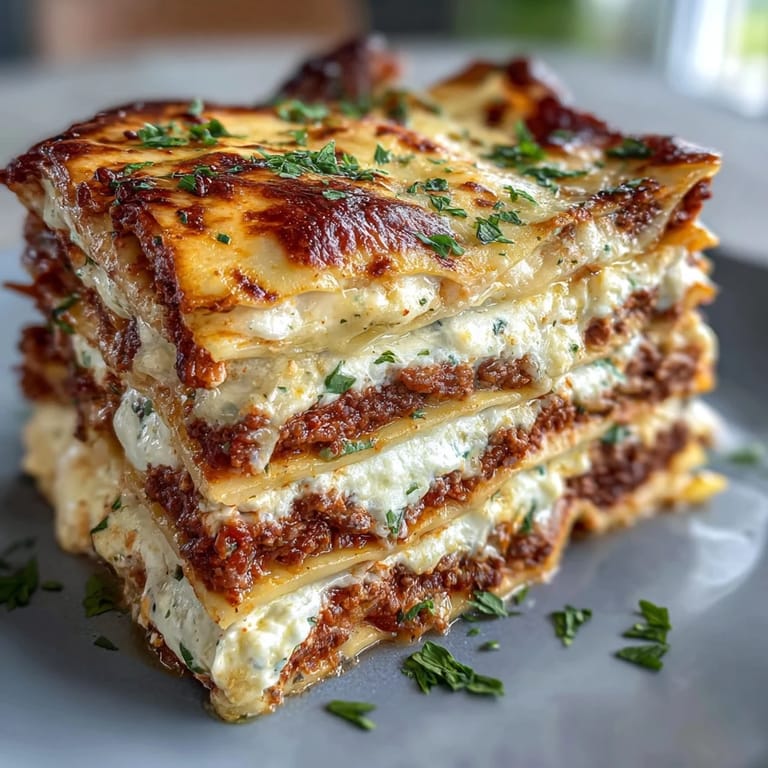
- Spread a cup of meat sauce on the bottom of your dish, then lay down four noodles, then a third of the ricotta mixture, then more sauce, then mozzarella. Repeat this pattern twice more until your dish is full and gorgeous.
- Bake covered, then revealed:
- Cover tightly with foil and bake for 25 minutes so the noodles soften gently, then remove the foil and bake another 20 minutes until the cheese is bubbly and the edges are golden brown.
- The hardest step:
- Let it rest for 15 minutes before you cut into it—this lets everything set so you don't end up with lasagna soup. I know it's painful, but it's worth it.
 Save
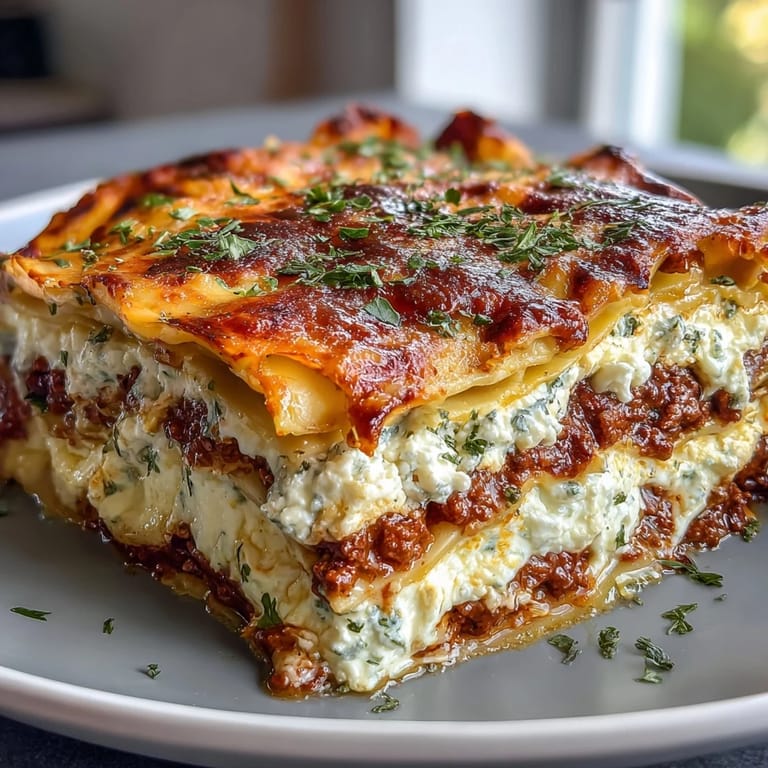
Save There's a moment about ten minutes after you pull lasagna from the oven when your kitchen smells so good that people drift in from other rooms asking questions. That smell—the caramelized cheese edges, the slow-cooked tomato, the warmth of herbs—that's when you know you've made something that matters. It's not complicated or fancy, but it's the kind of food that makes people feel like they're being taken care of.
Making Ahead and Leftovers
Build your lasagna the morning you want to bake it, cover it with foil, and refrigerate until evening—the noodles soften slightly from the moisture and everything melds together even better. Cold lasagna actually reheats beautifully because the flavors have had time to settle and agree with each other. I've heated leftovers in a 350°F oven for 20 minutes covered with foil, and they taste exactly as good as fresh, maybe better if you're someone who likes flavors to deepen overnight.
Variations That Work
Ground turkey can replace some of the beef if you want something lighter, though you'll lose a bit of richness so add an extra splash of olive oil when browning. For vegetarian, skip the meat entirely and sauté a big handful of chopped spinach, diced zucchini, and sliced mushrooms in that same pan—cook them down first so they release their water and don't make your sauce watery. Some people add a pinch of nutmeg to the ricotta layer, which sounds strange until you taste it and realize it adds a whisper of elegance that nobody can quite name.
What Pairs Beautifully With This
A robust red wine like Chianti or Sangiovese sits beside lasagna like they were made for each other, cutting through the richness while complementing the tomato. A simple green salad with sharp vinaigrette balances all that cream and meat, and garlic bread is never going to be wrong here. If you want to drink something non-alcoholic, cold lemon water or sparkling water with fresh mint feels right.
- Cook the meat sauce a day ahead and refrigerate it—flavors develop overnight and you'll move faster the next day.
- Use a 9x13 dish specifically because a smaller pan makes it too thick and a larger one too thin to bake evenly.
- Let the finished lasagna rest even if you're starving, because those 15 minutes let everything set so it actually stays together on the plate.
 Save
Save This lasagna has become the thing people ask for when they want to feel held by their food, and that's exactly what it should be. Make it for someone you love, or make it for yourself on a night when you need to know you're worth the time and butter and care.
Recipe Help
- → How long should the lasagna rest before serving?
Let the lasagna rest for 15 minutes after baking to allow the layers to set and make slicing easier.
- → Can I use no-boil noodles in this dish?
Yes, no-boil noodles can be used to save prep time, just layer them directly as directed.
- → What can be substituted for ground beef and sausage?
Ground turkey works well for a lighter version, and vegetables like spinach, zucchini, or mushrooms can create a vegetarian option.
- → How can I make the meat sauce more flavorful?
Simmer the sauce longer to deepen flavors and consider adding herbs like oregano and basil along with garlic and onions.
- → What cheese mixture is used in the layers?
The cheese mixture includes ricotta, Parmesan, egg, parsley, salt, and pepper, creating a creamy and flavorful layer.