 Save
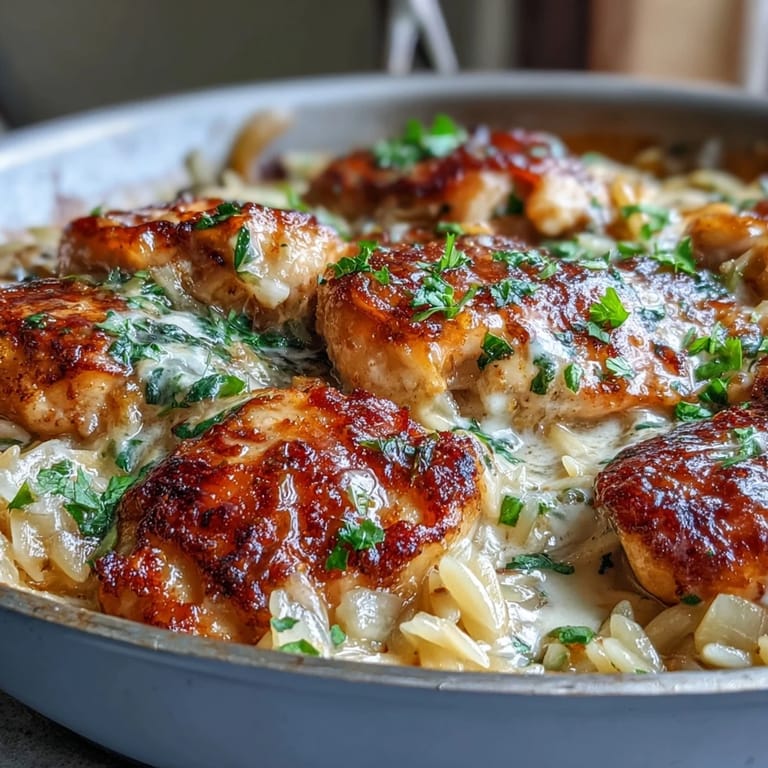
Save There's something about a one-pot dinner that feels like a small victory at the end of a long day. I stumbled onto this creamy garlic Parmesan chicken orzo combination on a Tuesday night when I had chicken thighs in the fridge, half a box of orzo tucked away, and absolutely no energy for juggling multiple pans. What started as improvisation became the kind of meal I now make without thinking, the one that somehow tastes even better than it sounds.
I made this for my neighbor Sarah on a chilly October evening after she'd mentioned being tired of the usual rotation. She brought wine, I brought this steaming skillet to her kitchen, and we stood around her counter talking longer than expected, both of us reaching for just one more forkful while it was still warm. That's when I knew this recipe had staying power.
Ingredients
- Boneless, skinless chicken thighs or breasts (1 lb, cut into bite-size pieces): Thighs stay more forgiving if you accidentally overcook them, but breasts work beautifully too if that's what you have on hand.
- Kosher salt (1 tsp), black pepper (½ tsp), and Italian seasoning (1 tsp): This simple seasoning blend is your friend; it lets the chicken shine without overpowering anything else.
- Olive oil (1 tbsp): Just enough to get a good sear on the chicken and build those flavorful browned bits that make the sauce taste deeper.
- Garlic (4 cloves, minced) and yellow onion (1 small, finely diced): These two are the backbone of everything; don't skip mincing the garlic finely so it distributes evenly throughout the sauce.
- Baby spinach (1 cup, roughly chopped): Optional, but I almost always include it because it wilts right in and adds a gentle earthiness that balances the richness.
- Orzo pasta (1½ cups): The small, rice-shaped pasta soaks up the cream sauce beautifully and cooks right in the skillet, absorbing all that savory broth.
- Low-sodium chicken broth (3 cups): Low-sodium lets you control the salt level as you go, which matters more than you'd think with the Parmesan adding its own salty punch.
- Heavy cream (½ cup) and unsalted butter (2 tbsp): These create the silky sauce base; the butter gets bloomed with the aromatics first, so it carries their flavor forward.
- Freshly grated Parmesan cheese (¾ cup): This is the moment where buying pre-shredded versus fresh-grating actually makes a difference; fresh-grated melts more smoothly and tastes brighter.
- Fresh parsley (2 tbsp, chopped) and extra Parmesan for serving: The parsley adds a fresh green note right at the end, cutting through the richness in the best way possible.
Tired of Takeout? 🥡
Get 10 meals you can make faster than delivery arrives. Seriously.
One email. No spam. Unsubscribe anytime.
Instructions
- Season your chicken generously:
- Toss your bite-size chicken pieces with salt, pepper, and Italian seasoning in a bowl, coating everything evenly. This step takes 30 seconds but sets the stage for deeper flavor.
- Sear the chicken until it's golden:
- Heat olive oil in your large skillet or Dutch oven over medium-high heat, then add the chicken in a single layer. Let it sit undisturbed for 2 to 3 minutes before stirring, which gives it that beautiful golden crust; cook for 5 to 7 minutes total until cooked through, then transfer to a plate and set aside.
- Build the aromatic base:
- Reduce heat to medium, add butter to the pan, then sauté your diced onion for about 3 minutes until it softens and turns translucent. Add the minced garlic and cook for just 1 minute until fragrant, being careful not to let it brown.
- Toast the orzo lightly:
- Stir the uncooked orzo into the pan with all those savory bits, and let it toast for 1 to 2 minutes while stirring. You'll notice the pasta will start to smell toasted and nutty, which adds a subtle depth to the final dish.
- Add broth and bring to a gentle simmer:
- Pour in your chicken broth and use a wooden spoon to scrape up all the caramelized bits clinging to the bottom of the pan. Bring everything to a gentle boil, then reduce the heat and let it simmer with the lid on.
- Cook the orzo until tender:
- Let it simmer covered for 8 to 10 minutes, stirring occasionally, until the orzo is al dente and most of the liquid is absorbed. You want a little liquid left because it'll help the cream sauce come together.
- Return the chicken and finish the sauce:
- Add the seared chicken and any juices back to the pan, then stir in the heavy cream and freshly grated Parmesan. If you're using spinach, add it now and watch it wilt right in.
- Simmer gently until creamy:
- Stir frequently for 2 to 3 minutes until the sauce is silky and everything is heated through. Taste and adjust seasoning with extra salt and pepper if needed.
- Finish and serve:
- Remove from heat, garnish with fresh chopped parsley and extra Parmesan, and serve immediately while it's steaming hot.
 Save
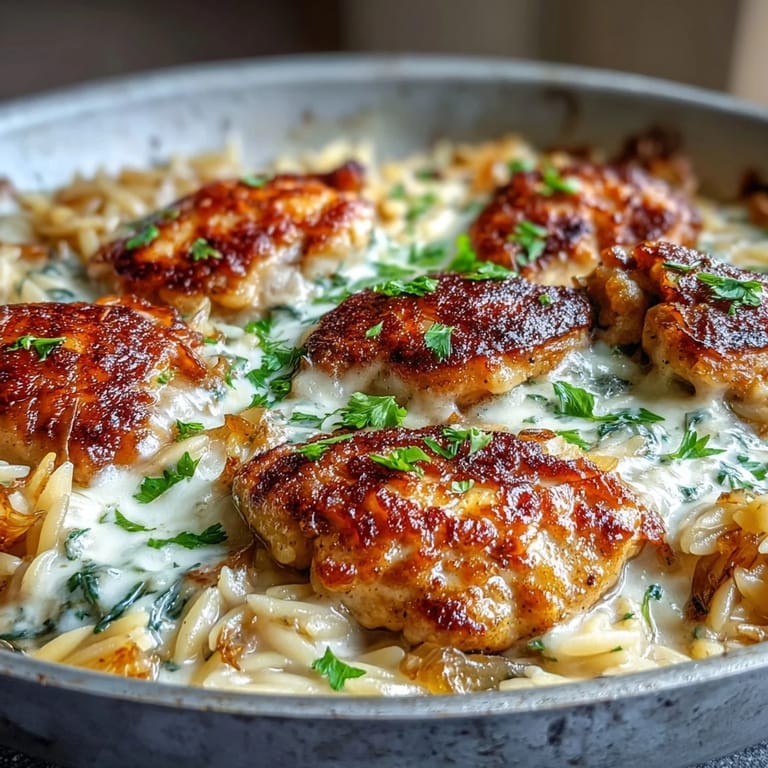
Save My sister called me during a particularly rough week and asked what I was making for dinner. When I told her about this recipe, she drove over with wine and stayed to cook it with me, and somehow by the time we were twirling pasta onto our forks, the day felt a lot lighter. Food does that sometimes—it's not just about being fed, it's about the company and the comfort of knowing someone cared enough to show up.
Why Fresh Parmesan Really Matters
The first time I made this with pre-shredded Parmesan, the sauce turned grainy and separated slightly, and I couldn't figure out why. Turns out those anti-caking agents in shredded cheese don't play well with heat and cream. After switching to freshly grated, the sauce transformed into something silky and luxurious, melting seamlessly into the cream without any grittiness. It's one of those small details that feels trivial until you taste the difference.
The Art of the Perfect Sear
Getting a proper golden crust on the chicken is what gives this entire dish its depth. The key is patience—don't move the chicken around obsessively in the pan, just let it sit for a few minutes undisturbed so it can actually make contact with the hot surface and caramelize. That crust isn't just pretty; it's flavor, and it's what carries through the whole finished dish in subtle, satisfying ways.
Customizing to Your Mood
This recipe is genuinely flexible without falling apart. Some nights I toss in sliced mushrooms or diced bell peppers with the onions, and other times I use half-and-half instead of heavy cream if I'm feeling like something lighter. You could swap the orzo for ditalini or even small pasta shells, or skip the spinach entirely if you're not in the mood for it.
- Roasted vegetables on the side make this feel like a complete dinner without adding complexity to the one-pot situation.
- A squeeze of fresh lemon juice right before serving brightens everything up and cuts through the richness beautifully.
- If you're cooking for someone who loves garlic, don't hesitate to add an extra clove or two; this dish is forgiving enough to handle it.
 Save
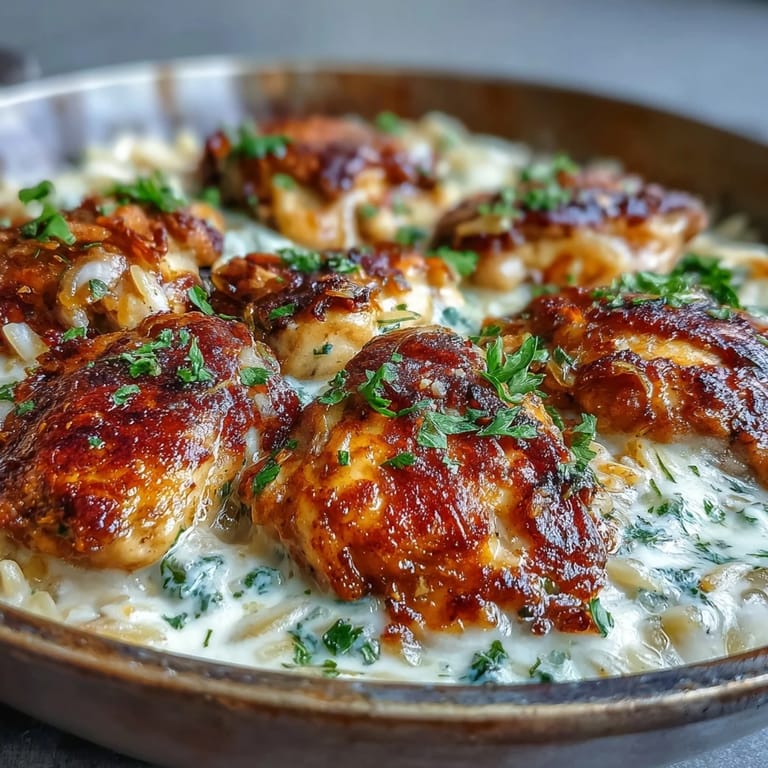
Save This one-pot creamy garlic Parmesan chicken orzo has become the meal I reach for when I want something that feels both comforting and a little bit special, all without the stress. It's the kind of dinner that makes you feel like you did something good for yourself and whoever's sitting across the table.
Recipe Help
- → Can I use chicken breasts instead of thighs?
Yes, boneless skinless chicken breasts work perfectly. Just be careful not to overcook them since they dry out faster than thighs. Cut into bite-size pieces and sear until golden—about 4–6 minutes total.
- → What pasta can I substitute for orzo?
Small pasta shapes like ditalini, small shells, or even broken spaghetti work well. Adjust cooking time slightly based on pasta size and add more broth if needed for larger shapes.
- → How do I store and reheat leftovers?
Store in an airtight container in the refrigerator for up to 4 days. Reheat gently with a splash of cream or broth to restore the creamy consistency. The orzo will continue absorbing liquid, so leftovers become thicker.
- → Can I make this lighter?
Absolutely. Substitute half-and-half or whole milk for heavy cream. You can also increase the vegetable content with bell peppers, mushrooms, or zucchini to add bulk without extra calories.
- → Why toast the orzo before adding liquid?
Toasting the orzo in butter for 1–2 minutes before adding broth enhances its nutty flavor and helps the pasta hold its texture better during simmering, preventing it from becoming mushy.
- → Can I freeze this dish?
Freezing isn't recommended because cream sauces can separate when thawed and the orzo texture becomes quite soft. This dish is best enjoyed fresh or refrigerated for a few days.