 Save
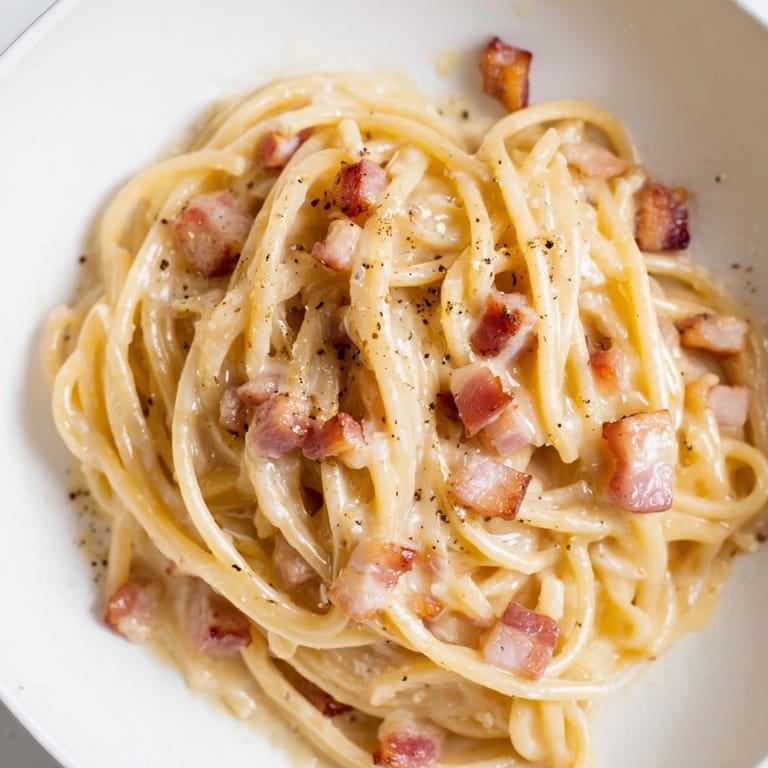
Save Carbonara taught me that some of the best meals come from accident and impatience. I was starving one weeknight, the kitchen felt too warm, and I didn't want to spend an hour cooking. So I threw together what I had: eggs, Parmesan, bacon, and spaghetti. What emerged was creamy, rich, and done in twenty minutes flat. Now whenever I make it, I'm reminded that the fastest dishes are sometimes the ones that taste like they took all day.
I made this for someone who claimed they hated cooking. They stood at my stove watching the eggs coat every strand of pasta, and something shifted. By the time we sat down, they were convinced it was restaurant-quality. That's when I realized carbonara isn't just food; it's a small act of confidence that gets shared across a table.
Ingredients
- Spaghetti: 200 g dried pasta is the foundation, and al dente is non-negotiable—it should have a slight resistance when you bite it, which helps it hold the sauce.
- Eggs: Two large eggs are all you need, and they must be fresh because they're doing the heavy lifting as your sauce.
- Parmesan cheese: 40 g freshly grated, never pre-shredded, because the powder gets clumpy and the sauce turns grainy instead of creamy.
- Black pepper: 1/4 teaspoon freshly ground, which adds bite and complexity that pre-ground pepper can't match.
- Bacon or pancetta: 100 g diced into small pieces so it renders evenly and crisps up beautifully throughout the pasta.
- Extra Parmesan and black pepper: For garnish at the end, because the first bite deserves the best finishing touch.
Tired of Takeout? 🥡
Get 10 meals you can make faster than delivery arrives. Seriously.
One email. No spam. Unsubscribe anytime.
Instructions
- Start the water and whisk the sauce:
- Bring a pot of salted water to a rolling boil—it should taste like the sea. While it heats, whisk the eggs, Parmesan, and pepper together in a bowl until they're fully combined and creamy.
- Cook the pasta:
- Drop the spaghetti into the boiling water and cook according to package directions until it bends slightly when pressed but still has resistance. This is crucial because the pasta will finish cooking when it hits the hot pan.
- Crisp the bacon:
- In a large skillet over medium heat, add your diced bacon and cook it until the edges are golden and the fat is rendered, about 3 to 4 minutes. Remove the pan from heat immediately—this is your stage for the main event.
- Combine while it's hot:
- Reserve 80 ml of pasta water, then drain the spaghetti. Add the hot pasta to the bacon skillet (while it's still warm but off the heat) and immediately pour in the egg mixture. Toss vigorously, lifting and coating every strand, adding pasta water a splash at a time until the sauce becomes silky and clings to the pasta like it was born together.
- Plate and serve:
- Move this to bowls immediately while it's still steaming, then shower each one with fresh Parmesan and cracked black pepper.
 Save
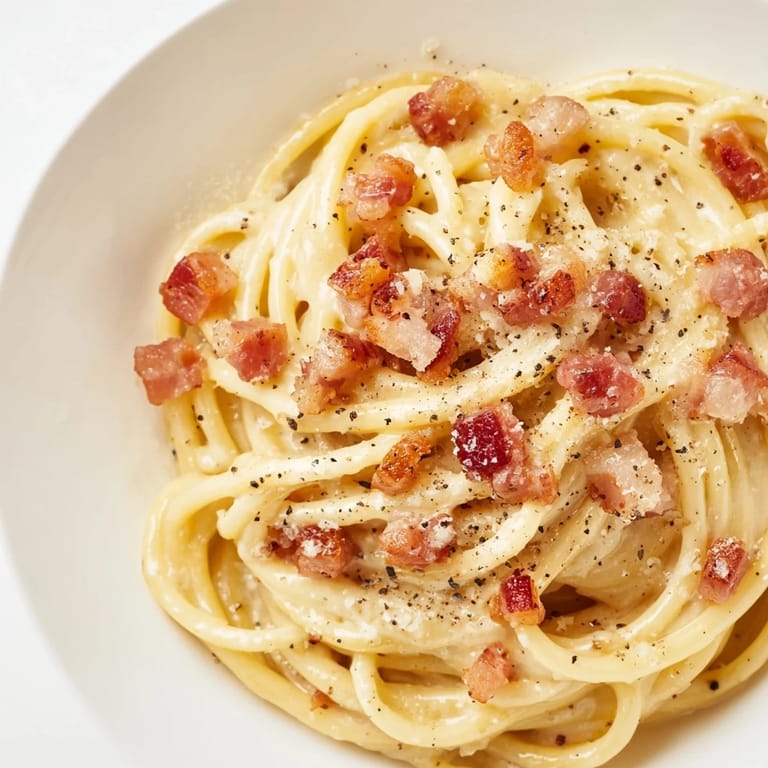
Save There's a moment when you're tossing the pasta and the eggs suddenly transform into something glossy and coating every strand, and you realize you've just made magic in a skillet. That moment is when carbonara stops being a recipe and becomes a reason to cook.
Timing Is Everything
Carbonara doesn't have a pause button. Every element needs to work in sync—the pasta drains at the exact moment the bacon is crispy, the skillet is warm but off the heat, and your hands are ready to toss. The first time I made this, I got distracted and the bacon cooled down too much, which meant the pasta didn't reach the right temperature to finish cooking. Now I treat it like a small performance, and the meal tastes better because I'm fully present for it.
The Sauce Philosophy
What makes carbonara different from other pasta sauces is that it's not a sauce in the traditional sense—it's an emulsion that happens the moment the hot pasta meets cold eggs and starch. This is why it feels luxurious without being heavy, and why it tastes better than you'd expect from such simple ingredients. The trick is respecting the science: hot pasta, off-heat cooking, and enough pasta water to build a creamy coating that clings rather than pools.
Variations and Thoughts
Some versions add garlic, mincing a clove and cooking it with the bacon before removing it so the flavor lingers without the texture. Pecorino Romano is the more authentic choice if you want a sharper, saltier edge, while Parmesan gives you a milder, slightly sweeter carbonara. The basics work perfectly as written, but these small swaps let you adjust the dish to what your taste buds are craving on any given night.
- If you want more depth, add a minced garlic clove to the bacon, then remove it before adding the pasta.
- Pecorino Romano swaps in beautifully for a more authentic, peppery bite.
- Always add the pasta water gradually and taste as you go, because you want a silky coating, not a soup.
 Save
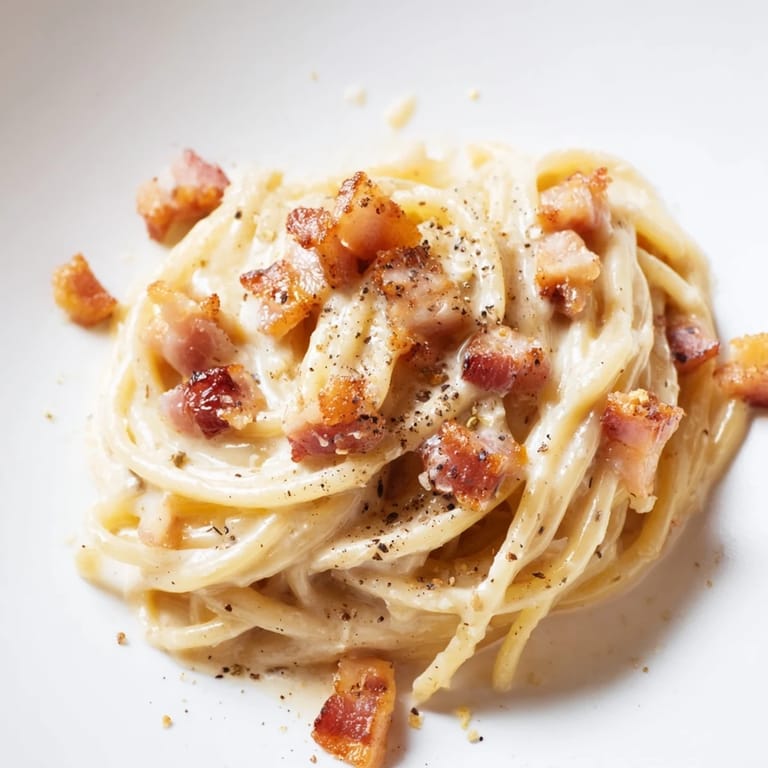
Save Carbonara is proof that great food doesn't need complexity, just respect for its ingredients and timing. Make it tonight.
Recipe Help
- → How do I prevent the eggs from scrambling in the sauce?
Toss the pasta and egg mixture off the heat and add reserved pasta water gradually to create a silky sauce without scrambling the eggs.
- → Can I substitute the bacon with another cured meat?
Pancetta is a classic alternative that provides similar texture and flavor to the bacon used in this dish.
- → What type of cheese works best in this sauce?
Freshly grated Parmesan is traditional, though Pecorino Romano offers a sharper, authentic flavor variation.
- → Is it necessary to reserve pasta water?
Yes, the reserved pasta water helps loosen the sauce and ensures a creamy, smooth coating on the spaghetti.
- → How long should the bacon be cooked for the ideal crispiness?
Cook diced bacon over medium heat for about 3 to 4 minutes until golden and crispy.