 Save
Save My neighbor Maria taught me that minestrone isn't really a recipe so much as a conversation between you and whatever vegetables are sitting in your crisper drawer. One rainy October afternoon, she was simmering a pot of it while I watched from her kitchen counter, and she kept pausing to taste, add a pinch of this, swap out an ingredient for that. What struck me wasn't the technique but the ease of it all, the way she moved through the steps like she was having a casual chat with an old friend.
I made this for my sister during her first week living in a new city, when she was feeling overwhelmed and homesick. She had no proper kitchen setup, just my place, and I wanted something that would fill her apartment with warmth and smell like someone cared. Watching her lean over the pot and breathe in those herby tomato notes, seeing her shoulders relax just a little, that's when I understood why people have been making this soup for centuries.
Ingredients
- Olive oil: Don't skimp here, as those first few minutes of sautéing set the entire flavor foundation for everything that follows.
- Onion, carrots, and celery: This trio is the holy base of almost every good soup, and dicing them roughly the same size means they cook evenly.
- Garlic: Mince it fine so it melts into the oil and releases its sweetness without burning.
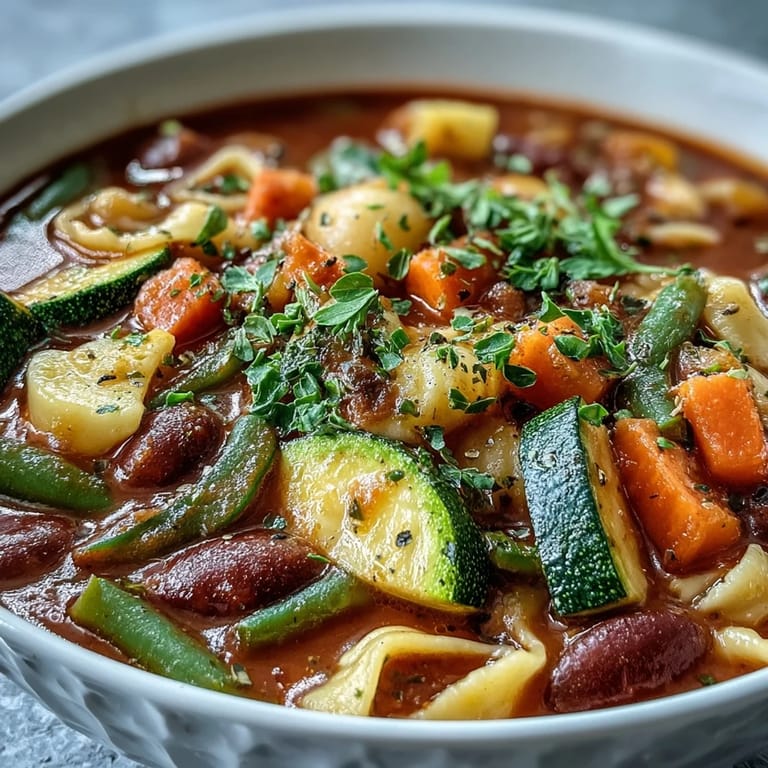
- Zucchini and green beans: These stay tender and add a subtle earthiness that balances the acidity of the tomatoes.
- Spinach or kale: Add this at the very end so it wilts into silky ribbons rather than turning dark and bitter.
- Diced tomatoes: Canned is perfectly fine here and often more consistent than fresh, especially outside of summer.
- Vegetable broth: Use good quality broth, as it's the backbone of flavor when paired with the herbs.
- Oregano, basil, and thyme: Dried herbs work beautifully in soups because the long simmering time extracts their full flavor.
- Bay leaf: This quietly adds depth that you don't notice until it's gone, so don't forget it.
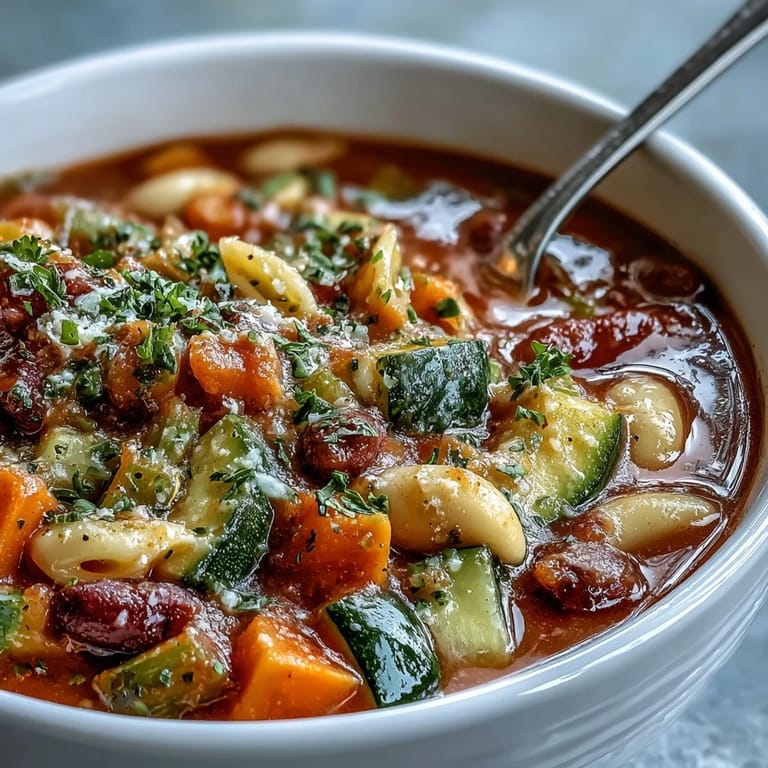
- Small pasta: Ditalini or small shells work best because they nestle into the broth and don't overwhelm each spoonful.
- Cannellini and kidney beans: Rinsing them removes excess starch and prevents the soup from becoming gluey.
- Parmesan and parsley: These finish the bowl with brightness and a sharp, salty contrast to the soft vegetables.
Tired of Takeout? 🥡
Get 10 meals you can make faster than delivery arrives. Seriously.
One email. No spam. Unsubscribe anytime.
Instructions
- Build the flavor base:
- Pour olive oil into a large pot and let it warm until it shimmers slightly. Add your diced onion, carrots, and celery, stirring occasionally so they soften into golden pieces over about 5 to 6 minutes, filling your kitchen with that unmistakable savory aroma.
- Layer in the next vegetables:
- Stir in minced garlic, zucchini, and green beans, cooking for another 3 to 4 minutes until the garlic becomes fragrant and the zucchini begins to soften at its edges.
- Bring in the broth and herbs:
- Add your canned tomatoes, vegetable broth, oregano, basil, thyme, bay leaf, and a generous seasoning of salt and pepper. Stir well and bring the whole pot to a rolling boil, then adjust the heat down to a gentle simmer.
- Let it simmer:
- Cover the pot and let it bubble softly for about 15 minutes, allowing the vegetables to become tender and the broth to deepen in flavor.
- Introduce the pasta and beans:
- Stir in your small pasta and both types of drained beans, then simmer uncovered for 10 to 12 minutes until the pasta reaches that perfect al dente texture, not mushy but still with a slight resistance to the tooth.
- Wilt the greens:
- Add your spinach or kale in the final minutes, stirring until the leaves surrender into soft, dark ribbons distributed throughout the soup. Fish out the bay leaf before tasting.
- Taste and adjust:
- Always taste before serving, as you might need a touch more salt, a crack of pepper, or even a whisper more oregano depending on the strength of your broth.
 Save
Save There's something almost sacred about serving a bowl of minestrone to someone you care about, the way it arrives warm and generous, asking nothing but to be eaten slowly. It's the kind of dish that says I took my time, I thought about you while cooking, without ever needing to say those words aloud.
The Beauty of Seasonal Swaps
One of the greatest gifts of minestrone is how it invites you to work with what's in season and what's hiding in your vegetable drawer. If you have potatoes, cube them and add them with the onion base so they soften completely. In autumn, butternut squash brings a subtle sweetness, and in spring, peas and asparagus lighten everything up and make it feel like a entirely different soup despite following the same basic steps. I've learned that the soup tastes more alive when you use vegetables at their peak, so rather than sticking rigidly to the recipe, let the seasons guide your hand.
Vegetarian Depth and Richness
The combination of beans, tomatoes, and that holy trio of onion, carrot, and celery creates such a complete savory depth that you won't miss any meat or stock. The beans bring protein and a subtle earthiness, while the tomatoes provide acidity and brightness that keeps the whole thing from feeling too heavy. I've served this to people who typically eat meat-forward meals, and they're often surprised by how satisfying and flavorful it is without any animal products at all.
Serving and Pairing Ideas
Minestrone feels most at home alongside something crispy and warm, preferably crusty bread that you can use to soak up every last bit of broth from your bowl. A light red wine like Chianti complements the herbal and tomato notes without overwhelming the delicate vegetables, though honestly, a glass of white wine works beautifully too. If you're feeling indulgent, drizzle each bowl with your best extra virgin olive oil and finish with a shower of fresh Parmesan, creating little pockets of richness in every spoonful.
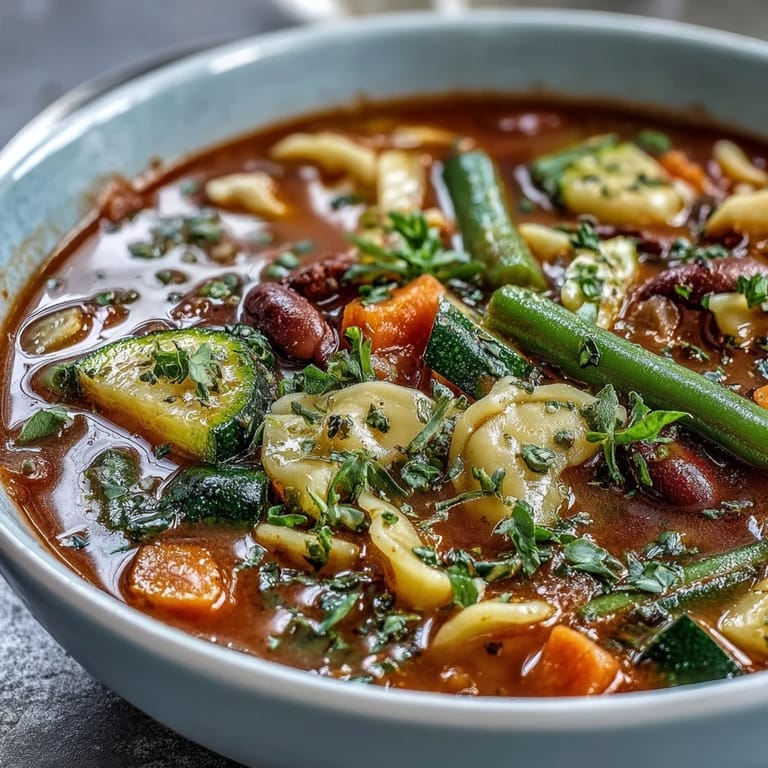
- Serve in shallow bowls rather than deep ones so the pasta and vegetables stay visible and the broth doesn't hide them away.
- Have the Parmesan and parsley at the table so people can customize their bowl to their preference.
- Make a double batch and freeze half in individual containers for a quick lunch on busy days.
 Save
Save Make this soup when you want to feel like you're taking care of someone, even if that someone is just you on a quiet evening at home. It's honest food, the kind that nourishes both body and spirit without pretense.
Recipe Help
- → What vegetables work best in minestrone?
Classic minestrone includes onions, carrots, celery, zucchini, green beans, and leafy greens like spinach or kale. You can also add potatoes, cabbage, or peas based on seasonality and preference.
- → Can I make minestrone soup ahead of time?
Yes, minestrone actually tastes better the next day as flavors meld together. Store in the refrigerator for up to 4 days. Note that pasta may absorb liquid, so you may need to add more broth when reheating.
- → What type of pasta should I use?
Small pasta shapes like ditalini, elbow macaroni, or small shells work best. They hold up well in the broth and are easy to scoop. For gluten-free versions, use rice or corn-based small pasta.
- → Is minestrone soup vegan?
The base soup is naturally vegan when made with vegetable broth. Simply omit the Parmesan cheese garnish or use a plant-based alternative to keep it completely vegan.
- → How do I store and freeze minestrone?
Refrigerate for up to 4 days in an airtight container. For freezing, consider cooking pasta separately and adding when reheating to prevent it from becoming mushy. Freezes well for up to 3 months.
- → What can I serve with minestrone soup?
Crusty Italian bread or focaccia is perfect for soaking up the flavorful broth. A light green salad with vinaigrette complements the hearty soup beautifully. For a complete Italian meal, pair with a glass of Chianti or other light red wine.