 Save
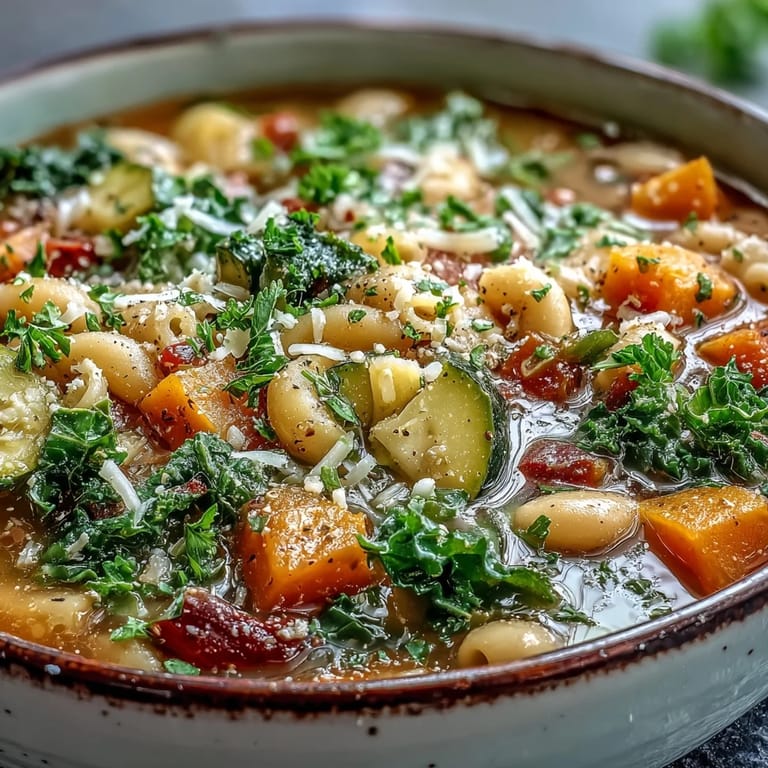
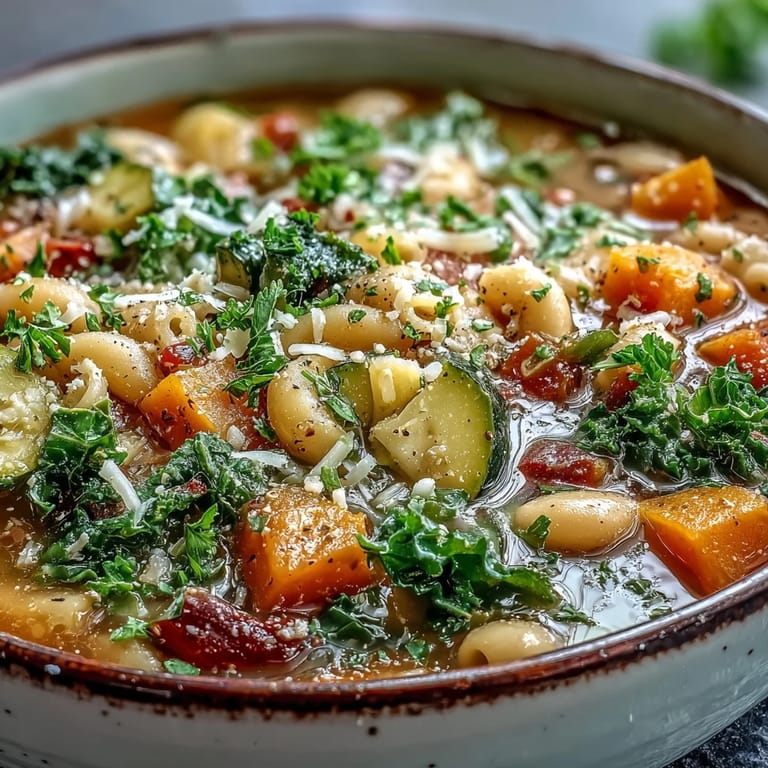
Save Winter Minestrone Soup is a hearty, comforting dish brimming with nourishing vegetables like kale and butternut squash. This flavorful Italian-style soup is the perfect choice for chilly days, offering a warm and wholesome meal that is both easy to prepare and deeply satisfying.
 Save
Save Combining traditional legumes and grains with a rich vegetable broth, this minestrone is a complete meal in a bowl. The addition of cannellini beans and small pasta ensures a filling texture that pairs beautifully with the earthy notes of dried oregano, thyme, and rosemary.
Ingredients
Tired of Takeout? 🥡
Get 10 meals you can make faster than delivery arrives. Seriously.
One email. No spam. Unsubscribe anytime.
- 2 tablespoons olive oil
- 1 medium yellow onion, diced
- 2 carrots, sliced
- 2 celery stalks, sliced
- 3 garlic cloves, minced
- 3 cups butternut squash, peeled and cubed
- 1 medium zucchini, diced
- 1 can (14 oz/400 g) diced tomatoes
- 4 cups kale, stems removed and leaves chopped
- 1 can (15 oz/425 g) cannellini beans, drained and rinsed
- 1 cup small pasta (such as ditalini or elbow macaroni)
- 6 cups vegetable broth
- 1 bay leaf
- 1 teaspoon dried oregano
- 1 teaspoon dried thyme
- 1/2 teaspoon dried rosemary
- Salt and pepper, to taste
- Freshly grated Parmesan cheese (optional garnish)
- Chopped fresh parsley (optional garnish)
- Crusty bread, for serving
Instructions
- Step 1
- Heat olive oil in a large pot over medium heat. Add onion, carrots, and celery. Sauté for 5 minutes until softened.
- Step 2
- Stir in garlic and cook for 1 minute until fragrant.
- Step 3
- Add butternut squash and zucchini. Cook for another 5 minutes, stirring occasionally.
- Step 4
- Pour in diced tomatoes, vegetable broth, bay leaf, oregano, thyme, and rosemary. Bring to a boil.
- Step 5
- Reduce heat to a simmer. Cover and cook for 15 minutes until the squash is just tender.
- Step 6
- Add beans, pasta, and kale. Simmer uncovered for 10-12 minutes, until pasta is cooked and kale is wilted.
- Step 7
- Remove bay leaf. Season with salt and pepper to taste.
- Step 8
- Ladle into bowls and top with Parmesan and parsley if desired. Serve with crusty bread.
Zusatztipps für die Zubereitung
For extra flavor, you can add a Parmesan rind to the soup while it is simmering; just remember to remove it before serving. Sautéing the base vegetables properly until softened helps to build a deep, savory foundation for the broth.
Varianten und Anpassungen
For a gluten-free version, use gluten-free pasta or omit the pasta entirely and add more beans. If you prefer a milder flavor, you can substitute fresh spinach for the kale.
Serviervorschläge
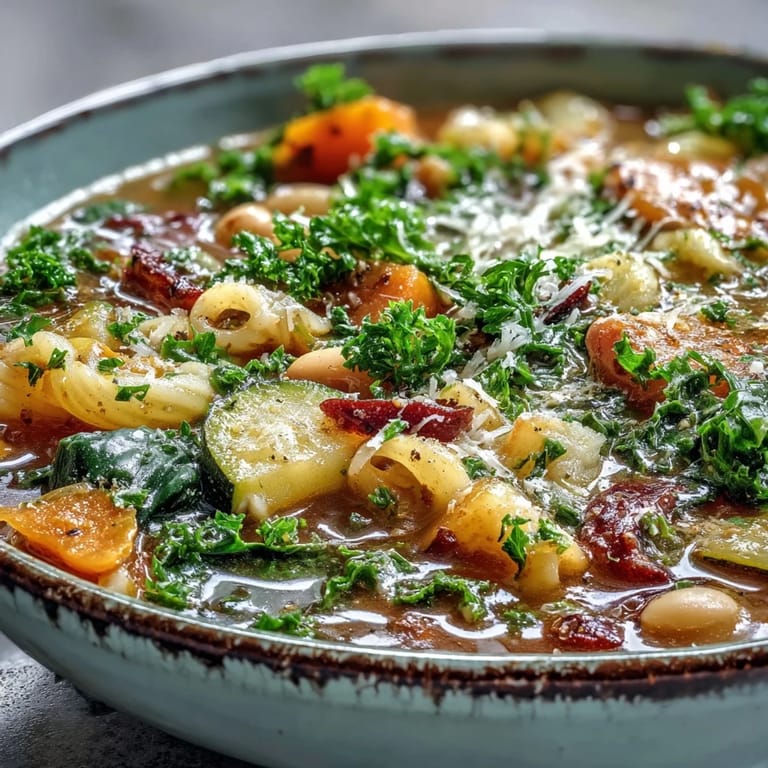
Ladle the hot soup into rustic bowls and garnish with a generous sprinkling of freshly grated Parmesan and chopped parsley. Serve alongside thick slices of crusty bread to soak up every drop of the nourishing broth.
 Save
Save 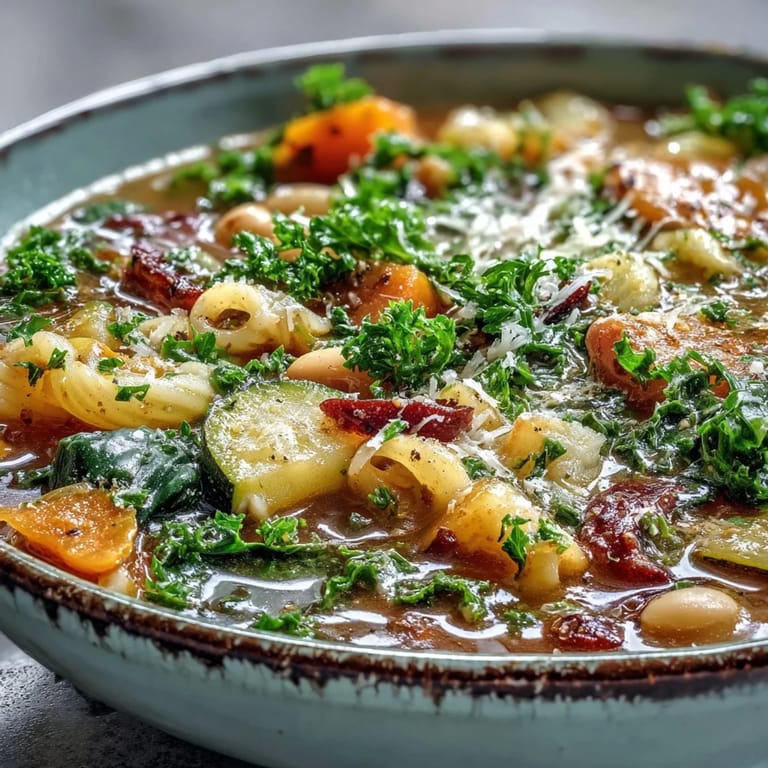 Save
Save This Winter Minestrone Soup is not only a nutritious meal but also a comforting staple for your cold-weather recipe collection. Enjoy the wholesome goodness of fresh vegetables in every spoonful.
Recipe Help
- → Can I make this minestrone gluten-free?
Absolutely. Simply substitute the regular pasta with your favorite gluten-free pasta shape, or increase the beans for an extra protein boost while keeping it completely grain-free.
- → How long does this soup keep in the refrigerator?
This hearty soup stores beautifully for 4-5 days in an airtight container. The pasta will absorb some liquid, so add a splash of broth when reheating to restore the perfect consistency.
- → Can I freeze winter minestrone?
Yes, though it's best to freeze without the pasta. Cook and freeze the vegetable base, then add freshly cooked pasta when reheating for the best texture. Freeze for up to 3 months.
- → What vegetables work best as substitutes?
Swap butternut squash for sweet potatoes or pumpkin. Replace kale with spinach, chard, or collard greens. Other winter vegetables like parsnips, turnips, or cabbage also work wonderfully.
- → How can I add more protein?
Add extra cannellini beans, stir in some chopped cooked chicken or Italian sausage during the last few minutes, or serve with a generous sprinkling of grated Parmesan for a protein boost.
- → What herbs can I use fresh instead of dried?
Fresh sage, rosemary, and thyme work beautifully. Use about three times the amount of fresh herbs compared to dried, adding them during the last 10 minutes of simmering to preserve their delicate flavor.