 Save
Save The first time I made okonomiyaki, I was standing in a cramped Tokyo apartment kitchen at midnight, watching my friend's grandmother demonstrate how to layer cabbage and batter with the confidence of someone who'd done it ten thousand times. She barely measured anything—just a glance, a pinch, a practiced hand. Years later, I recreated that same dish in my own kitchen, and suddenly I understood: it wasn't about precision, it was about the sizzle and the smell of things coming together. This Japanese savory pancake became my way of capturing that moment—the generosity, the simplicity, the magic of something humble turning golden and crispy on a griddle.
I brought a batch to a dinner party once, nervous because okonomiyaki isn't something most American home cooks make regularly. By the time guests finished their first bite—eyes widening at the contrast of textures, sauce dripping onto their plates—I knew this recipe had crossed over from "interesting Japanese dish" to "why aren't we making this every week?" Someone asked for seconds before finishing their first, and that's when I realized how foolproof it really is.
Ingredients
- All-purpose flour: The backbone of the batter—just 1 cup keeps things light and lets the cabbage shine instead of creating a heavy pancake.
- Dashi stock: This is the secret; even water works, but dashi adds an invisible layer of umami that makes people ask what your secret ingredient is.
- Eggs: Two large eggs bind everything and create structure so your pancake holds together when you flip it.
- Shredded cabbage: Three cups might sound like a lot, but it wilts down as it cooks and gives you that signature tender bite in every piece.
- Green onions and carrot: Both are optional, but green onions add a fresh bite that cuts through the richness of the sauce and mayo.
- Okonomiyaki sauce: If you can't find it, the sauce notes below will save you—homemade versions are honestly just as good and let you control the sweetness.
- Japanese mayonnaise: Kewpie mayo is thicker and richer than American brands; it makes a visible difference in the final dish.
- Bonito flakes: They dance from the residual heat, and that movement isn't just for show—it aerates them and makes them taste fresher.
- Aonori: Dried seaweed powder adds a briny, oceanic finish that feels authentically Japanese without overwhelming anything else.
Tired of Takeout? 🥡
Get 10 meals you can make faster than delivery arrives. Seriously.
One email. No spam. Unsubscribe anytime.
Instructions
- Whisk the base:
- Combine flour, dashi, eggs, salt, and baking powder in a large bowl until the batter is completely smooth with no floury streaks. This takes about a minute of whisking and ensures even cooking.
- Fold in the vegetables:
- Add shredded cabbage, green onions, carrot, and your protein of choice—shrimp, bacon, or nothing at all. Fold gently until everything is distributed evenly; you're not trying to break down the cabbage, just coat it in batter.
- Heat the skillet:
- Get a nonstick skillet to medium heat and add a small amount of oil—about 1/2 tablespoon. Let it heat until a drop of water sizzles on contact; this is your signal that the temperature is right.
- Form and cook the first side:
- Scoop roughly 1 cup of batter onto the hot skillet and gently shape it into a thick round pancake about 6 inches wide. Cook for 4 to 5 minutes without moving it; you want the bottom to turn deep golden brown and slightly crispy.
- Flip with confidence:
- Use a thin spatula to slide under the entire pancake in one smooth motion, then flip. The second side will cook slightly faster—about 4 to 5 minutes—and you'll know it's done when a gentle poke feels set but still tender.
- Repeat and finish:
- Transfer the cooked pancake to a plate and repeat with the remaining batter, adding more oil as needed between pancakes. This recipe makes four pancakes total.
- Top with intention:
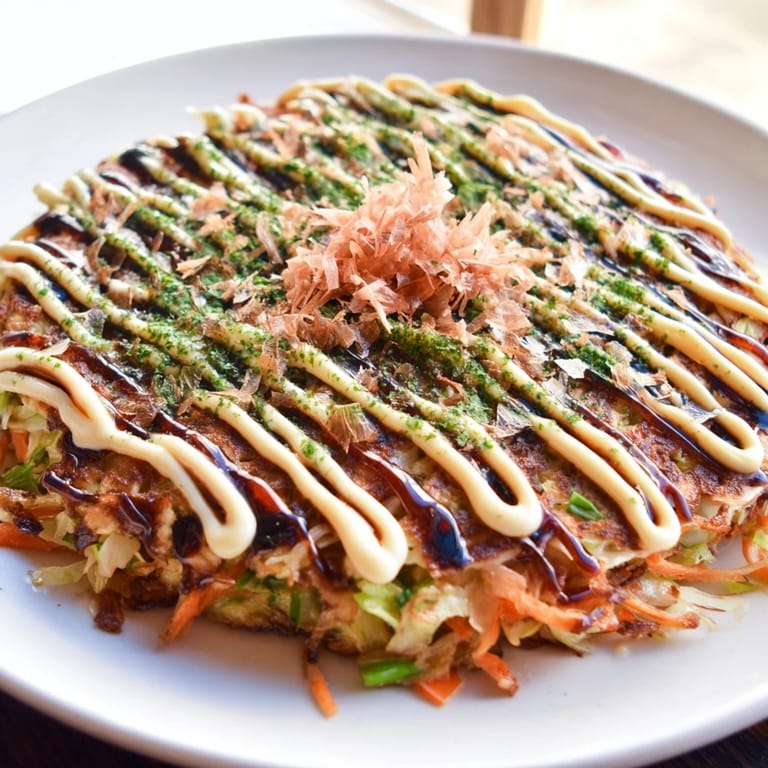
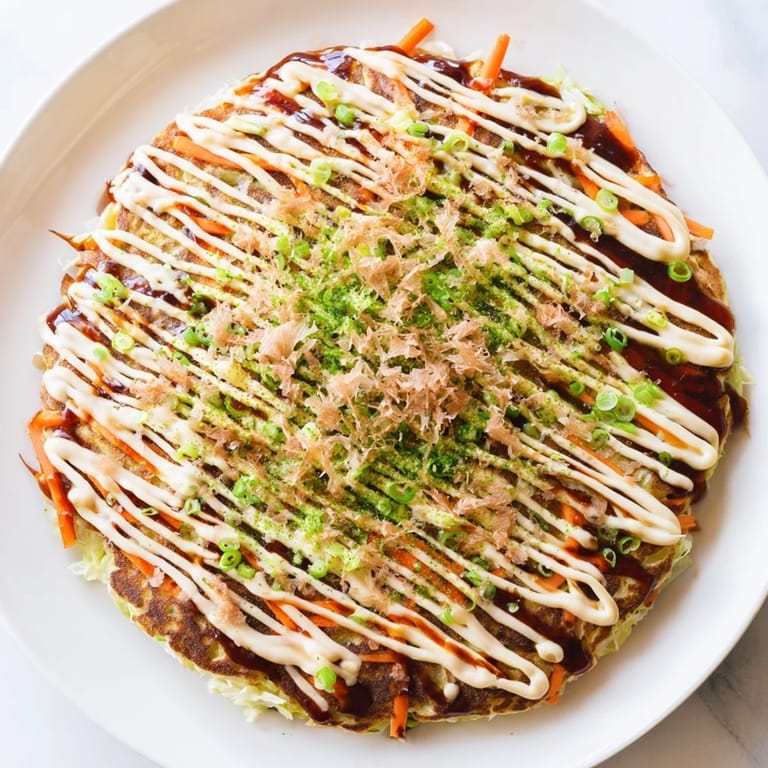
- Drizzle okonomiyaki sauce and Japanese mayo in a crosshatch pattern, then shower with bonito flakes, aonori, and pickled ginger if you have it. The heat will cause the bonito flakes to flutter and dance slightly—that's exactly what should happen.
 Save
Save There was a moment, maybe my fifth time making these, when everything aligned perfectly: the flip happened without hesitation, the color was exactly right, and someone at the table actually closed their eyes while eating. That's when I stopped thinking of okonomiyaki as a recipe to execute and started thinking of it as a small, edible celebration—something that brings people together without fuss or pretension.
The Art of the Flip
The flip is genuinely the moment of truth, and I'll be honest—I was terrified of it the first few times. But here's what I learned: a properly set bottom (golden, slightly crispy, cooked about 4 minutes) will flip without drama if you use a thin, flat spatula and commit to the motion in one smooth, confident slide underneath. Hesitation is what causes pancakes to stick or tear; decisiveness is what gives you that restaurant-quality presentation. The second side actually cooks slightly faster because the vegetables are already half-cooked and the batter sets more quickly on an already-hot surface.
Customizing Your Okonomiyaki
The beautiful thing about okonomiyaki is that it's genuinely flexible—more of a template than a rigid prescription. I've made versions with mushrooms and gobo root when I had them, versions with just cabbage and egg when I wanted something vegetarian, and versions loaded with leftover cooked shrimp because I had them on hand. The ratio of cabbage to batter is what matters; as long as you keep that balance, the pancake will hold together and cook properly. Think of it as a canvas where the cabbage is always the star and everything else is seasoning.
Sauce and Topping Strategy
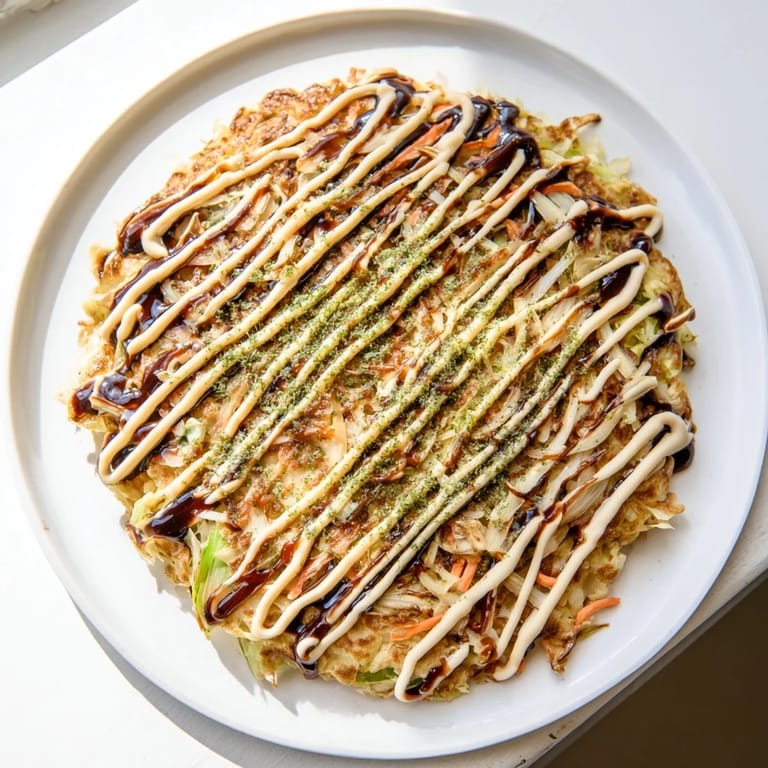
The toppings are where okonomiyaki transforms from good to unforgettable, and they're worth taking seriously. Use a squeeze bottle for the sauce and mayo if you have one—it gives you control and creates those beautiful zigzag patterns that look intentional and appetizing. The bonito flakes should go on last, right before eating, because they're delicate and honestly kind of magical when they respond to the heat of the pancake. Aonori adds a final flourish of umami and color; don't skip it even if you think you might not like seaweed. A few shreds of pickled ginger cut through the richness and add brightness, especially if you've been generous with the mayo. The combination of textures and temperatures—warm pancake, cool (or room-temperature) toppings, the slight acidity of pickled ginger—is what makes this dish sing.
- Make the okonomiyaki sauce from scratch if you have time: two parts ketchup, one part Worcestershire, a splash of soy sauce, and a teaspoon of sugar.
- Don't be shy with the mayo; it's a topping, not a garnish, and it's essential to the experience.
- Serve these hot, ideally on individual plates so people can add toppings to their preference.
 Save
Save Okonomiyaki is one of those recipes that rewards you for trying it—the first time might feel a little uncertain, but by the second or third pancake, you'll find your rhythm. It's food that brings people together without requiring pristine technique or fancy ingredients, which feels like the highest compliment any recipe can receive.
Recipe Help
- → What ingredients make the batter light and fluffy?
A combination of all-purpose flour, dashi stock, eggs, salt, and a bit of baking powder creates a smooth, airy batter ideal for these pancakes.
- → Can I customize the fillings?
Yes, shredded cabbage forms the base, while optional shrimp, bacon, and julienned carrots add flavor and texture according to preference.
- → How should the pancakes be cooked for best results?
Use a nonstick skillet over medium heat and cook each side 4–5 minutes until golden brown and cooked through.
- → What toppings enhance the flavor?
Traditional toppings include okonomiyaki sauce, creamy Japanese mayonnaise, smoky bonito flakes, dried seaweed flakes, and pickled ginger.
- → Is there a vegetarian alternative?
Omit shrimp, bacon, and bonito flakes, and increase the vegetable portion to maintain hearty texture and flavor.