 Save
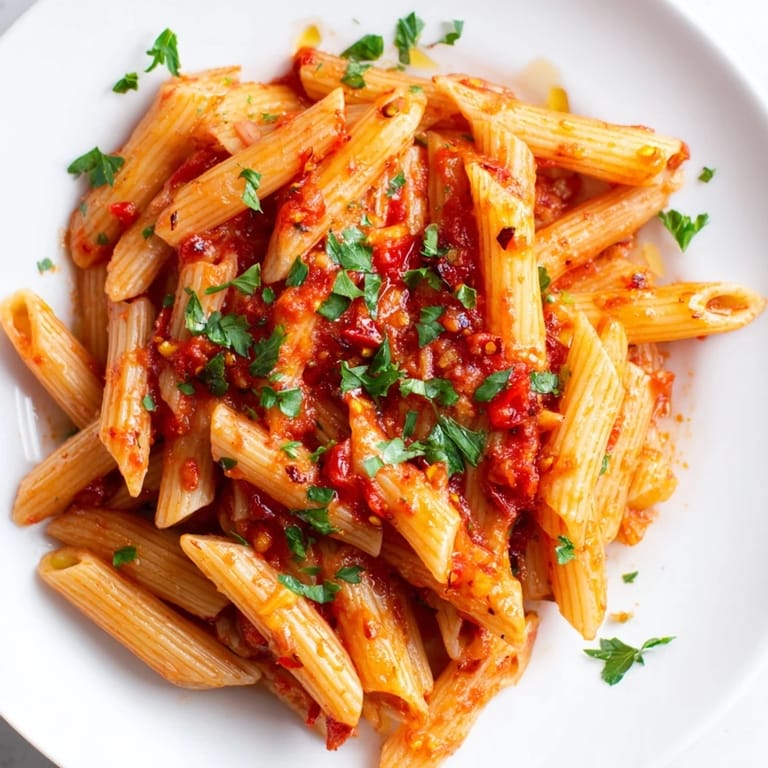
Save There's a night I won't forget—standing in a cramped Roman kitchen with barely a burner that worked, watching my neighbor toss penne in a pan so small it seemed impossible. She had three ingredients beyond the pasta and somehow made magic. That's when I understood that arrabbiata isn't about complexity; it's about respecting the fire on your tongue and the simplicity of good olive oil meeting hot garlic. This is the recipe that taught me less really can be more.
I made this for friends on a cold evening when we couldn't afford much, just pasta and pantry staples. Someone brought wine, someone lit candles, and by the end everyone was mopping their bowls with bread, asking for the secret. There was no secret—just that moment when people realize the best meals don't need pretension.
Ingredients
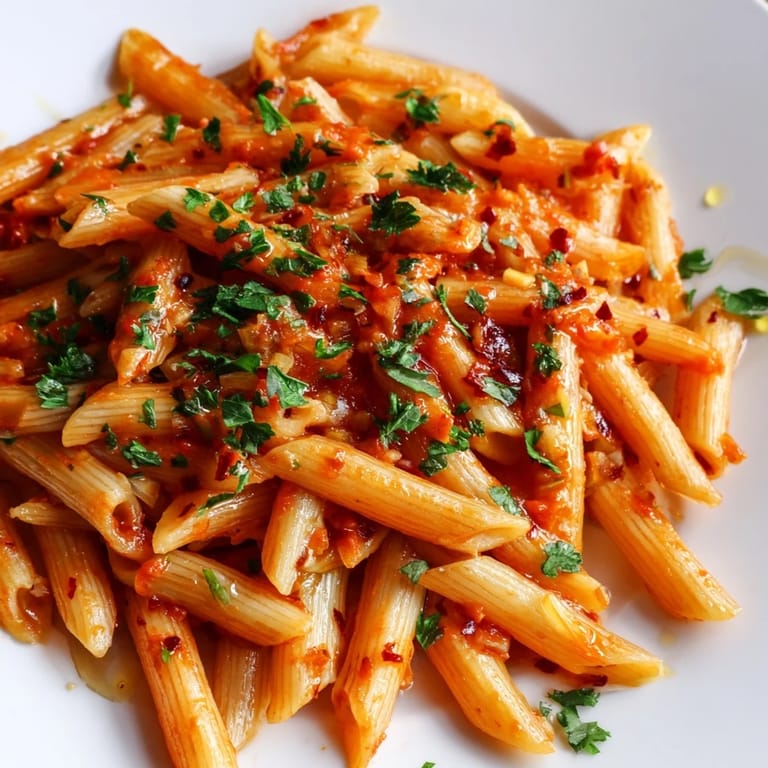
- Penne rigate, 400 g: The ridges catch and hold the sauce better than smooth pasta ever could, making sure every bite has heat and flavor.
- Extra virgin olive oil, 3 tbsp plus more for finishing: This is where the soul of the dish lives—use the best you have because there's nowhere to hide.
- Garlic cloves, 4 large thinly sliced: Thin slices cook faster and distribute evenly, avoiding burnt edges that turn bitter.
- Red chili flakes, 1–2 tsp: Start with less if you're new to heat; you can always add more but you can't take it back.
- Peeled whole tomatoes, 800 g: Two cans crushed by hand give you control over texture and keep the sauce from becoming baby food.
- Sea salt, 1 tsp and black pepper, 1/2 tsp: Season as you go, tasting the sauce as it simmers so nothing surprises you at the table.
- Fresh flat-leaf parsley, 2 tbsp chopped: Added at the very end, it keeps its brightness and cut through the heat like a cool breeze.
Tired of Takeout? 🥡
Get 10 meals you can make faster than delivery arrives. Seriously.
One email. No spam. Unsubscribe anytime.
Instructions
- Boil the pasta:
- Bring a pot of salted water to a rolling boil—it should taste like the sea. Drop in penne and stir so nothing sticks together, cooking until just shy of tender according to package time. Before draining, catch about 1/2 cup of starchy water in a cup; it's your secret weapon for bringing everything together.
- Build the heat:
- While pasta cooks, warm olive oil in a wide skillet over medium heat. Add thin garlic slices and chili flakes, listening for the quiet sizzle and breathing in the aroma—this takes maybe 1 minute before the garlic turns fragrant and golden. Move quick so it doesn't brown and turn acrid.
- Simmer the sauce:
- Pour in crushed tomatoes with a pinch of salt and pepper, letting everything bubble gently for 12–15 minutes. Stir now and then, watching as the sauce thickens and deepens in color, the olive oil beginning to separate and pool on top.
- Marry pasta and sauce:
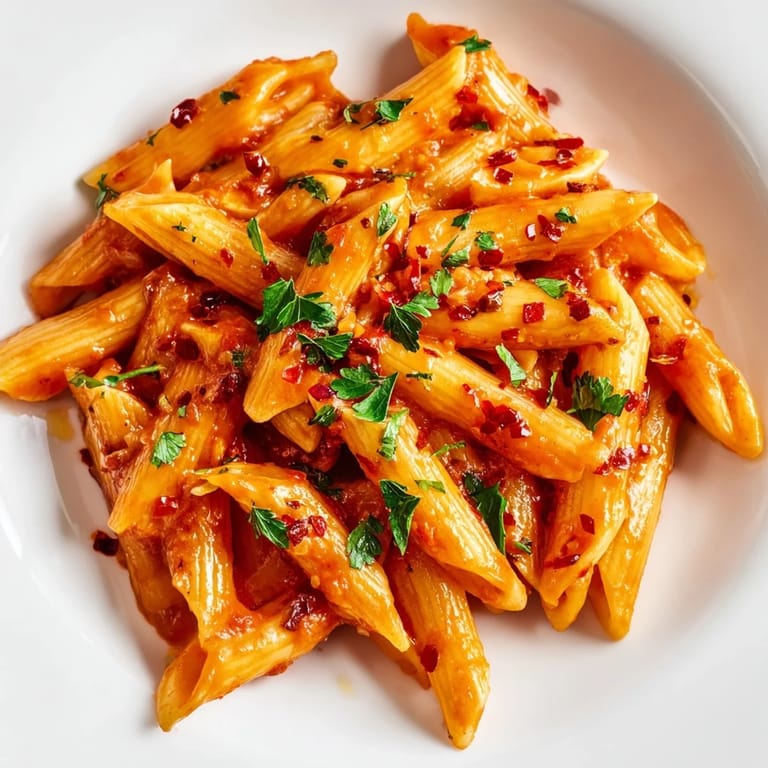
- Drain penne and tumble it into the skillet, tossing everything together so each piece glistens. If the sauce clings too tight, splash in a little pasta water until it flows like a loose embrace, coating without drowning.
- Finish with care:
- Turn off the heat, scatter in chopped parsley, and drizzle more olive oil over everything. This isn't just garnish—it's the final note, bright green against the crimson heat.
 Save
Save Years later, I realized this dish taught me something bigger than cooking: sometimes the things that matter most are the ones without clutter. A good arrabbiata is honest in a way fancy food often isn't.
Heat and Balance
The thing about chili heat is that it's not actually a flavor—it's a sensation, a doorway that opens wider with each bite if you let it. Some people love the searing wave; others prefer a warm whisper. The beauty of this recipe is that you control when to stop adding flakes, making it your own from the start. I learned this by watching someone add too much once and then another person rescue it by doubling the tomatoes and oil, which taught me that mistakes in the kitchen are just chances to learn what you actually like.
Why Simplicity Works
Arrabbiata exists because Rome was a place where people cooked with what they had—tomatoes, garlic, oil, and fire. No cream, no meat, no cheese meant the sauce had to sing on its own, which forced every element to be its best self. When you limit the ingredients, each one matters twice as much. The garlic can't hide behind cream; the tomato must be good enough to stand alone.
Serving and Pairing
This pasta is best served hot enough that steam rises from the bowl, carried immediately to the table while it's still singing. Pair it with a chilled white wine—something crisp and mineral like Verdicchio—that cuts through the heat and cleanses your palate between bites. You can add grated Parmesan if you want, though traditionally it's served naked, letting the sauce be the entire story.
- Have extra olive oil on the table so people can add more if they want richness or want to calm the heat.
- Serve with bread or grissini so no one misses out on soaking up the sauce pooled at the bottom of the bowl.
- This dish doesn't keep well as leftovers, so make only what you'll eat tonight.
 Save
Save Make this when you want to prove that restraint can be louder than excess. Serve it to people you want to know better, because a bowl of arrabbiata has a way of opening conversations.
Recipe Help
- → What type of pasta is best for this dish?
Penne rigate works best as its ridges hold the spicy tomato sauce well, providing balanced texture and flavor.
- → How can the spice level be adjusted?
Reduce or increase the amount of red chili flakes to achieve your preferred heat intensity.
- → Is fresh parsley necessary?
Fresh flat-leaf parsley adds brightness and freshness, but it can be omitted if unavailable.
- → Can this dish be made vegan and dairy-free?
Yes, it naturally contains no dairy or animal products, making it suitable for vegan and dairy-free diets.
- → What is the purpose of reserving pasta water?
Adding reserved pasta water helps loosen the sauce, ensuring it evenly coats the penne for better texture.