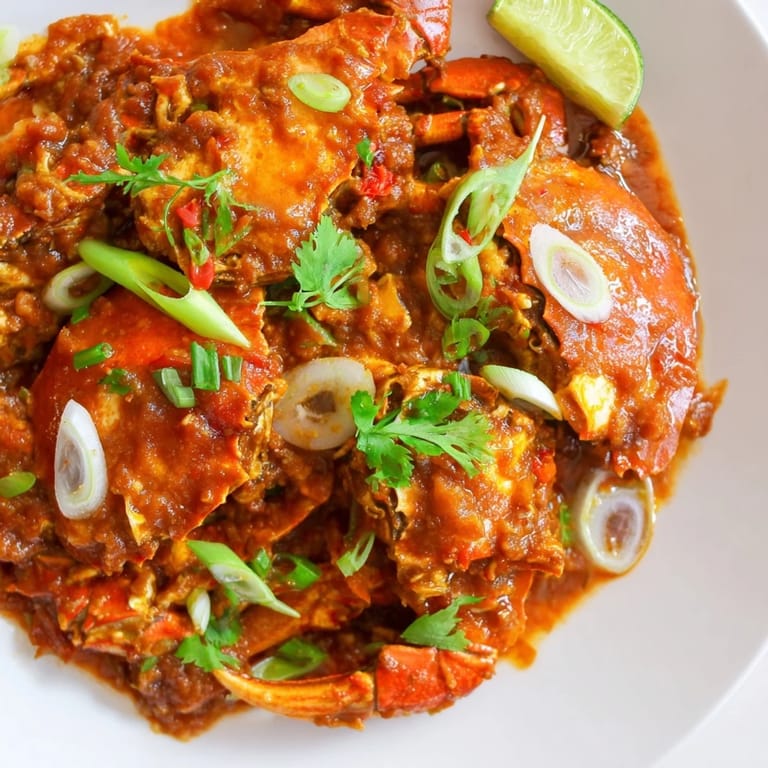
 Save
Save The first time I watched someone crack open a piece of chili crab at a hawker stall in Singapore, I was mesmerized by the controlled chaos of it all—shells clattering, sauce splattering, pure joy on every face around the table. Years later, I finally understood why this dish commands such reverence: it's the kind of food that demands your full attention, gets under your fingernails, and somehow makes you feel more alive. When I finally made it at home for the first time, my kitchen filled with a smell so intoxicating that my neighbors knocked to ask what smelled so incredible.
I'll never forget cooking this for my sister's birthday dinner when she mentioned she'd been craving it for months but never found a restaurant version quite right. Watching her face light up as she took that first bite—sauce dripping, that perfect balance hitting—reminded me why cooking for people matters so much. The whole table descended into happy, messy silence, the kind where everyone's too busy eating to talk.
Ingredients
- Whole live mud crabs (about 1.5 kg total), cleaned and cut into pieces: These are the heart of the dish; their sweet, tender meat soaks up every bit of that spiced sauce, and the shells add incredible depth to the cooking liquid.
- Vegetable oil: Use something with a high smoke point so you can really get that initial sear without the oil breaking down.
- Onion, garlic, ginger, red chilies, and birds eye chilies: This aromatic base is what builds that layered, complex flavor—don't rush this step, let it get fragrant.
- Tomato ketchup: I know it sounds simple, but quality matters here; it's your sauce's body and sweetness, so grab something you'd actually eat on fries.
- Chili sauce (Sriracha or sambal oelek): This adds the real punch; pick whichever you prefer, knowing that sambal oelek tends to be earthier while Sriracha is slightly more vinegary.
- Soy sauce and fish sauce: These are the umami anchors that make you close your eyes on the first taste; don't skip the fish sauce despite its pungent smell—it melts into something magical.
- Sugar: A small amount tames the acidity and balances the heat without making the sauce sweet.
- Chicken or seafood stock: This thins out the sauce and lets all those flavors dance together instead of sitting too heavy.
- Cornstarch slurry: This is your thickening agent; it keeps the sauce clingy and luxurious without making it gloopy.
- Beaten eggs: These create those silky ribbons that catch the sauce and add richness—the texture is what elevates this dish.
- Spring onions, cilantro, and lime: Fresh garnishes cut through the richness and add brightness that wakes up your palate with every bite.
Tired of Takeout? 🥡
Get 10 meals you can make faster than delivery arrives. Seriously.
One email. No spam. Unsubscribe anytime.
Instructions
- Build Your Aromatics:
- Heat oil in your wok until it shimmers, then add onion and let it soften into translucence before piling in garlic, ginger, and both types of chilies. You're looking for that moment when the kitchen suddenly smells so good you can barely stand it—that's your signal you've hit the right temperature and timing.
- Wake Up the Crab:
- Add your crab pieces and toss them through all those fragrant aromatics, letting them toast in the heat for a few minutes until the shells just start blushing red. You'll hear a subtle crackling sound, which is how you know the crab is properly sealing in its own flavor.
- Build the Sauce:
- Pour in ketchup, chili sauce, sugar, soy sauce, fish sauce, and stock, stirring until everything dissolves into this glossy, complex liquid. The smell at this moment will be so intoxicating you'll want to just stand there and breathe it in.
- Simmer Until Perfect:
- Bring everything to a boil, then drop the heat and let it bubble gently for 10 to 12 minutes, turning the crab pieces a few times so they cook evenly and the sauce clings to every piece. The shells will deepen to a burnt orange, and the meat will turn opaque and tender.
- Thicken Slightly:
- Stir in your cornstarch slurry and watch the sauce transform into something silkier and more coating in just a minute or two. Don't overdo it—you want it to cling, not to become a glaze.
- Create Those Silky Ribbons:
- Drizzle your beaten eggs very slowly into the hot sauce while stirring constantly, which creates those gorgeous ribbons instead of scrambled bits. The motion of the spoon and the steam rising are almost meditative at this point.
- Finish and Serve:
- Remove from heat, scatter spring onions and cilantro across the top, and get everything to the table while it's still steaming. Serve with warm mantou or rice and plenty of napkins, because this is food that demands you get your hands involved.
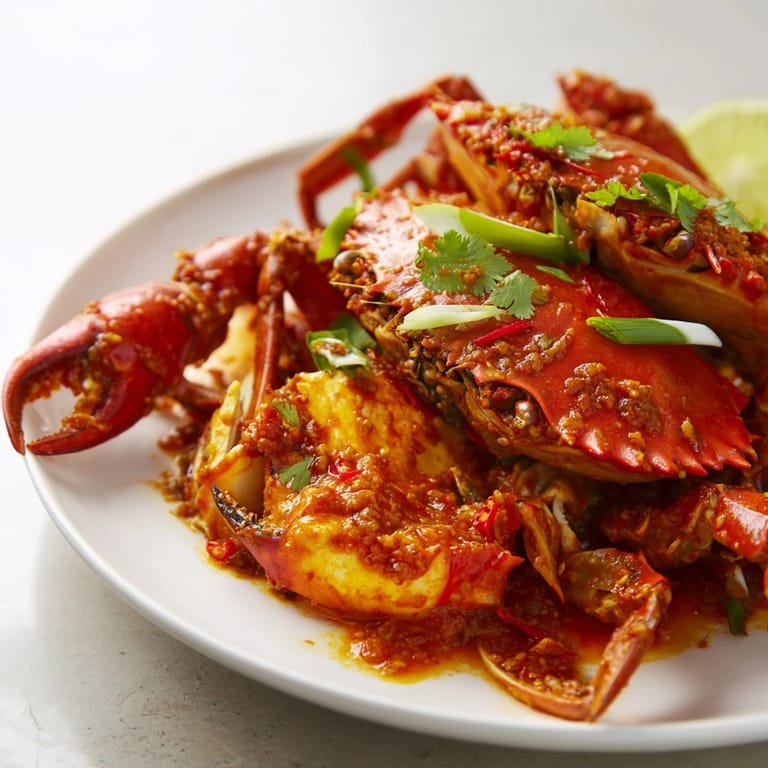 Save
Save There's something deeply satisfying about the moment when everyone at the table stops talking and starts communicating in happy sighs and sauce-stained hands. That's when you know you've nailed it—when the food dissolves into pure experience instead of something you're consciously tasting.
Why This Dish Matters
Chili crab isn't just food in Singapore—it's a statement of celebration, a marker of special occasions, and somehow a way of saying you care enough to spend time in the kitchen making something messy and wonderful. I've learned that dishes like this connect you to a place and a culture in ways that feel more honest than anything you could describe in words. Every time I make it, I'm transported back to humid afternoons, the clatter of shells, and the feeling of being exactly where I belong.
The Sauce Is Everything
The magic of chili crab lives entirely in the sauce—it's the bridge between the sweet crab meat and the heat of the chilies, balanced by that unexpected tomato ketchup base. I've made this with fancy sauces and minimal ingredients, and I've learned that balance matters far more than complexity. Get the ratio right and you'll have something that tastes like you spent all day on it, even though the whole thing took less than an hour.
Serving and Pairing
The real joy of chili crab is in the mess of eating it—shells crack, sauce drips, and somehow that's exactly the point. Steamed mantou buns are traditional and absolutely essential for soaking up every last drop of sauce, though rice works beautifully too. The lime wedges aren't optional; that bright acidity is what resets your palate between bites and keeps you coming back for more.
- Have an extra stack of napkins ready because this is intentionally hands-on food, and that's part of the charm.
- Serve family-style so everyone can dig in together—there's something communal and celebratory about passing around a big wok of chili crab.
- Make sure your guests know they're expected to get messy; it's a sign the food is worth every bit of chaos.
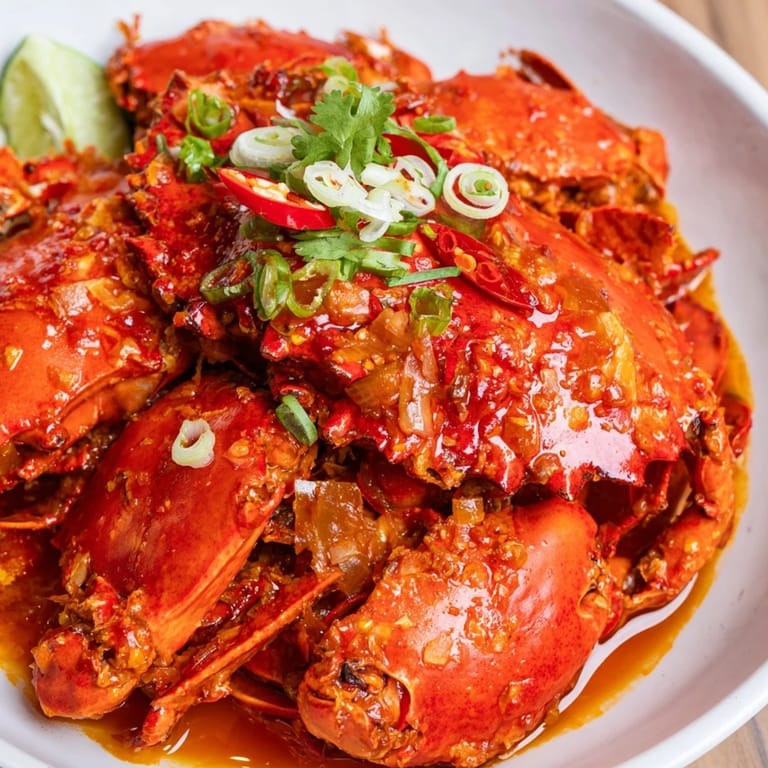 Save
Save This is the kind of dish that reminds you why cooking matters—not because it's complicated or impressive, but because it brings people together in the most delicious, joyful way possible. Make it for someone you love, get your hands messy, and enjoy every second of it.
Recipe Help
- → What type of crab works best for this dish?
Mud crabs are traditional, but blue swimmer or Dungeness crabs can be excellent substitutes if unavailable.
- → How can I adjust the spiciness?
Modify the amount of birds eye chilies according to your heat preference, adding more for extra spice.
- → What is the purpose of adding beaten eggs to the sauce?
Slowly stirring in beaten eggs creates delicate silky ribbons that enrich and thicken the sauce.
- → What side dishes complement this chili crab?
Steamed buns or plain rice soak up the flavorful sauce perfectly and balance the spicy, tangy elements.
- → How do I prevent the crab from overcooking?
Simmer the crab gently, turning occasionally, until shells turn bright red and meat is cooked through, about 10-12 minutes.