 Save
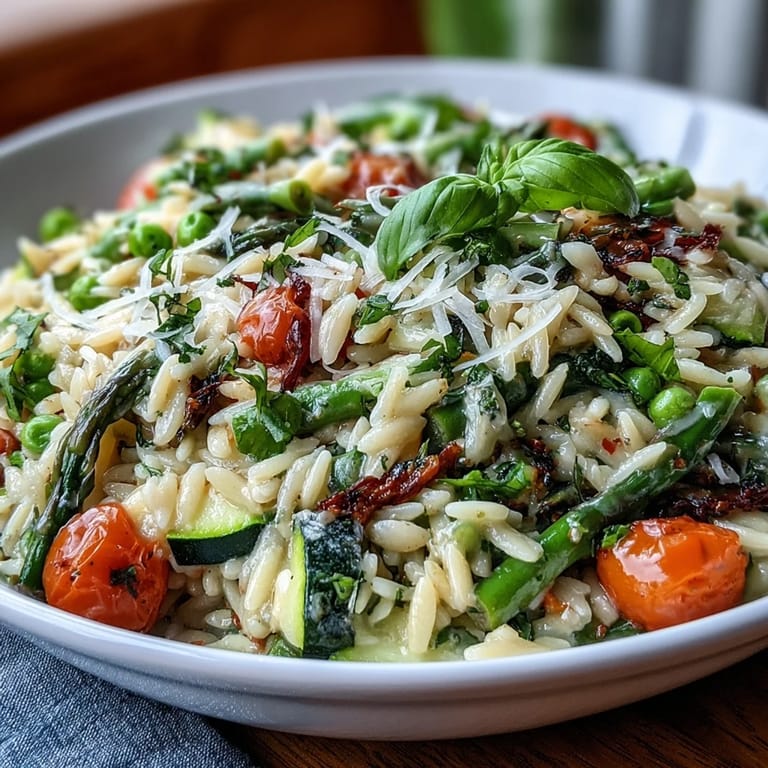
Save The scent of basil always reminds me of late spring when the kitchen windows are open and the breeze dances with fresh herbs on the counter. I first put this orzo primavera together on a whim after overzealously loading up on produce at the market—it was one of those meals that felt like capturing sunshine in a bowl. I can still hear the cheerful clatter of knives chopping and the hiss as vegetables hit hot oil. Not every spontaneous recipe becomes a staple, but this one won over my family right away. Now, making it means welcoming the season with open arms and a wooden spoon in hand.
One quiet evening last April, I made this dish while my partner read aloud from the other side of the kitchen. With every stir, the air filled with garlic and shallot before the vegetables even touched the pan. We ended up eating at the counter straight from our serving bowls, not bothering with the table or formalities. That easy mood is somehow baked into this recipe now. Just the act of making it brings back laughter and the content hum of a regular day turned just a bit more special.
Ingredients
- Orzo pasta: Its small, rice-like shape absorbs all the flavors and delivers them with every bite; stir occasionally for even cooking.
- Olive oil: Choose a good-quality extra virgin olive oil for sautéing, as it sets the tone for the vegetables’ flavor.
- Asparagus: Pick spears that snap easily and avoid woody ends—trim generously for perfect tenderness.
- Sugar snap peas: Halve them so they mix well with the orzo and hold onto a bit of snap in the finished dish.
- Zucchini: Dice evenly to ensure gentle cooking; it adds a succulent, mild texture.
- Cherry tomatoes: Go for ripe, sweet ones—when halved, they release just enough juice for a touch of sauciness.
- Frozen peas: Thaw before adding and toss in at the end so their color stays bright and they don’t get mushy.
- Shallot: This base adds depth and a delicate sweet note; chop fine for the best caramelization.
- Garlic: Mince fresh for a pop of aroma that perfumes the entire dish.
- Parmesan cheese: Grate your own if possible; it melts into a creamy sauce with a nutty, salty tang.
- Fresh basil: Slice just before tossing in to preserve its freshness—watch how the heat awakens its aroma.
- Unsalted butter: A small cube swirled in at the end gives a luscious mouthfeel and ties the flavors together.
- Salt and black pepper: Season as you go, tasting to highlight the freshness of the produce.
- Lemon zest and juice: Adds a sunny brightness that elevates all the green notes; zest before juicing for ease.
Tired of Takeout? 🥡
Get 10 meals you can make faster than delivery arrives. Seriously.
One email. No spam. Unsubscribe anytime.
Instructions
- Get the pot going:
- Fill a large pot with salted water and bring it to a rolling boil; the sizzle means it’s ready for the orzo.
- Cook the orzo:
- Add in your orzo and stir now and then; once it’s just al dente, scoop out half a cup of the water, drain, and set aside.
- Warm the oil:
- Heat olive oil in a big skillet until it shimmers, then toss in chopped shallot and garlic—breathe in that inviting aroma.
- Sauté the green veggies:
- Add asparagus, zucchini, and sugar snap peas, letting them cook for several minutes until their colors brighten and they start to soften.
- Add the rest of the veg:
- Tip in cherry tomatoes and thawed peas, stirring gently; when tomatoes look glossy and just give way, you’re golden.
- Combine pasta and vegetables:
- Return the cooked orzo to the pan, stirring everything together so every bite is balanced.
- Creamy finish:
- Stir in butter, parmesan, lemon zest, and lemon juice, dribbling in a bit of pasta water until a creamy gloss coats it all.
- Season and garnish:
- Turn off the heat, season with salt and pepper, and fold in the fresh basil right before serving to preserve its vivid flavor.
- Serve:
- Heap into bowls while hot, finishing with a sprinkle of cheese and basil for that final flourish.
 Save
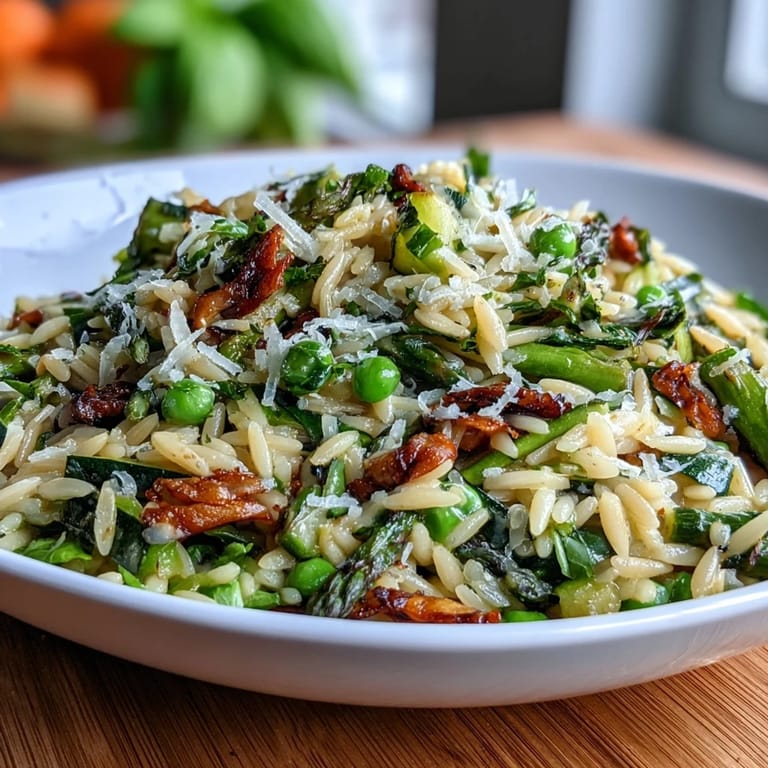
Save There was a day when friends dropped in without notice, and I happened to have orzo and a handful of vegetables on hand. Tossing this together turned into an impromptu dinner party right at my kitchen island—no fuss, just good food and the kind of laughter that lingers. Seeing everyone go back for seconds cemented this as my go-to crowd-pleaser. Sometimes the best gatherings begin with what you already have. This dish is woven into those spontaneous, joyful nights for me now.
How To Make The Most Of Seasonal Veggies
Every time I make this, I adjust the mix of vegetables depending on what looked irresistible at the market that week. There’s a thrill to trying out baby spinach, tiny artichokes, or juicy bell peppers in place of the standard medley. It’s hard to go wrong if you keep everything chopped to similar sizes so they cook evenly. Let curiosity guide you and don’t be afraid to swap in new additions. The result is always vibrant and feels just a little bit different each time.
Serving Suggestions You’ll Want To Try
This orzo is a star on its own, but sometimes I add grilled lemony chicken or shrimp on the side if someone’s especially hungry. We also love it with a peppery arugula salad dressed simply with olive oil and salt—something crisp and cool to contrast the warmth. Leftovers are rare, but they’re unbeatable for a quick lunch the next day (even cold). Top with an extra handful of fresh basil for a second burst of flavor if you can. The Parmesan forms the most irresistible little crust when reheated in the skillet.
What To Watch For When Cooking
The orzo can go from perfect to mushy in a flash, so start checking for doneness a minute early and trust your bite. Sauté the veggies just until sharp and tender—not limp—so their texture shines alongside the pasta.
- Always zest the lemon before juicing for ease.
- Have all your veggies prepped before turning on the stove.
- Don’t overcrowd the skillet—work in batches if you must, for truly vibrant veg.
 Save
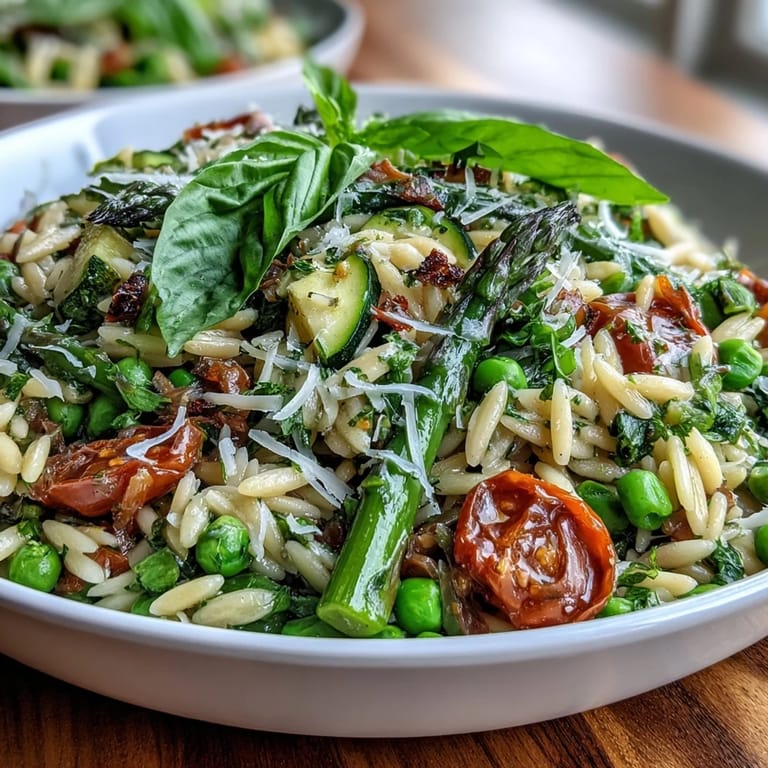
Save Spring Orzo Primavera is a celebration of what's fresh and lively, perfect for sharing at the table—no matter how casual the meal. I hope it brightens your week as much as it has mine.
Recipe Help
- → How do I prevent the orzo from becoming mushy?
Cook orzo to al dente according to package timing and start checking a minute or two early. Drain promptly and rinse briefly only if you plan to stop cooking; otherwise reserve some pasta water and toss hot orzo into the skillet so it finishes in the sauce, which preserves texture.
- → Can I make this dairy-free or vegan?
Yes — substitute plant-based butter and a vegan grated cheese or nutritional yeast for the parmesan. Add a little extra lemon or a splash of olive oil to boost flavor and skip the dairy-based finish.
- → What’s the best way to keep the vegetables bright and crisp?
Sauté vegetables over medium-high heat in a hot skillet and avoid overcrowding so they sear quickly. Add tender items like tomatoes and peas toward the end so they soften just enough without losing color or bite.
- → How can I add protein without changing cooking balance?
Grill or pan-sear chicken or shrimp separately, then fold into the finished orzo just before serving. That keeps proteins properly cooked and preserves the vegetable texture and sauce consistency.
- → Is this suitable for make-ahead meals?
You can prepare components ahead: cook orzo and store drained, and lightly sauté vegetables. Reheat gently in a skillet with a splash of reserved pasta water or olive oil, then finish with butter, parmesan and basil just before serving.
- → Can I freeze leftovers?
Freezing is not ideal due to dairy and delicate vegetables, which can become watery. If needed, freeze plain cooked orzo separately and add freshly sautéed vegetables and cheese when reheating for better texture.