 Save
Save The first time I made pho at home, I was trying to recreate a bowl from a tiny restaurant tucked away on a side street in Hanoi, where the broth had been simmering since dawn. I didn't have all the traditional spices or hours to spare, so I improvised—and discovered that you don't need a full day of slow cooking to capture that warm, aromatic magic. Twenty-five minutes later, I had something that tasted like a memory, like comfort made liquid, and since that evening, this quick version has become my go-to when I want something that feels both authentic and achievable.
I made this for friends on a chilly evening, and what I remember most isn't the cooking—it was the quiet moment after everyone took their first spoonful. The whole table just paused, spoons mid-air, and someone whispered, how did you make this so fast? That's when I knew this recipe had become something special in my kitchen, not because it was fancy, but because it delivered genuine joy without demanding hours of prep.
Ingredients
- Beef or chicken broth, 8 cups: This is your foundation—low-sodium is key because you're building flavor with spices, not salt, and you want room to adjust seasoning at the end.
- Onion and ginger: The backbone of the broth's aromatic character; halving the onion and slicing the ginger lets their flavors infuse evenly.
- Star anise, cinnamon stick, and cloves: These three spices create that signature warm, slightly sweet note that makes pho unmistakably itself.
- Fish sauce and soy sauce: They work as a team—fish sauce adds depth and umami, soy sauce brings a gentle saltiness and color.
- Rice noodles: Flat bánh phở noodles are traditional and worth seeking out; they hold the broth beautifully and have a tender texture that can't be rushed.
- Beef sirloin or eye round, thinly sliced: Ask your butcher to slice it, or partially freeze the meat at home and use a sharp knife for thin, even pieces that cook perfectly in hot broth.
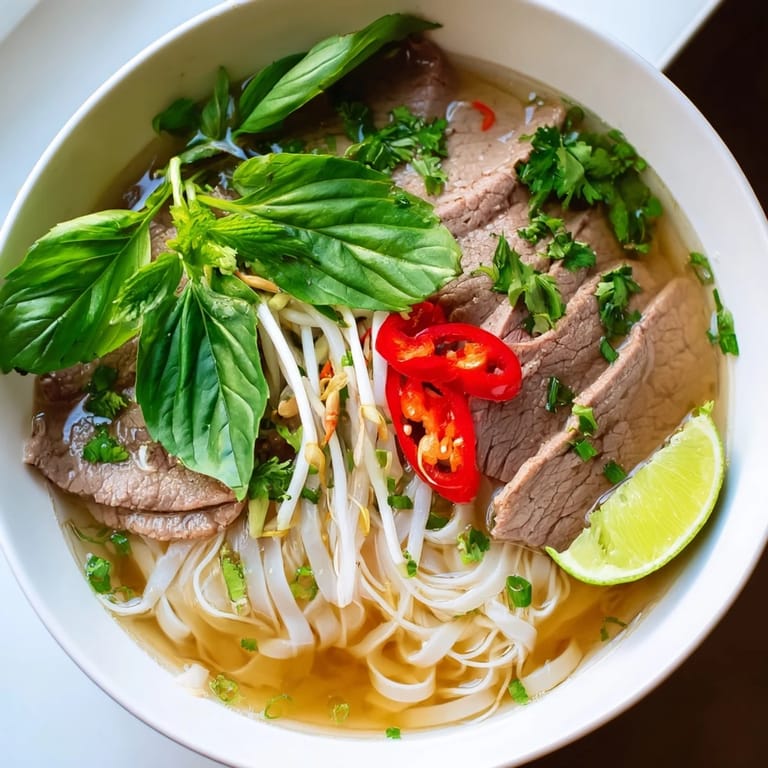
- Fresh herbs and garnishes: Thai basil, cilantro, scallions, and bean sprouts aren't decoration—they're essential flavor builders that brighten each spoonful and let your guests customize their bowl.
Tired of Takeout? 🥡
Get 10 meals you can make faster than delivery arrives. Seriously.
One email. No spam. Unsubscribe anytime.
Instructions
- Build your broth base:
- Combine broth with halved onion, sliced ginger, star anise, cinnamon, and cloves in a large pot. Bring to a rolling boil so the spices release their oils, then lower the heat and let it simmer uncovered for 20 minutes. You'll notice the kitchen fills with warmth—that's the pho calling.
- Season and strain:
- Add fish sauce, soy sauce, sugar, and salt to taste. Simmer another 5 minutes for the flavors to marry, then pour the broth through a fine-mesh strainer into a clean pot. Return it to low heat—you want it hot when you need it but not aggressively boiling.
- Prepare the noodles:
- While the broth simmers, cook rice noodles according to package directions. Drain them well so they don't waterlog your bowls, then divide evenly among four large serving bowls.
- Arrange the meat:
- Lay thin slices of beef (or chicken) directly over the noodles in each bowl. The thinner the slices, the more delicate and tender they'll be once the hot broth hits them.
- Pour and cook:
- Ladle the hot broth carefully over the meat and noodles—you'll see the beef turn from pink to cooked in seconds. The heat does the work; there's nothing to interrupt this moment.
- Finish with fresh flavors:
- Top each bowl with a generous handful of bean sprouts, fresh basil leaves, cilantro, sliced scallions, and chili if you like heat. Serve lime wedges, hoisin sauce, and Sriracha on the side so everyone can adjust to their taste.
 Save
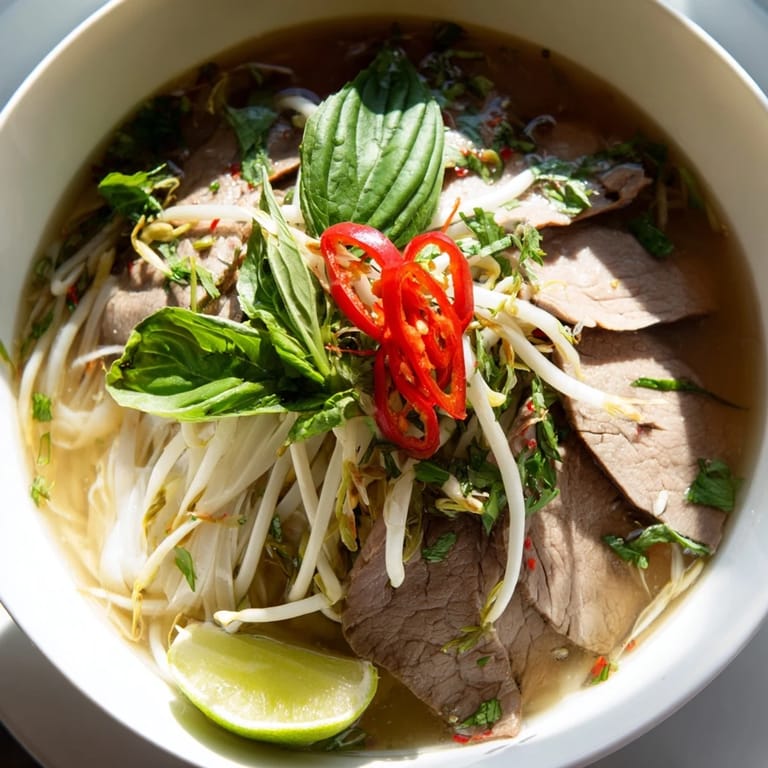
Save One afternoon, my neighbor smelled the pho from her kitchen and knocked on the door with a hopeful look. We ended up eating together, and she spent half the meal just quietly appreciating how the herb-filled bowl tasted different with each spoonful depending on what she grabbed first. That's when I understood—this dish isn't about impressing anyone with technique; it's about creating a moment where people can slow down and savor something warm.
The Secret to Speed Without Sacrifice
The magic of this express pho is that you're not actually rushing the flavors—you're being smart about where time matters. The broth still gets 25 minutes to develop, which is just enough for the spices to open up and infuse the liquid with their warmth. Using pre-made broth as your base isn't cutting corners; it's giving yourself permission to spend your effort on the parts that make pho uniquely satisfying: the fresh herbs, the tender meat, the way everything comes together in the bowl.
Customizing Your Bowl
One of the joys of pho is how personal it becomes once it lands in front of you. Some people load their bowls with herbs until they're almost hiding the broth; others prefer a cleaner, broth-forward approach with just cilantro and a squeeze of lime. My sister always adds extra chili and a generous drizzle of Sriracha, while a friend prefers the sweetness of hoisin mixed into the broth before eating. There's no wrong way—this is where everyone's taste takes over.
Storing and Reheating
If you find yourself with leftover broth, it keeps beautifully in the refrigerator for up to three days and actually deepens in flavor as it sits. Reheat it gently over medium heat without boiling, and prepare fresh noodles and toppings when you're ready to serve again. The broth is the precious part; the noodles and fresh elements should always be made fresh for the best texture and taste.
- Freeze the broth in portions for up to three months and pull it out whenever you need a quick, satisfying dinner.
- Prep all your garnishes and herbs the morning of cooking, and store them in the fridge so assembly is just a matter of grabbing and adding.
- Always slice your meat as thin as possible; ask your butcher or use a sharp knife on partially frozen meat for paper-thin pieces that cook instantly.
 Save
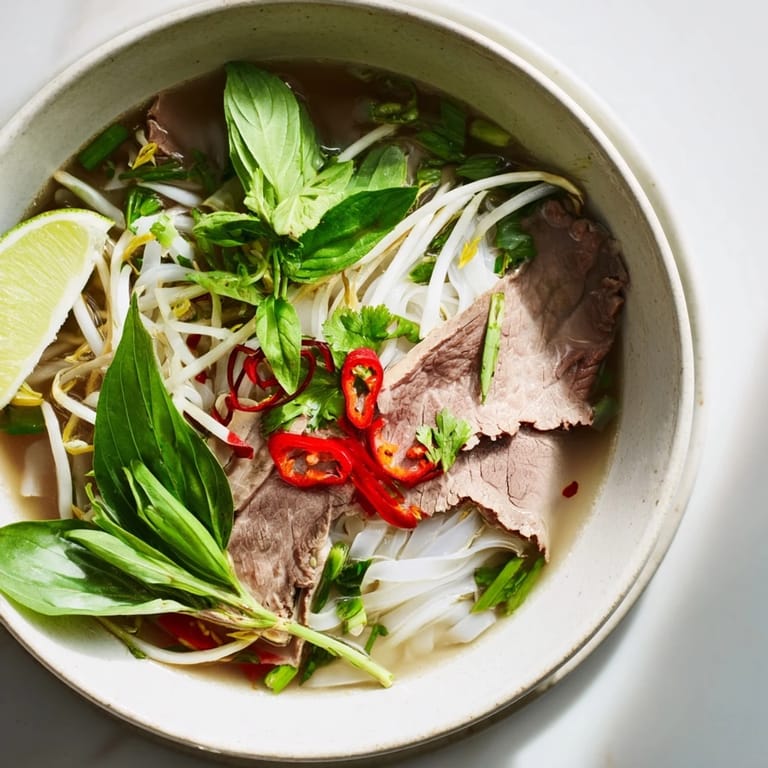
Save This pho has taught me that some of the most meaningful dishes aren't the ones that demand a full day in the kitchen—they're the ones that let you feed people well without sacrificing time with them. Make this soon, and notice how a simple bowl of broth and noodles becomes the excuse for a quiet, unhurried moment.
Recipe Help
- → What ingredients create the broth's unique flavor?
The broth combines star anise, cinnamon, cloves, fresh ginger, and onion, simmered with broth and seasoned with soy and fish sauces for a complex, aromatic base.
- → Can I substitute the meat with other proteins?
Yes, thinly sliced chicken works well, and tofu can be used for a vegetarian alternative, especially when paired with vegetable broth.
- → How long should the broth simmer for best results?
Simmer the broth uncovered for 20 minutes, then add seasonings and simmer an additional 5 minutes to deepen flavor before straining.
- → What garnishes enhance the overall dish?
Fresh Thai basil, cilantro, scallions, bean sprouts, and optional red chili add aroma, texture, and a fresh brightness to the bowl.
- → Are there any tips for cooking noodles properly?
Cook rice noodles according to package instructions, drain well, and serve promptly to maintain their texture alongside the hot broth and meat.
- → How can additional flavors be incorporated?
Lightly charring the onion and ginger before simmering enriches the broth, and adding mint or fried shallots offers extra depth and aroma.