 Save
Save The first time I shaved truffle over white asparagus, I wasn't expecting the fragrance to be so immediate, so intoxicating. It happened on a quiet spring evening when I was trying to impress someone who claimed they'd eaten everywhere. The black threads curled off the truffle like calligraphy, and suddenly the dish felt less like an assembly and more like a small act of devotion. That's when I understood The Silver Birch isn't really a recipe—it's a moment you build on a plate.
I made this for a dinner party once and watched someone pause mid-conversation when they tasted it, fork suspended, eyes closing for a moment. No one asked for the recipe that night—they just asked if I could make it again. There's something about white asparagus that feels almost ceremonial, especially when you pair it with something as unapologetically luxurious as truffle.
Ingredients
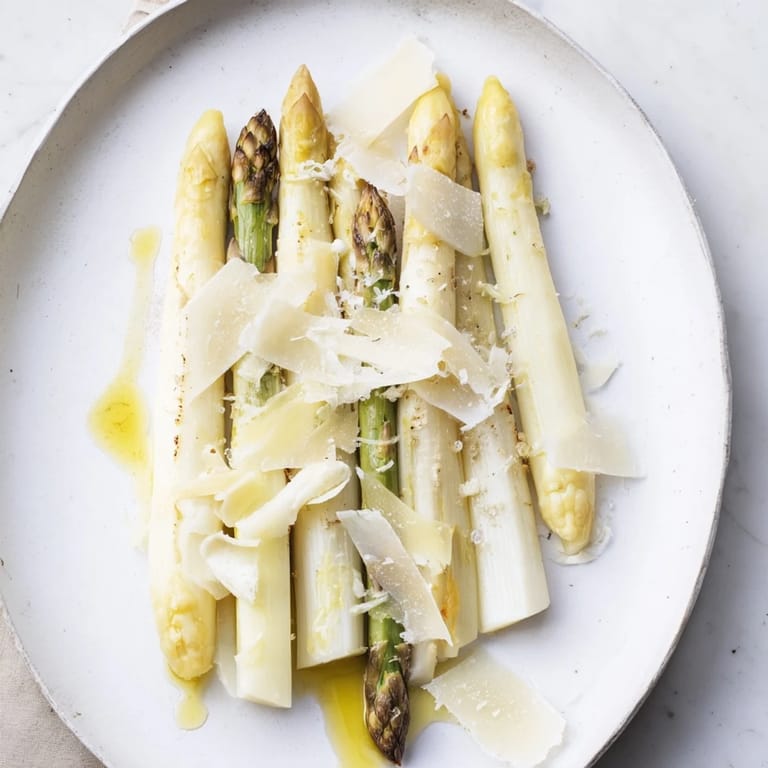
- White asparagus, 500 g: Seek out thick spears with tightly closed tips; they're milder and sweeter than green asparagus, and they peel beautifully to reveal a tender heart.
- Burrata or buffalo mozzarella, 75 g: Burrata's creamy center is the star here—make sure it's properly drained so it doesn't water down the plate.
- Aged Comté cheese, 75 g: This French cheese has a subtle nuttiness that echoes the truffle without competing with it; shave it thin with a vegetable peeler.
- Parmigiano-Reggiano, 50 g: The aged, crystalline bite of this cheese adds structure and prevents the plate from feeling one-note creamy.
- Fresh black truffle, 15 g: If you can find it, fresh truffle is worth the investment for this dish; truffle paste works in a pinch but lacks the same earthiness.
- Extra-virgin olive oil, 2 tbsp: Use something you actually love drinking by the spoon—this is not the moment for a utility oil.
- Fresh lemon juice, 1 tbsp: Squeeze it fresh; bottled lemon juice tastes hollow next to these delicate flavors.
- Flaky sea salt and white pepper: White pepper keeps the plate visually clean while adding just enough heat to wake up the palate.
Tired of Takeout? 🥡
Get 10 meals you can make faster than delivery arrives. Seriously.
One email. No spam. Unsubscribe anytime.
Instructions
- Prepare the asparagus:
- Bring a large pot of salted water to a gentle simmer and add the white asparagus. Cook for 8–10 minutes until the spears bend slightly but still have resistance at the core—this is where taste beats texture every time. Immediately transfer them to an ice bath to stop the cooking, then drain and pat dry with kitchen towels, treating them like they're as delicate as they actually are.
- Arrange with care:
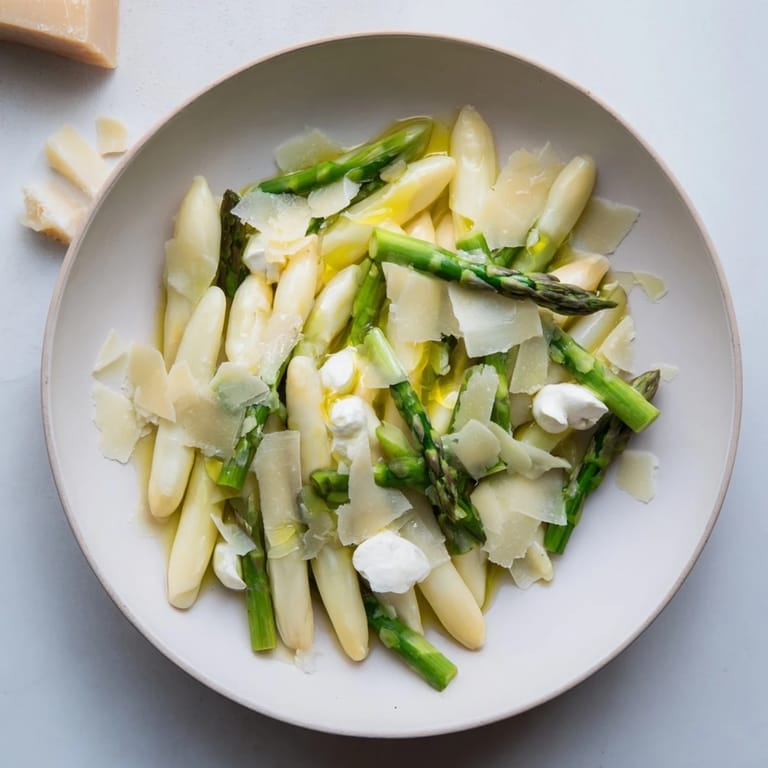
- Once cooled, slice each spear in half lengthwise and lay them on chilled serving plates in a gentle pattern. Cold plates matter here because warm porcelain will make the cheese weep and the delicate flavors scatter.
- Layer the cheeses:
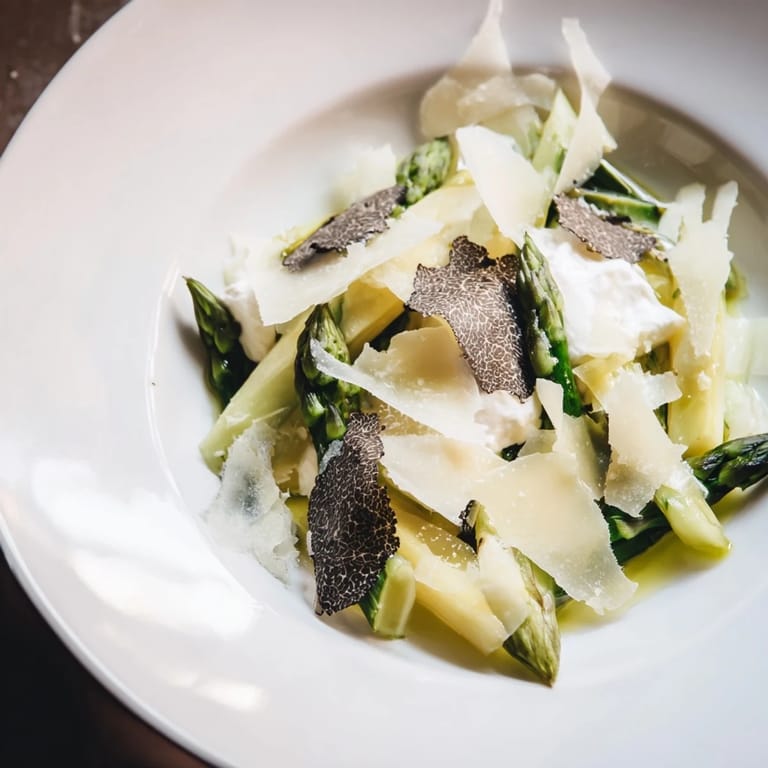
- Tear the burrata into bite-sized pieces and distribute it across the asparagus, letting some pieces fall naturally. Add thin, almost translucent shavings of Comté, then finish with a fine mist of grated Parmigiano-Reggiano—the cheese should feel like an accent, not the main event.
- Add the truffle:
- If using fresh truffle, use a truffle slicer or a sharp vegetable peeler to create delicate black stripes across the plate. If using truffle paste, a small squeeze applied in thin, intentional lines works just as well and looks almost as beautiful.
- Dress and finish:
- Whisk together the olive oil, lemon juice, sea salt, and a whisper of white pepper, then drizzle the dressing in a thin, even pattern over everything. A final garnish of microgreens or delicate chervil adds a whisper of green if you want it, but it's not essential.
 Save
Save I once made this for someone who said they didn't like asparagus, and they ate every piece. Sometimes it takes the right dish, the right context, and the right moment for people to realize their tastes have shifted. That's what this recipe taught me: it's not just food, it's permission to feel a little fancy without apology.
Why White Asparagus Matters
White asparagus grows underground, shielded from sunlight, which gives it a delicate sweetness and a tender texture that green asparagus can't quite achieve. It requires more careful peeling and handling, but that extra care translates directly onto the plate. The flavor is almost floral, with a subtle sweetness that pairs beautifully with the earthiness of truffle without any muddiness.
The Cheese Trinity
Three cheeses might sound excessive, but each one plays a specific role: the burrata provides a luxurious, creamy anchor; the Comté adds a sophisticated, slightly sweet nuttiness; and the Parmigiano-Reggiano brings crystalline sharpness that keeps the whole composition from feeling too soft or one-dimensional. Together, they create a complexity that no single cheese could achieve alone.
Truffle: The Non-Negotiable Luxury
Truffle is the reason this dish feels like more than just fancy salad—it's the fragrance, the visual drama, and the taste all at once. A little goes an impossibly long way, which is why this dish doesn't require a fortune, just intention. The black stripes against the pale cheeses and pale asparagus create a visual composition that feels almost artistic, which means when you serve it, people eat with their eyes first.
- Fresh truffle is seasonal and expensive, but the aroma is utterly irreplaceable and worth saving for a special occasion.
- Truffle paste is a reliable option if fresh truffle is unavailable, though it lacks some of the perfumed intensity.
- Store fresh truffle wrapped in paper towels inside a sealed container in the coldest part of your refrigerator, and use it within a few days for maximum impact.
 Save
Save This dish reminds me that sometimes the simplest meals are the most memorable, and that a few excellent ingredients assembled with care can feel like you've given someone the world. Make it when you want someone to know you were thinking of them.
Recipe Help
- → How is the white asparagus prepared for optimal texture?
The asparagus is simmered in salted water for 8–10 minutes until tender yet firm, then immediately cooled in an ice bath to retain texture and color.
- → Can different cheeses be used in place of Comté?
Yes, Gruyère or mild goat cheese can substitute Comté while maintaining a similar flavor profile and texture.
- → What is the best way to add the black truffle to the dish?
Fresh truffle should be thinly shaved over the dish using a truffle slicer or vegetable peeler; alternatively, high-quality truffle paste can be drizzled in fine lines.
- → How does the dressing enhance the flavors?
The olive oil and lemon juice dressing adds brightness and balances the richness of the cheeses and truffle, accented by sea salt and a hint of white pepper.
- → Are there any suggested garnishes to complement this dish?
Microgreens or chervil add a fresh, herbaceous note and a touch of visual elegance when used as garnish.
- → Is this dish suitable for specific dietary needs?
It is vegetarian and gluten-free; however, check cheese labels to ensure compatibility with strict vegetarian diets due to rennet content.